
The goal of suction blister grafting for vitiligo is simple: transfer healthy pigment cells to white areas so the skin slowly regains natural color.
Can Vitiligo Be Treated Permanently?
White patches from Vitiligo can feel emotionally difficult, especially when creams and light therapy stop working. Many patients reach a stage where medical treatment no longer shows improvement.
At this point, surgical options like suction blister grafting for vitiligo become an important solution. This method is used for stable cases where patches are not increasing and the disease has stopped spreading.
What is Suction Blister Grafting for Vitiligo?
Suction blister grafting for vitiligo is a minor skin surgery used to treat stable white patches. In this method, a very thin layer of healthy skin is taken from the body and placed on white patches.
This layer contains active pigment cells (melanocytes). Over time, these cells start producing color again.
This technique is part of modern surgical dermatology in Dermatology and is widely used for small, well-defined vitiligo patches.
A key benefit of suction blister grafting for vitiligo is that it gives natural-looking results without major scarring.
Who Can Go for Suction Blister Grafting for Vitiligo?
Not every vitiligo patient is suitable for surgery. Proper selection improves success rate of suction blister grafting for vitiligo.
You may be eligible if:
- Vitiligo is stable for at least 1 year
- No new white patches in last 12 months
- No growth in existing patches
- No improvement with creams or phototherapy
Best candidates:
- Small stable patches
- Vitiligo on face, lips, eyelids, or neck
- Patients looking for cosmetic improvement
Stable disease is the most important factor for successful suction blister grafting for vitiligo.
Types of Vitiligo Surgical Treatments
There are different surgical options available:
- Melanocyte Transplantation
- Mini Punch Grafting
- Split Thickness Skin Grafting
- Follicular Unit Transplant
- Suction blister grafting for vitiligo
Among all methods, suction blister grafting for vitiligo is preferred for delicate areas because it gives smoother cosmetic results.
How Suction Blister Grafting for Vitiligo is Done? (Step-by-Step)
The procedure is simple but requires expert skill.
Step 1: Donor Skin Selection
A healthy skin area (thigh or arm) is selected.
Step 2: Blister Formation
A suction device is used to create small blisters under local anesthesia.
Step 3: Graft Collection
The thin top skin layer is carefully removed. This layer contains pigment cells.
Step 4: Preparing White Patch Area
The vitiligo patch is gently prepared to receive the graft.
Step 5: Skin Placement
The graft is placed on the white patch and covered with dressing.
Doctors usually perform the entire process of suction blister grafting for vitiligo as a day-care procedure.
What Happens After Suction Blister Grafting for Vitiligo?
Healing takes time and patience.
- 5–10 days: graft settles
- 3–4 weeks: first pigment starts appearing
- 2–3 months: visible color spread
- 3–6 months: full improvement in most cases
Doctors may suggest phototherapy after 3 weeks to improve results of suction blister grafting for vitiligo.
Advantages of Suction Blister Grafting for Vitiligo
This procedure is popular because:
- No major scars
- Natural skin color return
- Safe for face and sensitive areas
- Day-care surgery (no hospital stay)
- Low complication rate
- Good cosmetic match with surrounding skin
- Effective in stable cases
For many patients, suction blister grafting for vitiligo becomes the most satisfying surgical option.
Does Suction Blister Grafting for Vitiligo Hurt?
The procedure is done under local anesthesia, so there is no major pain. Mild discomfort may occur during suction, but it is temporary.
Most patients tolerate suction blister grafting for vitiligo well and go home the same day.
Recovery After Suction Blister Grafting for Vitiligo
Recovery is simple if instructions are followed:
- Keep dressing dry for a few days
- Avoid movement of treated area
- Do not disturb graft site
- Follow phototherapy if advised
- Avoid sun exposure during healing
Good aftercare improves results of suction blister grafting for vitiligo significantly.
Results and Success Rate
When done on stable vitiligo cases, suction blister grafting for vitiligo shows strong results:
- 50%–100% repigmentation in many cases
- Natural blending with surrounding skin
- Long-term stability when disease is inactive
However, results depend on disease stability and patient care.
Risks and Limitations
Like any medical procedure, suction blister grafting for vitiligo has some limitations:
- Slow pigmentation in some patients
- Partial graft loss if movement occurs
- Not suitable for unstable vitiligo
- Needs careful post-care
Proper evaluation reduces most risks.
When Should You Choose Surgery for Vitiligo?
Surgery is considered when:
- Medicines are not working
- White patches are stable
- Patient wants cosmetic improvement
- Phototherapy alone is not enough
In such cases, suction blister grafting for vitiligo can be a reliable option.
Why Expert Care Matters in Suction Blister Grafting for Vitiligo?
Success of suction blister grafting for vitiligo depends heavily on surgical skill and proper patient selection. Even small errors can affect pigmentation results.
This is why choosing an experienced dermatologist is important.
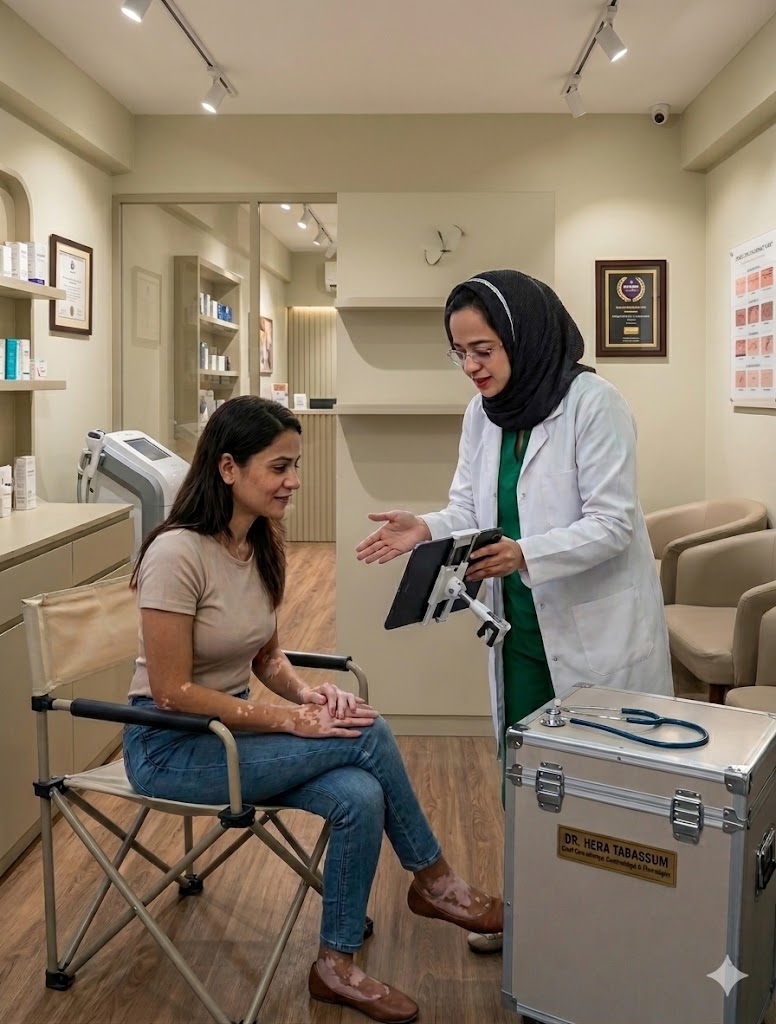
About Dr Hera’s Skin & Hair Clinic (Roorkee)
Dr Hera’s Skin & Hair Clinic is a trusted dermatology center in Roorkee offering complete care for skin, hair, and nail conditions. The clinic focuses on both medical and surgical dermatology with modern treatment protocols.
Dr. Hera Tabassum is one of the best dermatologists in Roorkee. She has strong clinical experience in treating conditions like acne, fungal infections, eczema, hair loss, warts, and vitiligo.
At the clinic, doctors manage vitiligo cases using a scientific, step-by-step approach. They perform treatments like suction blister grafting for vitiligo only after carefully evaluating disease stability and patient suitability.
The focus is always on:
- Safe procedures
- Realistic expectations
- Personalized treatment plans
- Long-term skin health
Patients receive complete guidance before and after suction blister grafting for vitiligo, ensuring better understanding and better outcomes.
Book Consultation
If white patches remain stable and do not improve with medicines, doctors can consider surgical options like suction blister grafting for vitiligo after proper evaluation.
Early consultation helps in selecting the right treatment and improves chances of better skin repigmentation.
Book a consultation at Dr Hera’s Skin & Hair Clinic, Roorkee for a detailed evaluation and personalized vitiligo treatment plan.