
Hyperpigmentation on neck is a common skin concern where the skin around the neck becomes darker than the surrounding areas.
This condition may appear gradually or sometimes suddenly and can affect people of all skin types.
In most cases, Hyperpigmentation on Neck is harmless, but in some situations, it may indicate an underlying health or skin-related issue.
Many people notice dark patches on neck, uneven skin tone, or general darkening that does not improve with regular cleansing.
Understanding the root cause of Hyperpigmentation on Neck is important for choosing the right treatment approach and preventing further darkening.
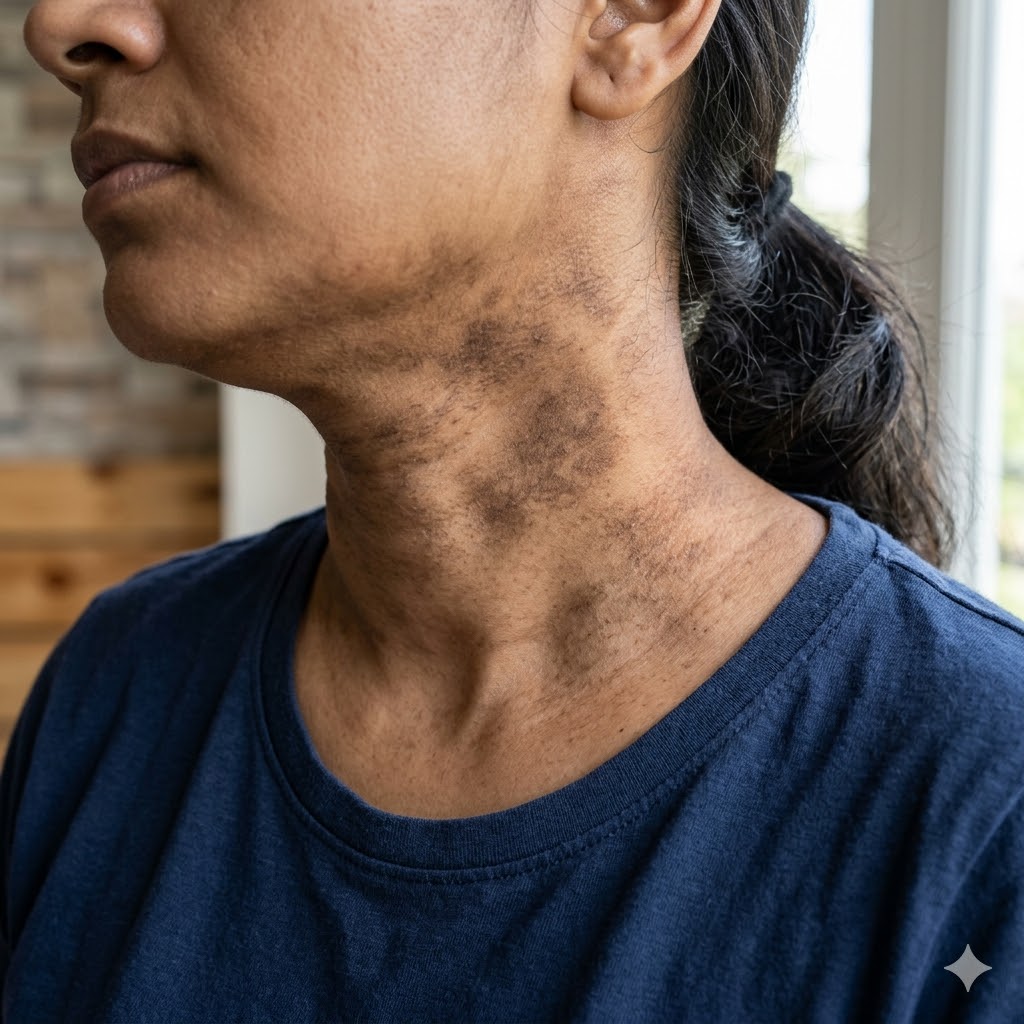
What is Hyperpigmentation on the Neck?
Hyperpigmentation on Neck refers to excess melanin production, leading to darker skin patches or discoloration in the neck area. This condition may appear as:
- Patchy dark areas
- Uniform darkening of the neck
- Rough or uneven skin tone
Neck discoloration often develops slowly and becomes more visible over time compared to the face.
Pigmentation on Neck
Pigmentation on neck occurs when melanin production increases, causing the neck area to become darker than surrounding skin.
This Pigmentation on neck may develop due to sun exposure, hormonal imbalance, or metabolic conditions. One of the major causes is acanthosis nigricans, often linked with insulin resistance and obesity.
Friction, poor hygiene, and buildup of sweat can also worsen pigmentation on neck. In many cases, pigmentation on neck is not harmful but affects appearance and confidence.
Treatment depends on identifying the cause, and dermatologists may recommend creams, chemical peels, or laser therapy. Proper skincare and sunscreen use help control pigmentation on neck effectively.
Symptoms of Dark Neck Pigmentation
Signs of Hyperpigmentation on Neck may vary but commonly include:
Visible darkening or patches
Skin becomes darker in uneven patterns.
Thick or velvety texture
Skin may feel rough or slightly thickened.
Persistent discoloration
Darkness does not reduce with regular cleansing.
Mild irritation
Some individuals may feel slight discomfort.
These symptoms are commonly associated with dark patches on neck and require proper evaluation.
Black Patches on Skin
Black patches on skin occur due to excess melanin production. These black patches on skin may appear on the neck, face, or body folds and vary in intensity.
One of the main causes of black patches on skin is sun exposure, which increases pigment production as protection.
Other causes include hormonal imbalance, friction, poor skincare, and metabolic issues. In some cases, black patches on skin may also be linked to diabetes-related conditions.
Treatment depends on the cause and may include creams, chemical peels, or laser therapy.
Dark Patches on Neck
Dark patches on neck develop due to sun exposure, friction, hormonal changes, or poor hygiene. These dark patches on neck may appear as uneven or thickened skin areas. In some cases, dark patches on neck are linked with insulin resistance.
Without proper care, dark patches on neck may become more visible over time. Treatments include topical creams, exfoliation, and dermatological procedures like chemical peels or lasers. Proper skincare can significantly reduce dark patches on neck.
Causes of Hyperpigmentation on Neck
Hyperpigmentation on Neck can occur due to multiple reasons:
Acanthosis Nigricans
Linked to insulin resistance and obesity.
Sun exposure
UV rays increase melanin production.
Poor hygiene
Accumulation of dirt and dead skin cells.
Friction
From collars or jewelry.
Hormonal imbalance
PCOS or thyroid-related issues.
Genetics
Family history of pigmentation.
Medications
Certain drugs or cosmetics may trigger pigmentation.
How to Reduce Blackness on Neck
How to reduce blackness on neck is a common concern for individuals dealing with uneven skin tone. Sun exposure, friction, and dead skin buildup contribute to this condition.
To reduce blackness on neck, sunscreen use is essential. Gentle exfoliation helps remove dead skin cells.
Dermatologists may prescribe creams containing kojic acid, retinoids, or vitamin C. Advanced treatments like chemical peels, microneedling, or laser therapy may also be used.
Proper hygiene and lifestyle changes help improve results and reduce blackness on neck effectively.
Best Dermatologist Treatments for Neck Pigmentation
Treatment for Hyperpigmentation on Neck depends on severity:
Lifestyle care
- Sunscreen use
- Hygiene maintenance
- Healthy diet
Topical treatments
- Kojic acid
- Glycolic acid
- Retinoids
- Hydroquinone
Chemical peels
Improve skin renewal and reduce pigmentation on neck.
Microneedling
Boosts collagen and enhances serum absorption.
Laser therapy
Targets deep melanin deposits.
Prevention of Hyperpigmentation on Neck
Prevent Hyperpigmentation on Neck by:
- Using sunscreen regularly
- Avoiding friction
- Maintaining hygiene
- Exfoliating gently
- Managing weight and hormones
When to See a Dermatologist
- Dark patches on neck appear suddenly
- Skin becomes thick or rough
- No improvement with home care
FAQs
Why is my neck darker than my face?
It may be due to sun exposure, friction, or Hyperpigmentation on Neck.
Can it go away naturally?
Mild cases improve, but persistent pigmentation needs treatment.
Is it linked to diabetes?
Yes, in some cases of acanthosis nigricans.
Conclusion
Hyperpigmentation on Neck is a common condition caused by multiple internal and external factors. While mild cases improve with skincare, persistent pigmentation requires professional treatment.
Early diagnosis helps restore even skin tone effectively.
About Dr Hera’s Skin & Hair Clinic
Dr Hera’s Skin & Hair Clinic is a leading Dermatology Clinic in Roorkee, offering comprehensive skin, hair, and nail care services. The clinic specializes in treating conditions like Hyperpigmentation on Neck, acne, fungal infections, eczema, hair loss, warts, and vitiligo.
Dr. Hera Tabassum is one of the best dermatologists in Roorkee, known for her expertise in skin, hair, and nail disorders. With extensive clinical experience, she provides personalized and result-oriented treatment plans tailored to individual skin needs.
The clinic focuses on advanced dermatology solutions to improve skin health, appearance, and patient confidence through safe and effective treatments.