
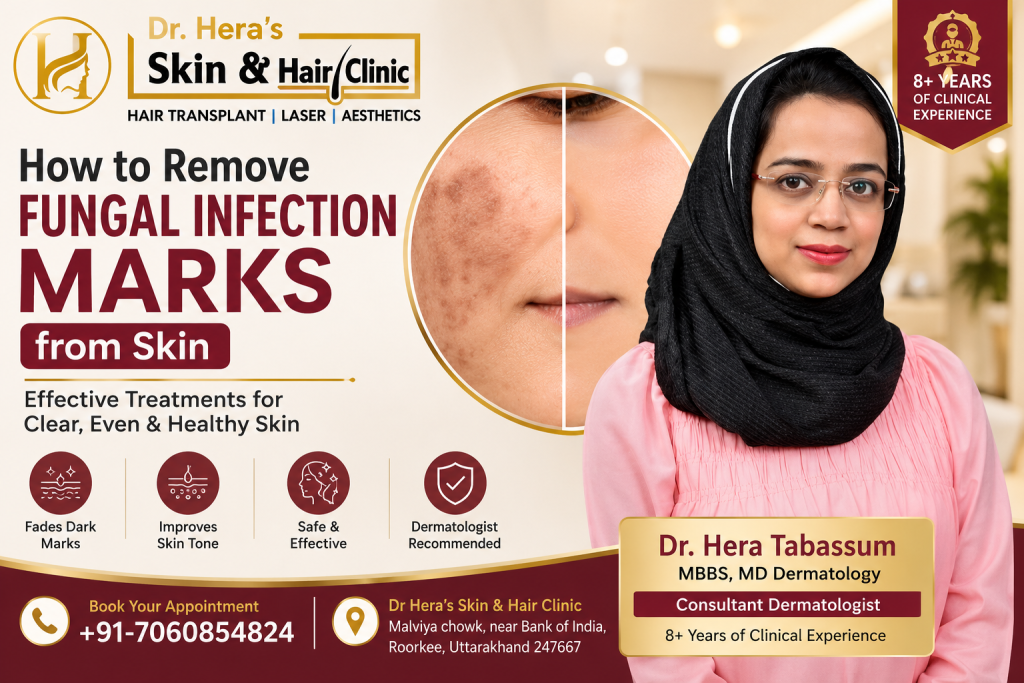
Medically Reviewed by Dr. Hera Tabassum (MBBS, MD Dermatology)
Consultant Dermatologist | 8+ Years of Clinical Experience
Fungal infection marks usually fade with time after the infection has healed. However, depending on your skin type and the severity of the marks, it may take several weeks or months. Treatments such as topical creams, chemical peels, laser therapy, and proper sun protection can help fade the pigmentation faster. Always make sure the fungal infection is completely treated before trying to remove the marks.
Fungal infections like ringworm, athlete’s foot, jock itch, and tinea versicolor often heal with the right treatment, but they can leave behind dark or light marks on the skin.
These marks are usually not active infections or permanent scars. In most cases, they are caused by post-inflammatory hyperpigmentation (PIH), where the skin produces extra pigment during the healing process.
According to Dr. Hera Tabassum, Consultant Dermatologist with over 8 years of experience, most fungal infection marks can improve with proper skincare, sun protection, and dermatologist-recommended treatments.
What Are Fungal Infection Marks?
Fungal infection marks are dark or light patches that remain after a fungal infection has healed.
They are not contagious and usually appear because the skin produces extra pigment while healing.
Common fungal infections that may leave marks include:
- Ringworm
- Tinea versicolor
- Jock itch
- Athlete’s foot
- Candida skin infections
Why Do Fungal Infection Marks Appear?
Fungal infection marks usually develop because of skin inflammation during the healing process.
Common causes include:
- Post-inflammatory hyperpigmentation (PIH)
- Scratching the affected skin
- Delayed treatment
- Sun exposure
- Naturally darker skin tones
Can Fungal Infection Marks Go Away Naturally?
Yes. Most fungal infection marks fade gradually after the infection has completely healed. Mild marks may improve within a few weeks, while deeper pigmentation can take several months.
Good skincare, daily sunscreen, and avoiding scratching can help speed up recovery.
How to Remove Fungal Infection Marks from Skin
The best treatment depends on how dark the marks are, your skin type, and how long they have been present. Most marks improve with proper skincare, while stubborn pigmentation may need professional treatment.
1. Topical Creams for Fungal Infection Marks
Dermatologists may recommend creams that help reduce pigmentation and improve skin tone.
Common ingredients include:
- Azelaic Acid
- Kojic Acid
- Niacinamide
- Vitamin C
- Retinoids (when appropriate)
These ingredients gradually fade dark marks by reducing excess melanin production and supporting healthy skin renewal.
Note: Avoid using skin-lightening creams without a dermatologist’s advice, especially those containing steroids or hydroquinone.
2. Chemical Peels
Chemical peels gently remove damaged skin cells and encourage new skin growth. They can help improve fungal infection marks that do not fade with skincare alone.
Depending on your skin type, your dermatologist may recommend:
- Glycolic Acid Peel
- Lactic Acid Peel
- Mandelic Acid Peel
Related Article: Learn more about the Benefits of Chemical Peels for Skin Rejuvenation and Which Chemical Peel Is Best for Hyperpigmentation?
3. Laser Treatment
Laser treatment may be recommended for deeper or long-standing pigmentation that does not respond to creams or chemical peels.
It targets excess pigment while improving overall skin tone. Multiple sessions may be needed depending on the severity of the marks.
4. Microneedling
Microneedling creates tiny micro-injuries in the skin to stimulate collagen production and improve skin repair.
It is sometimes combined with topical treatments to help improve skin texture and stubborn pigmentation.
5. Daily Sunscreen
Sun exposure can make fungal infection marks darker and slow the healing process.
Apply a broad-spectrum SPF 30 or higher sunscreen every day, especially if the affected area is exposed to sunlight.
Home Remedies for Fungal Infection Marks
Some home remedies may help soothe the skin, but they usually work much slower than medical treatments.
You may try:
- Pure aloe vera gel
- A gentle moisturizer
- A healthy diet rich in vitamins and antioxidants
❌ Avoid applying lemon juice, toothpaste, baking soda, or other harsh DIY remedies, as they can irritate the skin and make pigmentation worse.
Which Treatment Is Best?
There is no single treatment that works for everyone.
| Condition | Recommended Treatment |
| Mild marks | Skincare + Sunscreen |
| Dark pigmentation | Topical creams |
| Stubborn marks | Chemical peels |
| Deep pigmentation | Laser treatment |
| Uneven skin texture | Microneedling |
The right treatment depends on your skin type and the severity of the pigmentation. A dermatologist can help choose the safest and most effective option.
How to Prevent Fungal Infection Marks
Preventing fungal infection marks starts with treating the infection early and taking good care of your skin during recovery.
Here are a few simple tips:
- Treat the fungal infection as soon as symptoms appear.
- Complete the full course of antifungal medication.
- Avoid scratching the affected area.
- Keep your skin clean and dry.
- Wear loose, breathable clothing.
- Apply sunscreen to exposed areas to prevent darkening.
- Moisturize your skin to support healing.
Taking these steps can reduce the risk of pigmentation and help your skin heal more evenly.
Common Mistakes That Make Fungal Infection Marks Worse
- Many people unknowingly delay healing by making these common mistakes:
- Stopping antifungal treatment too early
- Scratching or rubbing the affected skin
- Using steroid creams without medical advice
- Trying harsh home remedies like lemon juice or toothpaste
- Skipping sunscreen after the infection heals
- Picking at peeling skin
Avoiding these mistakes can help your skin recover faster and reduce the chance of long-lasting marks.
When Should You See a Dermatologist?
You should consult a dermatologist if:
- The fungal infection keeps coming back.
- The marks don’t improve after 2–3 months.
- The pigmentation becomes darker or spreads.
- You have pain, swelling, or signs of infection.
- Over-the-counter treatments aren’t helping.
According to Dr. Hera Tabassum, early diagnosis and the right treatment can prevent both recurring fungal infections and long-lasting pigmentation.
Frequently Asked Questions (FAQs)
Can fungal infection marks be removed completely?
Yes. In most cases, fungal infection marks fade with proper treatment, skincare, and sun protection. Some stubborn marks may require dermatologist treatments like chemical peels or laser therapy.
How long do fungal infection marks take to fade?
Mild marks may fade within 4–8 weeks, while deeper pigmentation can take several months, depending on your skin type and treatment.
Can I use home remedies to remove fungal infection marks?
Simple remedies like aloe vera may soothe the skin, but they usually provide limited results. Avoid harsh DIY remedies that can irritate the skin.
Are fungal infection marks permanent?
No. Most fungal infection marks are temporary and gradually fade as your skin renews itself. Permanent scarring is uncommon.
Can chemical peels help remove fungal infection marks?
Yes. Chemical peels may help improve stubborn pigmentation after the fungal infection has completely healed. The right peel should be selected by a dermatologist.
Is laser treatment effective for fungal infection marks?
Laser treatment can improve persistent pigmentation that doesn’t respond to creams or chemical peels. Multiple sessions may be needed for the best results.
Can fungal infection marks spread to other people?
No. The marks themselves are not contagious. However, an active fungal infection can spread through direct skin contact or shared personal items.
Which cream is best for fungal infection marks?
Dermatologists may recommend creams containing ingredients like azelaic acid, niacinamide, kojic acid, vitamin C, or retinoids, depending on your skin type and pigmentation.
Can sunscreen help fade fungal infection marks?
Yes. Daily sunscreen prevents existing marks from becoming darker and supports faster, more even skin healing.
Final Thoughts
Fungal infection marks are usually temporary and improve with time, but proper treatment can help speed up the healing process. The key is to treat the fungal infection completely first, then focus on reducing the remaining pigmentation with the right skincare and dermatologist-recommended treatments.
If your marks persist or become more noticeable, consult a qualified dermatologist for a personalized treatment plan. With early care and consistent skincare, most people can achieve clearer, healthier-looking skin.