
Vitiligo is a long-term skin condition that causes loss of skin color in patches. It happens when melanocytes, the cells responsible for producing melanin, stop working or are destroyed. Melanin gives skin its natural color, so when it decreases, white or pale patches appear.
Vitiligo can affect any part of the body. It may also affect hair and mucous membranes. The condition is not contagious, and it can occur in people of all skin tones.
In many cases, patients notice skin changes without any clear reason, which leads to the common question: why does vitiligo start suddenly?
Why Does Vitiligo Start Suddenly in Some People?
Vitiligo may appear sudden, but in most cases, the process starts slowly inside the body. The visible skin changes appear only when pigment loss becomes noticeable.
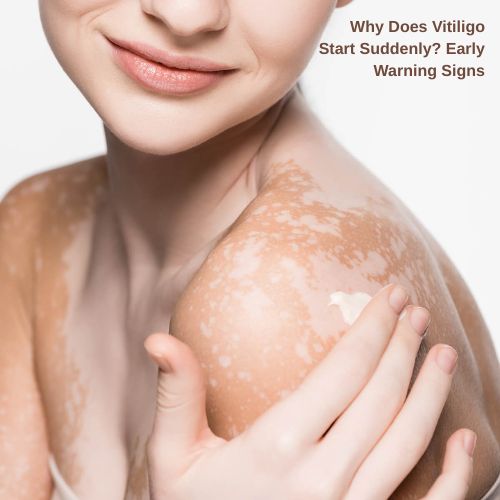
One of the main reasons is an autoimmune response. In this condition, the immune system mistakenly attacks melanocytes. This leads to sudden visible white patches on the skin.
Genetic factors also play an important role. If someone in the family has vitiligo or another autoimmune disease, the risk increases.
Stress is another trigger. Emotional or physical stress can disturb immune balance and may speed up the onset. In some cases, sunburn or skin injury can also trigger new patches.
Other possible causes include:
- Immune system imbalance
- Hormonal changes
- Oxidative stress in skin cells
- Environmental triggers
This is why many people feel that vitiligo starts suddenly, even though the process may have already been active inside the body.
Early Warning Signs of Vitiligo You Should Notice
Early detection is important for managing vitiligo. The first signs are usually subtle and easy to miss.
Common early symptoms include:
- Small white or light patches on the skin
- Gradual loss of skin color in one area
- Pale spots that become more visible under sunlight
- Premature whitening of hair on scalp, eyebrows, or beard
- Irregular patches on hands, face, elbows, or knees
- Slight increase in sensitivity to sunlight in affected areas
These early signs of vitiligo often appear slowly but may look sudden when noticed for the first time.
Common Areas Where Vitiligo First Appears
Vitiligo usually starts in areas exposed to sun or friction. These include:
- Face, especially around eyes and mouth
- Hands and fingers
- Feet and ankles
- Elbows and knees
- Neck and areas of frequent skin contact
In some cases, vitiligo may also begin inside the mouth or on scalp areas.
What Causes Vitiligo? Key Medical Reasons Explained
The exact cause of vitiligo is still being studied. However, medical experts agree that it is mainly an autoimmune condition.
In vitiligo, the immune system mistakenly attacks pigment-producing cells. This leads to gradual or sudden loss of skin color.
Other contributing factors include:
- Genetic predisposition
- Oxidative stress in skin cells
- Environmental triggers
- Association with other autoimmune disorders
Understanding these causes helps explain why vitiligo starts suddenly in some individuals.
Is Sudden Vitiligo Dangerous or Permanent?
Vitiligo is not life-threatening. However, it can affect emotional well-being and confidence due to visible skin changes.
In many cases, vitiligo progresses slowly. In others, it may spread faster during active phases. Early stage vitiligo responds better to treatment compared to advanced cases.
Early medical consultation helps in controlling progression and improving skin appearance.
How Dermatologists Diagnose Early Vitiligo
A dermatologist can identify vitiligo through clinical examination. In many cases, no complex tests are needed.
Common diagnostic methods include:
- Skin examination
- Wood’s lamp test to highlight pigment loss
- Patient history review
- Skin biopsy in rare cases
A proper diagnosis helps rule out other skin conditions that cause white patches.
When Should You See a Doctor for White Skin Patches?
A medical consultation is recommended if:
- White patches appear suddenly and increase in size
- Color loss spreads quickly on the skin
- Hair starts turning white at an early age
- There is a family history of autoimmune disease
- Skin changes occur after stress or illness
Early consultation improves treatment outcomes and helps slow progression.
If you are looking for a dermatologist in Roorkee, timely evaluation can help confirm the condition and start proper management.
Early Treatment Options for Vitiligo
Treatment depends on the stage and spread of the condition. Early treatment can help control progression.
Common treatment options include:
- Topical steroid creams
- Immunomodulator creams
- Phototherapy (narrowband UVB therapy)
- Skin protection from sun exposure
- Supportive lifestyle changes
Early-stage vitiligo responds better to treatment compared to long-standing cases.
Can Vitiligo Be Controlled in Early Stage?
Vitiligo cannot always be fully cured, but early management can slow or stop progression in many cases.
Key control strategies include:
- Reducing stress levels
- Avoiding skin injury or friction
- Protecting skin from UV exposure
- Following dermatologist-prescribed treatment
Regular follow-up with a specialist is important for long-term control.
Myths vs Facts About Sudden Vitiligo
Many misconceptions exist about vitiligo.
Myth: Vitiligo is contagious Fact: It does not spread from person to person
Another Myth: It always spreads quickly Fact: Progress varies from person to person
Myth: It is caused only by stress Fact: Stress is a trigger, not the only cause
Clear understanding helps reduce unnecessary fear.
Conclusion: Why Early Awareness Matters in Vitiligo
Understanding why vitiligo starts suddenly helps in early detection and better management. The first signs are often subtle but important. Early consultation with a dermatologist improves control and reduces progression.
If you are noticing white patches or early signs of vitiligo, consulting a specialist is the right step.
For expert care, Dr Hera’s Skin & Hair Clinic is a well-known dermatology center offering advanced skin treatments. It is a trusted choice for people looking for a dermatologist in Roorkee.
Dr. Hera Tabassum is considered among the experienced skin specialists in Roorkee. She provides treatment for skin, hair, and nail conditions including acne, eczema, fungal infections, hair loss, warts, and vitiligo. The clinic focuses on personalized care and evidence-based treatment plans to improve patient outcomes.