
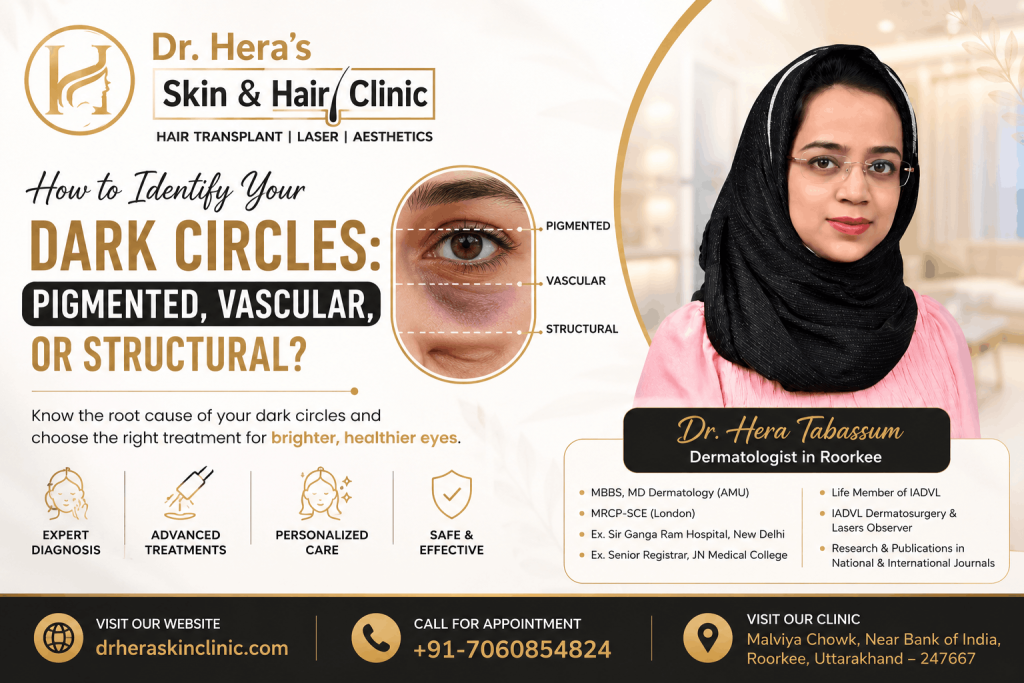
Dark circles under the eyes are one of the most common cosmetic concerns affecting both men and women. While many people assume that lack of sleep is the only cause, dark circles can develop due to multiple underlying factors such as pigmentation, visible blood vessels, volume loss, genetics, aging, allergies, and lifestyle habits.
Understanding the type of dark circles you have is the first step toward choosing the right treatment. At Dr Hera’s Skin & Hair Clinic, patients receive personalized diagnosis and advanced treatment plans from an experienced dermatologist in Roorkee to effectively address different causes of under-eye darkness.
If you’re looking for the best dermatologist in Roorkee for dark circle treatment in Roorkee, this comprehensive guide will help you identify whether your dark circles are pigmented, vascular, or structural and what treatment options may work best.
Understanding Dark Circles
Dark circles are discolorations or shadows that appear beneath the eyes. Since the skin under the eyes is much thinner than other facial areas, underlying issues become more visible.
Dark circles can be classified into three major categories:
- Pigmented Dark Circles
- Vascular Dark Circles
- Structural Dark Circles
Many patients actually have a combination of two or more types, making professional evaluation important.
Why Do Dark Circles Occur?
Several factors contribute to under-eye darkness:
- Genetics
- Aging
- Sun exposure
- Hyperpigmentation
- Poor sleep habits
- Stress
- Allergies
- Eye rubbing
- Dehydration
- Nutritional deficiencies
- Volume loss under the eyes
Consulting a qualified skin specialist in Roorkee can help identify the exact cause and recommend targeted treatments.
Type 1: Pigmented Dark Circles
What Are Pigmented Dark Circles?
Pigmented dark circles occur when excess melanin deposits develop around the eyes. These circles typically appear brown, dark brown, or black in color.
They are particularly common among individuals with medium to darker skin tones.
How to Identify Pigmented Dark Circles
You may have pigmented dark circles if:
- The area appears brown or black.
- The darkness remains visible regardless of lighting.
- Stretching the skin does not significantly change the appearance.
- Family members have similar pigmentation.
- Dark circles worsen with sun exposure.
Common Causes
Genetics
Some people naturally produce more melanin around the eye area.
Sun Damage
UV exposure stimulates melanin production, worsening pigmentation.
Excessive Eye Rubbing
Frequent rubbing due to allergies or irritation can trigger pigmentation.
Post-Inflammatory Hyperpigmentation
Previous eczema, dermatitis, or allergies may leave behind pigmentation.
Treatment Options for Pigmented Dark Circles
At Dr Hera’s Skin & Hair Clinic, treatment may include:
Chemical Peels
Help reduce excess pigmentation and improve skin brightness.
Laser Treatments
Advanced laser procedures target melanin deposits.
Medical Skin Care
Prescription creams and serums may help regulate pigment production.
Sun Protection
Daily sunscreen is essential for preventing recurrence.
These treatments are commonly recommended by experienced skin doctors in Roorkee for long-term improvement.
Type 2: Vascular Dark Circles
What Are Vascular Dark Circles?
Vascular dark circles result from visible blood vessels beneath the thin under-eye skin.
They often appear:
- Blue
- Purple
- Pink
- Red
These circles become more noticeable when blood flow is affected or the skin becomes thinner.
How to Identify Vascular Dark Circles
You may have vascular dark circles if:
- The area appears bluish or purple.
- Dark circles worsen when tired.
- They become more visible after poor sleep.
- Stretching the skin slightly reduces their appearance.
- They are accompanied by puffiness.
Common Causes
Lack of Sleep
Poor sleep causes blood vessels to dilate.
Stress
Stress can affect circulation and worsen under-eye darkness.
Thin Under-Eye Skin
Naturally thin skin makes blood vessels more visible.
Allergies
Chronic allergies may lead to vascular congestion.
Dehydration
Dehydration can make blood vessels appear more prominent.
Treatment Options for Vascular Dark Circles
Medical Eye Creams
Specialized formulations improve circulation and skin quality.
Laser Treatments
Vascular lasers target visible blood vessels.
Lifestyle Changes
- Better sleep
- Hydration
- Stress management
Allergy Management
Treating allergies often improves vascular dark circles.
An experienced dermatologist in Roorkee can determine whether vascular treatments are suitable for your condition.
Type 3: Structural Dark Circles
What Are Structural Dark Circles?
Structural dark circles are not caused by pigmentation or blood vessels.
Instead, they result from facial anatomy creating shadows beneath the eyes.
These shadows become more prominent due to:
- Aging
- Volume loss
- Tear trough deformities
- Bone structure
How to Identify Structural Dark Circles
You may have structural dark circles if:
- The darkness changes depending on lighting.
- Looking upward reduces the appearance.
- Shadows become deeper with age.
- Makeup provides limited improvement.
- The under-eye area appears hollow.
Common Causes
Aging
Loss of collagen and fat creates hollowness.
Genetics
Some individuals naturally have deeper tear troughs.
Facial Anatomy
Bone structure influences shadow formation.
Weight Loss
Rapid weight loss can reduce facial volume.
Treatment Options for Structural Dark Circles
Dermal Fillers
Fillers restore lost volume and reduce shadows.
Skin Tightening Procedures
Improve skin quality and firmness.
Collagen-Stimulating Treatments
Promote natural rejuvenation.
Combination Treatments
Many patients benefit from combining fillers and skin rejuvenation procedures.
At Dr Hera’s Skin & Hair Clinic, customized treatment plans are developed after detailed assessment.
Mixed Dark Circles: The Most Common Situation
Many patients do not fit neatly into one category.
For example:
- Pigmentation + vascular component
- Structural + pigmentation component
- Vascular + structural component
This is why self-diagnosis often leads to ineffective treatments.
Consulting the best skin specialist in Roorkee ensures accurate diagnosis and personalized care.
Professional Diagnosis Matters
Treating the wrong type of dark circles can lead to disappointing results.
For example:
- Pigmentation creams won’t fix structural hollowness.
- Fillers won’t remove pigmentation.
- Sleep improvement won’t resolve genetic pigmentation.
A professional dermatological evaluation helps identify:
- Underlying cause
- Severity
- Contributing factors
- Most suitable treatment options
Preventing Dark Circles Naturally
While some causes are genetic, healthy habits can help reduce worsening.
Sleep Well
Aim for 7-8 hours of quality sleep.
Stay Hydrated
Proper hydration improves skin appearance.
Use Sunscreen
Protects against pigmentation.
Manage Allergies
Reduces eye rubbing and inflammation.
Eat a Balanced Diet
Include:
- Vitamin C
- Iron-rich foods
- Antioxidants
Avoid Excessive Screen Time
Eye strain can worsen under-eye fatigue.
Advanced Dark Circle Treatments in Roorkee Available at Dr Hera’s Skin & Hair Clinic
Patients seeking professional skin treatment in Roorkee may benefit from advanced solutions such as:
- Chemical peels
- Laser treatments
- Pigmentation correction
- Under-eye rejuvenation
- Skin brightening therapies
- Collagen induction procedures
- Customized dermatological skincare plans
Each treatment plan is tailored to the patient’s skin type and underlying cause.
Why Choose Dr Hera Tabassum for Dark Circle Treatment?
| Details | Information |
| Doctor Name | Dr. Hera Tabassum |
| Specialization | Dermatologist, Skin, Hair, Laser & Aesthetic Specialist |
| Qualification | MBBS, MD Dermatology (AMU) |
| International Certification | MRCP-SCE (London) |
| Hospital Experience | Ex. Sir Ganga Ram Hospital, New Delhi |
| Clinical Experience | Ex. Senior Registrar, JN Medical College |
| Special Expertise | Skin Disorders, Hair Treatments, Laser Procedures & Aesthetic Treatments |
| Professional Membership | Life Member of IADVL |
| Advanced Training | IADVL Dermatosurgery & Lasers Observer |
| Research & Publications | Published in National & International Journals |
| Consultation Number | +91 7060854824 |
| Website | drheraskinclinic.com |
| Email Address | dr.heraskinandhairclinic@gmail.com |
| Clinic Location | Malviya Chowk, Roorkee, Uttarakhand – 247667 |
When Should You Visit a Dermatologist?
Consider consulting a skin doctor in Roorkee if:
- Dark circles persist despite adequate sleep.
- Home remedies are not working.
- Pigmentation is increasing.
- Under-eye hollowness is becoming more noticeable.
- Dark circles affect your confidence.
- You want a professional treatment plan.
Early diagnosis often leads to better treatment outcomes.
Frequently Asked Questions
Q1. Can dark circles be completely removed?
Results vary depending on the underlying cause. Many patients experience significant improvement with appropriate treatment.
Q2. Which type of dark circles is hardest to treat?
Mixed dark circles often require combination therapies for optimal results.
Q3. Are laser treatments safe for dark circles?
When performed by a qualified dermatologist, laser treatments can be safe and effective for suitable candidates.
Q4. Can lack of sleep cause permanent dark circles?
Chronic sleep deprivation may worsen vascular dark circles, but permanent dark circles usually involve additional factors.
Q5. How do I know which type of dark circles I have?
A professional consultation with a dermatologist is the most reliable way to determine the exact cause.