
Your skin can feel dry, tight, or dull for different reasons. Many people assume that every dry-looking face simply needs a moisturizer. In reality, skin hydration and skin moisturization are not the same. Understanding the Difference Between Skin Hydration and Skin Moisturization helps you choose products that match your skin’s actual needs.
Hydration focuses on increasing the water content within the skin. Moisturization focuses on reducing water loss by strengthening the skin barrier. Both are essential for healthy-looking skin, but they work differently. Using only one approach may not completely address your concern.
If your skin feels oily but still tight, dehydration may be the issue. If it feels rough, flaky, and uncomfortable, your skin may need better moisturization. Learning this difference helps you build a skincare routine that supports long-term skin health instead of providing only temporary relief.
This guide explains the Difference Between Skin Hydration and Skin Moisturization, the signs of each condition, and simple ways to maintain balanced skin.
What Is Skin Hydration?
Skin hydration refers to the amount of water present within the outer layers of your skin. Proper hydration allows skin cells to stay flexible, smooth, and healthy. Hydrated skin usually looks fresh, plump, and naturally radiant.
Water alone does not remain in the skin for long. The skin depends on natural moisturizing factors (NMFs), humectants, and a healthy skin barrier to maintain adequate hydration throughout the day.
Ingredients such as hyaluronic acid, glycerin, aloe vera, panthenol, and sodium PCA attract water into the skin. These ingredients are commonly called humectants because they help bind water to the skin’s surface.
When hydration levels decrease, the skin may appear tired even if it produces enough natural oil. This is why oily skin can also become dehydrated.
Common Signs of Dehydrated Skin
- Skin feels tight after cleansing.
- The complexion appears dull.
- Fine dehydration lines become noticeable.
- Makeup settles into fine lines.
- The skin feels uncomfortable despite looking oily.
- The face lacks a healthy glow.
These signs often improve after using hydrating products that replenish water instead of adding oil.
What Is Skin Moisturization?
Skin moisturization focuses on protecting the skin barrier and preventing water from escaping. A moisturizer forms a protective layer that reduces transepidermal water loss (TEWL). This process helps the skin remain soft and comfortable.
Unlike hydration, moisturization mainly works with lipids, oils, emollients, and occlusive ingredients. These ingredients smooth rough skin and improve barrier function.
Common moisturizing ingredients include ceramides, shea butter, squalane, dimethicone, mineral oil, and petrolatum. These ingredients support the skin’s natural protective barrier and reduce excessive dryness.
People with naturally dry skin often require moisturizers daily because their skin produces less natural oil.
Common Signs Your Skin Needs Moisturization
- Persistent roughness.
- Visible dry patches.
- Flaking skin.
- Skin feels uncomfortable in cold weather.
- Itching caused by dryness.
- Cracked or irritated skin barrier.
Moisturization does not replace hydration. Instead, it helps preserve the hydration already present inside the skin.
Difference Between Skin Hydration and Skin Moisturization
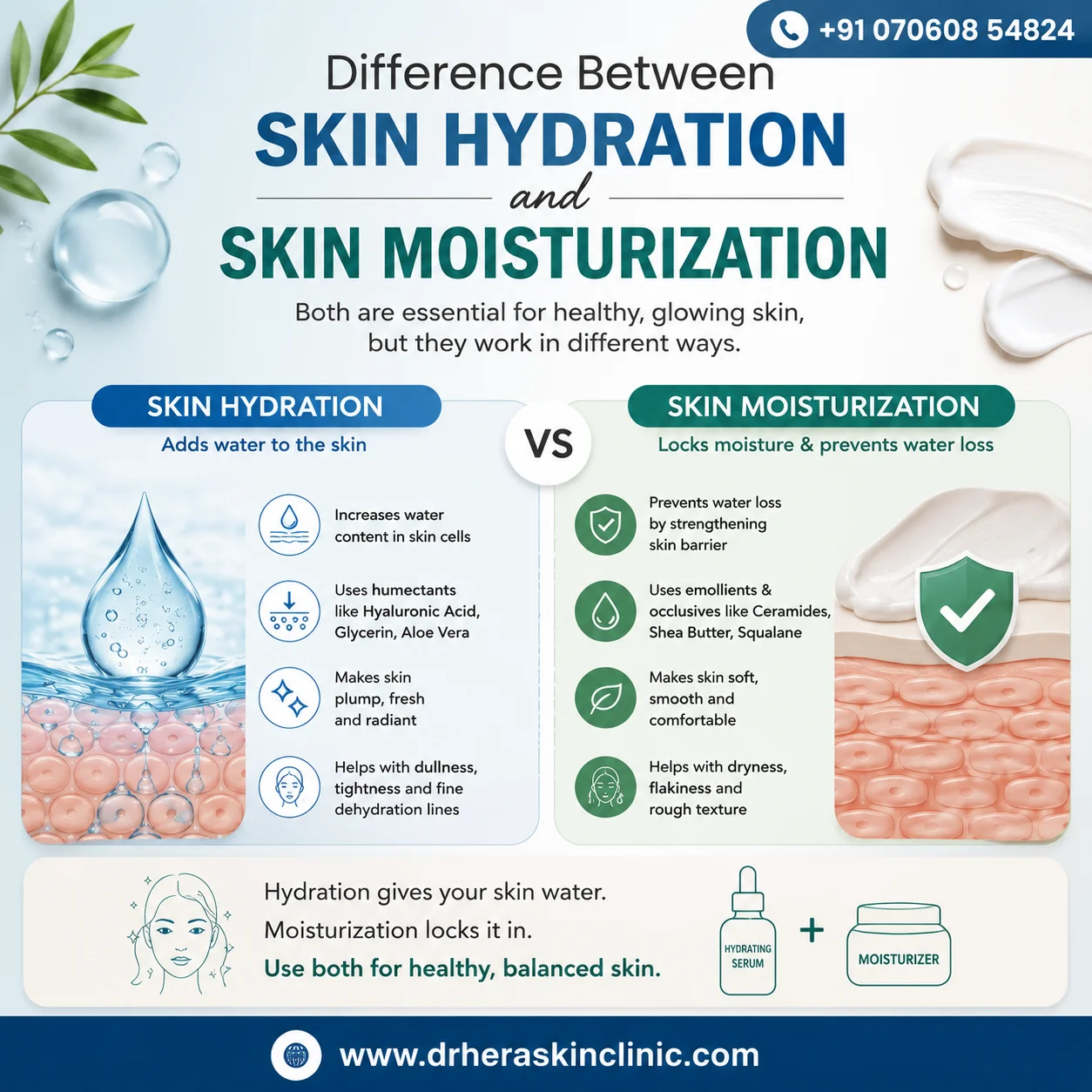
The Difference Between Skin Hydration and Skin Moisturization becomes easier to understand once you know their individual roles.
| Skin Hydration | Skin Moisturization |
|---|---|
| Adds water to the skin. | Helps retain existing moisture. |
| Uses humectant ingredients. | Uses emollients and occlusive ingredients. |
| Improves skin plumpness. | Improves skin softness. |
| Helps dull, dehydrated skin. | Helps rough and flaky skin. |
| Supports healthy water balance. | Strengthens the skin barrier. |
The Difference Between Skin Hydration and Skin Moisturization does not mean you must choose one over the other. Most healthy skincare routines include both steps because hydrated skin still needs protection against water loss.
Dry Skin and Dehydrated Skin Are Not the Same
Many people confuse dry skin with dehydrated skin. They are different conditions.
Dry skin is a skin type. It produces less natural oil. Dehydrated skin is a temporary condition caused by reduced water content. A person with oily skin, combination skin, or normal skin can still experience dehydration.
This distinction is one of the most important aspects of understanding the Difference Between Skin Hydration and Skin Moisturization.
For example, someone with oily skin may notice excess shine on the forehead but still experience tightness after washing the face. In this situation, the skin usually needs hydration rather than heavy creams.
On the other hand, someone with naturally dry skin often benefits from richer moisturizers that reinforce the skin barrier and reduce water loss.
Why Your Skin Needs Both Hydration and Moisturization?
Hydration and moisturization work together. One step supports the other.
If you only hydrate your skin, water can gradually evaporate through the skin surface. Without a healthy barrier, the benefits may not last long.
If you apply only a moisturizer without improving hydration, the skin may still feel tight because there is not enough water inside the skin cells.
This is why dermatologists often recommend layering products correctly. A hydrating serum is usually applied first. A moisturizer follows to seal in hydration and support the skin barrier.
Understanding the Difference Between Skin Hydration and Skin Moisturization allows you to select products based on your skin’s condition instead of following trends.
Ingredients That Improve Skin Hydration
Hydrating ingredients attract and bind water within the skin.
- Hyaluronic Acid
- Glycerin
- Aloe Vera
- Panthenol (Vitamin B5)
- Sodium PCA
- Betaine
- Polyglutamic Acid
These ingredients are commonly found in lightweight serums, toners, and gel-based moisturizers. They suit many skin types because they deliver hydration without making the skin feel heavy.
Ingredients That Help Moisturize the Skin
Moisturizing ingredients reduce water loss and support the skin’s protective barrier. They are especially useful for people with dry or sensitive skin.
- Ceramides
- Shea Butter
- Squalane
- Jojoba Oil
- Dimethicone
- Petrolatum
- Mineral Oil
These ingredients help keep the skin soft and comfortable. They also protect against environmental factors that may weaken the skin barrier over time.
How to Build a Simple Skincare Routine
A balanced skincare routine includes both hydration and moisturization. The exact products may vary depending on your skin type, but the order of application is equally important.
Morning Routine
- Cleanse your face with a gentle cleanser.
- Apply a hydrating serum containing humectants.
- Use a moisturizer suitable for your skin type.
- Finish with a broad-spectrum sunscreen.
Night Routine
- Remove sunscreen and makeup.
- Wash your face with a mild cleanser.
- Apply a hydrating serum or essence.
- Seal it with a moisturizer.
Following these simple steps helps maintain healthy hydration levels while protecting the skin barrier.
Choosing Products Based on Your Skin Type
The right products depend on your skin type and current skin condition.
Oily Skin
Choose lightweight, non-comedogenic hydrating serums and gel-based moisturizers. Oily skin still benefits from hydration even if it produces excess sebum.
Dry Skin
Look for creams containing ceramides, shea butter, and squalane. These ingredients improve barrier function and reduce moisture loss.
Combination Skin
Use lightweight hydrating products throughout the face. Apply a richer moisturizer only on dry areas if needed.
Sensitive Skin
Select fragrance-free products with barrier-supporting ingredients. Avoid harsh cleansers that may increase irritation or dryness.
Simple Habits That Support Healthy Skin
Skincare products work best when combined with healthy daily habits.
- Drink adequate fluids throughout the day.
- Avoid very hot showers.
- Use a gentle cleanser instead of harsh soaps.
- Apply moisturizer after cleansing while the skin is slightly damp.
- Protect your skin from excessive sun exposure with sunscreen.
- Maintain a balanced diet that includes healthy fats and nutrient-rich foods.
These habits support the skin barrier and help maintain hydration naturally.
Common Myths About Skin Hydration and Moisturization
Myth 1: Drinking Water Alone Fixes Dry Skin
Staying hydrated is important for overall health. However, skin health also depends on a healthy skin barrier and appropriate skincare products.
Myth 2: Oily Skin Does Not Need Moisturizer
Even oily skin requires moisturization. Skipping moisturizer may leave the skin feeling uncomfortable and can affect barrier function.
Myth 3: A Moisturizer Can Replace a Hydrating Serum
Hydrating serums and moisturizers serve different purposes. Many people benefit from using both products together.
Myth 4: All Dry-Looking Skin Needs Heavy Creams
If the skin is dehydrated rather than dry, adding hydration may be more beneficial than immediately using a heavier moisturizer.
When Should You Consult a Dermatologist?
Occasional dryness or dehydration usually improves with a suitable skincare routine. However, professional evaluation is recommended if you notice:
- Persistent dryness despite regular skincare.
- Redness or irritation that does not improve.
- Painful cracks in the skin.
- Recurring itching.
- Symptoms of eczema or other chronic skin conditions.
- Sudden changes in your skin without an obvious cause.
A dermatologist can identify the underlying cause and recommend treatment based on your skin type and medical history.
Expert Advice from Dr. Hera Tabassum
Understanding the Difference Between Skin Hydration and Skin Moisturization is an important step toward maintaining healthy skin. According to Dr. Hera Tabassum, skincare should always be tailored to an individual’s skin type, lifestyle, and existing skin concerns. Self-diagnosing persistent dryness or irritation may delay appropriate care.
Dr. Hera Tabassum, Chief Dermatologist, Cosmetologist, and Trichologist, completed her MBBS and MD in Dermatology from JNMCH, AMU (Aligarh). She also holds the Speciality Certificate Examination in Dermatology (MRCP-SCE) from the Royal College of Physicians, London. Her clinical training includes dermatosurgery, aesthetic dermatology, and laser procedures. She has served as Senior Registrar at JN Medical College and has worked with leading hospitals, including Sir Ganga Ram Hospital, New Delhi. She has contributed to national and international dermatology publications and is a life member of IADVL.
For professional consultation or appointment-related information, you may contact:
Dr. Hera Tabassum
Chief Dermatologist, Cosmetologist & Trichologist
E-mail: info@drheraskinclinic.com
Frequently Asked Questions
Can oily skin be dehydrated?
Yes. Oily skin can lack water while still producing excess oil. In such cases, hydrating products can help improve skin comfort without making the skin greasy.
Which should I apply first, a hydrating serum or a moisturizer?
Apply a hydrating serum first on clean skin. Follow it with a moisturizer to help reduce water loss.
Is hyaluronic acid a moisturizer?
Hyaluronic acid is primarily a humectant. It attracts water to the skin. A moisturizer is often applied afterward to help retain that hydration.
Can I use both hydrating and moisturizing products every day?
Yes. Many daily skincare routines include both products because they support different aspects of skin health.
What is the Difference Between Skin Hydration and Skin Moisturization?
The Difference Between Skin Hydration and Skin Moisturization is that hydration increases the skin’s water content, while moisturization helps prevent water loss by strengthening the skin barrier. Most people benefit from using both for balanced and healthy-looking skin.
Conclusion
The Difference Between Skin Hydration and Skin Moisturization is simple once you understand their roles. Hydration supplies water to the skin. Moisturization helps keep that water from escaping. Together, they support a smoother texture, a stronger skin barrier, and a healthier complexion.
Instead of choosing one over the other, focus on your skin’s individual needs. A consistent skincare routine, suitable ingredients, and guidance from a qualified dermatologist can help you maintain comfortable and healthy skin throughout the year.