
The skin around your eyes is the thinnest on your face. It moves every time you blink, smile, or squint. Because of this, skin wrinkling around eyes is often one of the first visible signs of aging. However, aging is not the only reason. Sun exposure, dry skin, dehydration, repeated facial expressions, smoking, and lifestyle habits can also lead to early fine lines.
Understanding the cause is the first step toward choosing the right treatment. In many cases, good skincare and healthy habits help delay wrinkles. For deeper lines, a dermatologist can recommend treatments based on your skin type and concerns.
Quick Answer
Skin wrinkling around eyes usually happens because the delicate eye area gradually loses collagen, elastin, and moisture. Daily facial movements, UV exposure, lack of sleep, dehydration, smoking, and natural aging can speed up this process. Early care, sun protection, and dermatologist-guided treatments can improve the appearance of fine lines and help maintain healthier skin.
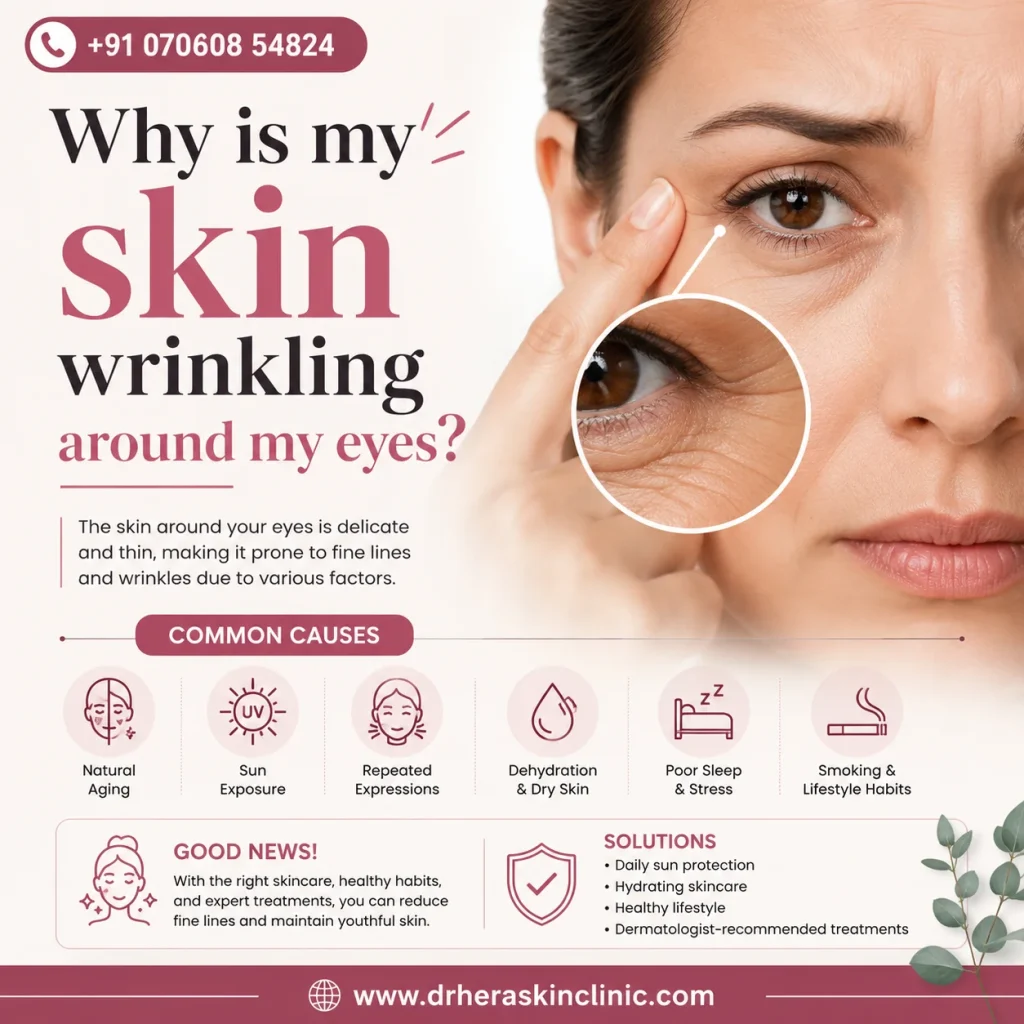
Why Does the Skin Around the Eyes Wrinkle First?
The eye area ages faster than most parts of the face. There are several reasons for this.
- The skin is much thinner than other facial areas.
- There are fewer oil glands to keep it naturally moisturized.
- You blink thousands of times every day.
- Smiling and squinting create repeated skin folds.
- Collagen production naturally slows with age.
These factors make skin wrinkling around eyes more noticeable, even before wrinkles appear on the forehead or cheeks.
If your skin also feels dry or rough, following a proper skincare routine becomes even more important. Learn how to protect your skin barrier with the right dry skin care routine.
Common Causes of Skin Wrinkling Around Eyes
1. Natural Aging
As you grow older, your body produces less collagen and elastin. These proteins keep the skin firm and flexible. Reduced collagen makes the skin thinner and less able to bounce back after facial movements. This is the most common cause of skin wrinkling around eyes.
2. Sun Exposure
Ultraviolet (UV) rays break down collagen faster than normal aging. Spending time outdoors without sunscreen or sunglasses increases the risk of premature fine lines and crow’s feet.
Daily sun protection is one of the simplest ways to slow visible aging. It also helps reduce other skin concerns caused by UV damage.
3. Dry Skin
Dry skin makes existing lines appear deeper. When the skin barrier loses moisture, the eye area looks dull and creased.
Using a gentle moisturizer formulated for delicate skin can improve hydration and make fine lines less noticeable.
4. Repeated Facial Expressions
Smiling, laughing, blinking, and squinting are normal facial movements. Over time, repeated muscle activity creates expression lines. These are commonly known as crow’s feet.
Initially, these lines disappear when your face relaxes. As collagen decreases, they may become visible even when your face is at rest.
5. Dehydration
Dehydration does not directly cause wrinkles, but it can make them more noticeable. Skin that lacks water often appears tired, less plump, and rough around the eyes.
6. Poor Sleep
Your skin performs many repair processes while you sleep. Inadequate sleep may affect skin recovery and make tired-looking eyes and fine lines more obvious.
7. Smoking
Smoking reduces blood flow to the skin and increases oxidative stress. Over time, these changes contribute to faster collagen breakdown and premature aging around the eyes.
8. Genetics
Some people naturally develop wrinkles earlier than others. Family history can influence how quickly collagen decreases and how the skin responds to aging.
Early Wrinkles vs. Normal Aging
| Normal Aging | Premature Wrinkles |
|---|---|
| Usually appear after the late 20s or 30s. | Can appear in the early 20s. |
| Develop gradually over time. | May become noticeable faster. |
| Mainly caused by natural collagen loss. | Often linked with UV damage, smoking, dehydration, or lifestyle factors. |
| Fine lines slowly deepen with age. | Wrinkles may appear more pronounced at a younger age. |
If you notice early signs of aging, consulting a qualified dermatologist can help identify the underlying cause and recommend suitable treatment options.
Why Did Wrinkles Around My Eyes Appear Suddenly?
Many people feel that wrinkles appeared overnight. In reality, they usually become noticeable after changes in the skin’s hydration or elasticity.
Possible reasons include:
- Recent dehydration.
- Dry weather.
- Increased sun exposure.
- Weight loss.
- Poor sleep.
- Stress.
- Using harsh skincare products.
- Frequently rubbing your eyes.
If the change is sudden, severe, or accompanied by redness, irritation, or persistent dryness, it is best to seek medical advice instead of relying only on home remedies. You can also read more about when you should consult a dermatologist for persistent skin concerns.
Can a Nutritional Deficiency Cause Eye Wrinkles?
This is a common question. A single vitamin deficiency is rarely the direct cause of skin wrinkling around eyes. However, poor nutrition can affect overall skin health and collagen production.
Nutrients that support healthy skin include:
- Vitamin C for collagen formation.
- Protein for skin repair.
- Healthy fats for maintaining the skin barrier.
- Zinc and copper for normal skin function.
- Adequate water intake for hydration.
A balanced diet works best alongside a consistent skincare routine. Supplements should only be taken after consulting a healthcare professional if a deficiency is suspected.
Can You Rebuild Collagen Around the Eyes?
Collagen naturally decreases with age. While no treatment can completely restore youthful skin overnight, several options can stimulate collagen production and improve skin texture.
Depending on your skin condition, a dermatologist may recommend:
- Prescription retinoids.
- Vitamin C-based skincare.
- Peptide-containing eye creams.
- Microneedling.
- Laser skin resurfacing.
- Platelet-rich plasma (PRP) therapy.
If you want to understand how collagen stimulation works, read our guide on boosting collagen production for healthier skin.
Dermatologist Treatments for Skin Wrinkling Around Eyes
The best treatment depends on your age, skin quality, wrinkle depth, and overall skin health.
| Treatment | Best For |
|---|---|
| Medical-grade skincare | Early fine lines |
| Chemical peels | Mild skin texture changes |
| Microneedling | Collagen stimulation |
| Laser resurfacing | Moderate wrinkles and skin renewal |
| Botulinum toxin injections | Dynamic crow’s feet |
| Dermal fillers | Volume loss around the eyes |
Every treatment should begin with a detailed skin assessment. This helps select the safest and most suitable option for your skin.
You can also learn about modern anti-aging treatment options available for different age groups.
Daily Skincare Routine for the Eye Area
Morning Routine
- Wash your face with a gentle cleanser.
- Apply a hydrating eye cream.
- Use a moisturizer suitable for your skin.
- Finish with broad-spectrum sunscreen.
- Wear sunglasses when outdoors.
Night Routine
- Remove makeup completely.
- Cleanse gently.
- Apply dermatologist-recommended retinoid if advised.
- Use a nourishing moisturizer before bed.
Consistency matters more than using many products at once.
How to Prevent Skin Wrinkling Around Eyes?
You cannot completely stop aging, but you can slow premature skin changes.
- Apply sunscreen every day.
- Avoid rubbing your eyes.
- Keep the eye area moisturized.
- Stay hydrated.
- Sleep for adequate hours.
- Eat a balanced diet.
- Avoid smoking.
- Wear UV-protective sunglasses outdoors.
Healthy daily habits often make a noticeable difference over time.
Home Remedies: What Helps and What Doesn’t
Some home remedies may temporarily improve hydration. They do not permanently remove wrinkles.
Helpful options include:
- Cold compresses for temporary puffiness.
- Using a gentle moisturizer.
- Running a humidifier in dry weather.
- Following a regular skincare routine.
Be cautious with DIY remedies that contain lemon juice, toothpaste, or other harsh ingredients. These can irritate the delicate eye area.
Myths vs Facts
| Myth | Fact |
|---|---|
| Wrinkles only affect older adults. | Fine lines can appear in younger people due to sun damage and lifestyle habits. |
| Drinking more water removes wrinkles. | Hydration supports healthy skin but does not erase established wrinkles. |
| Expensive creams always work better. | The ingredients matter more than the price. |
| Only cosmetic procedures improve wrinkles. | Daily skincare and sun protection also play an important role. |
When Should You See a Dermatologist?
Book a skin evaluation if you notice:
- Wrinkles appearing at a very young age.
- Persistent dryness around the eyes.
- Redness or irritation that does not improve.
- Deep lines affecting your confidence.
- Dark circles or volume loss with wrinkles.
A dermatologist can identify contributing factors and recommend treatments suited to your skin rather than suggesting a one-size-fits-all solution.
Frequently Asked Questions
Why is my skin wrinkling around my eyes all of a sudden?
Temporary dehydration, poor sleep, dry weather, stress, recent weight loss, sun exposure, or harsh skincare products can make existing fine lines more visible.
Can dehydration cause skin wrinkling around eyes?
Yes. Dehydration can make the skin appear less plump, making fine lines easier to notice. Restoring hydration may improve their appearance.
Can eye wrinkles disappear naturally?
Very fine dehydration lines may improve with proper skincare. Established wrinkles usually require consistent skincare or dermatologist-recommended treatments for noticeable improvement.
At what age do wrinkles around the eyes usually start?
Many people notice fine lines in their late twenties or thirties. Genetics, sun exposure, and lifestyle habits can influence when they appear.
Can sunscreen help prevent eye wrinkles?
Yes. Daily sunscreen helps reduce UV-related collagen breakdown and is one of the most effective ways to slow premature skin aging.
Conclusion
Skin wrinkling around eyes is a common concern and often develops because the eye area is naturally delicate. Aging is an important factor, but sun exposure, dehydration, dry skin, smoking, poor sleep, and repeated facial expressions can make wrinkles appear earlier.
Simple habits like daily sunscreen, gentle skincare, good hydration, and healthy lifestyle choices support long-term skin health. If wrinkles become more noticeable or appear earlier than expected, consulting a qualified skin specialist can help you understand the cause and choose the most appropriate treatment.