
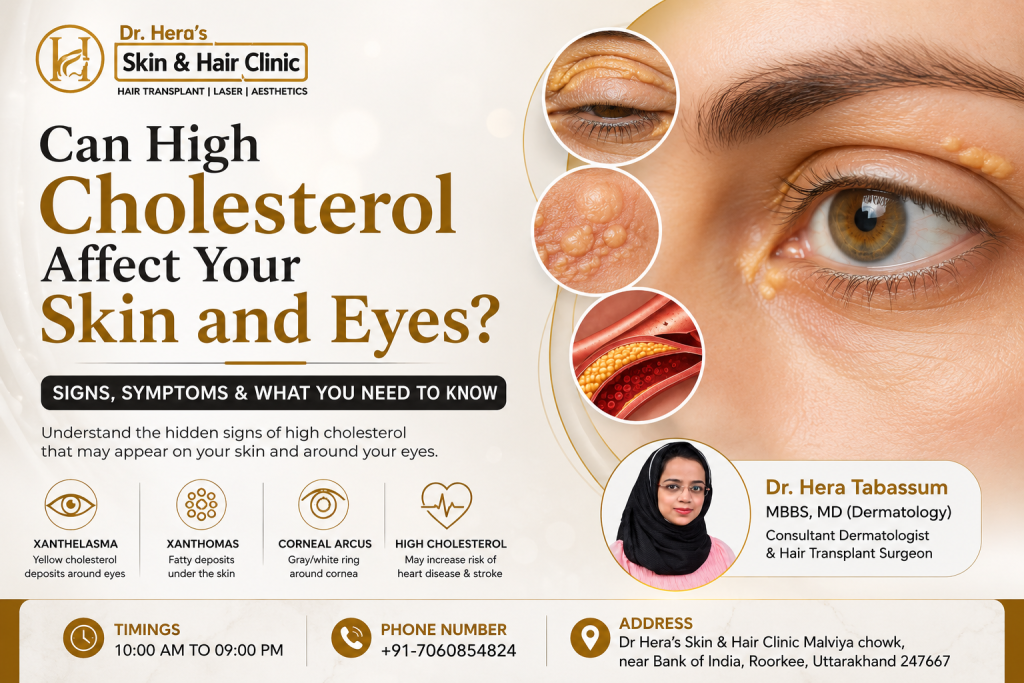
Most people think high cholesterol only affects the heart. However, cholesterol problems can sometimes show visible signs on the skin and eyes long before serious cardiovascular symptoms develop.
High cholesterol is often called a “silent condition” because it usually doesn’t cause pain or obvious symptoms. Yet in some cases, excess cholesterol and triglycerides can accumulate in the skin, around the eyes, and even within blood vessels, creating noticeable warning signs.
Understanding these signs can help identify potential health issues earlier and reduce the risk of heart disease, stroke, and other complications.
In this guide, we’ll explore how high cholesterol affects the skin and eyes, what symptoms to look for, and when you should seek medical advice.
What Is High Cholesterol?
Cholesterol is a waxy, fat-like substance that your body needs to build cells, hormones, and vitamin D. It is naturally produced by the liver and also obtained from certain foods. While cholesterol is essential for many bodily functions, excessive levels can increase the risk of heart disease, stroke, and other cardiovascular problems.
Your blood contains different types of cholesterol:
LDL Cholesterol (Bad Cholesterol)
Low-density lipoprotein (LDL) can build up inside blood vessels and contribute to plaque formation. Over time, these fatty deposits can narrow the arteries and reduce blood flow to vital organs such as the heart and brain.
HDL Cholesterol (Good Cholesterol)
High-density lipoprotein (HDL) helps remove excess cholesterol from the bloodstream. It carries cholesterol back to the liver, where it can be processed and removed from the body.
Triglycerides
Triglycerides are another type of blood fat. Extremely high levels can increase the risk of pancreatitis and skin-related cholesterol deposits. When cholesterol or triglyceride levels become elevated, your body may begin showing visible warning signs.
Can High Cholesterol Affect Your Skin and Eyes?
Yes, Although high cholesterol often has no symptoms, it can sometimes cause fatty deposits and vascular changes that become visible on the skin and around the eyes. These changes occur when excess cholesterol or triglycerides accumulate in tissues or affect blood vessels, creating noticeable signs that should not be ignored.
These signs may indicate:
- High LDL cholesterol
- Elevated triglycerides
- Familial hypercholesterolemia
- Diabetes
- Metabolic syndrome
- Increased cardiovascular disease risk
In some people, these skin and eye changes appear years before a heart attack or stroke. Recognizing these warning signs early can help identify underlying health issues and encourage timely medical evaluation and treatment.
How High Cholesterol Affects the Eyes
The eyes are one of the most common places where cholesterol-related changes become visible.
1. Xanthelasma: Yellow Cholesterol Deposits Around the Eyes
Xanthelasma is the most common cholesterol-related eye condition. It is often seen in adults between the ages of 35 and 55 and typically develops gradually over time. While usually harmless, it may sometimes indicate underlying cholesterol or cardiovascular health concerns.
It appears as:
- Soft yellow patches
- Flat or slightly raised plaques
- Deposits near the inner corners of the eyelids
- Symmetrical growths affecting both eyes
Xanthelasma develops when cholesterol-rich material accumulates beneath the skin around the eyelids.
Interestingly, research suggests that approximately 50% of people with xanthelasma have normal cholesterol levels. However, the condition is still considered an important marker for future cardiovascular disease.
2. Corneal Arcus
Corneal arcus is a condition characterized by a gray, white, or bluish ring that forms around the outer edge of the cornea. It occurs when cholesterol and other lipids accumulate in the corneal tissue, creating a visible ring-like appearance around the iris.
Corneal arcus appears as:
- A gray ring
- A white ring
- A bluish ring
around the outer edge of the cornea.
Corneal arcus is relatively common in older adults and is often considered a normal part of aging. However, when it appears before the age of 45, it may be linked to familial hypercholesterolemia or high cholesterol levels and should be medically evaluated.
3. Retinal Artery Blockage
In rare cases, cholesterol plaques can break away from larger arteries and block the blood vessels that supply the retina. This condition, known as retinal artery occlusion, is considered an eye emergency and can lead to sudden vision problems. According to studies published by the National Center for Biotechnology Information (NCBI), cholesterol emboli account for approximately 46% to 80% of all retinal emboli cases, making them one of the most common causes of retinal artery blockage.
This can lead to:
- Sudden blurred vision
- Partial vision loss
- Temporary blindness
- Permanent vision damage
Any sudden change in vision should be treated as a medical emergency and requires immediate medical attention.
How High Cholesterol Affects the Skin
1. Xanthomas
Xanthomas are fatty cholesterol-rich deposits that develop beneath the skin. They occur when excess lipids accumulate in tissues and are often associated with underlying lipid metabolism disorders.
The presence of xanthomas is strongly linked to severe cholesterol abnormalities. According to a review published in the Journal of Clinical Lipidology, xanthomas are among the most recognizable clinical signs of inherited lipid disorders, particularly familial hypercholesterolemia.
2. Tendinous Xanthomas
Tendinous xanthomas are cholesterol deposits that form over tendons and are considered a classic sign of familial hypercholesterolemia (FH).
Common locations include:
- Achilles tendon
- Knuckles
- Elbows
A large study involving 951 genetically confirmed FH patients found that 29.2% developed tendon xanthomas, with prevalence increasing with age. Researchers also found that tendon xanthomas were associated with a higher cardiovascular risk burden.
Reference:
- https://pubmed.ncbi.nlm.nih.gov/16020744/
- https://www.researchgate.net/publication/7723502_Tendon_Xanthomas_in_Familial_Hypercholesterolemia_Are_Associated_With_Cardiovascular_Risk_Independently_of_the_Low-Density_Lipoprotein_Receptor_Gene_Mutation
3. Eruptive Xanthomas
Eruptive xanthomas appear as clusters of small yellow-red bumps that develop suddenly and are often a visible sign of severe hypertriglyceridemia.
These lesions may:
- Feel itchy
- Become inflamed
- Spread rapidly
Recent clinical studies report that eruptive xanthomas are almost always associated with severe triglyceride elevation, and triglyceride levels often exceed 1,500 mg/dL in affected patients. They are also considered an important warning sign for acute pancreatitis.
4. Rare Cholesterol Embolization Skin Changes
In rare situations, cholesterol crystals can break away from arterial plaques and block small blood vessels, a condition known as cholesterol embolization syndrome.
This may cause:
- Blue or purple toes
- Mottled skin discoloration
- Painful ulcers
- Tissue damage
Dermatology and vascular studies identify blue toe syndrome and livedo reticularis among the most common skin manifestations of cholesterol embolization syndrome. These findings require urgent medical evaluation because they may indicate widespread vascular disease.
FAQs About High Cholesterol, Skin & Eye Health
1. Can high cholesterol affect your skin and eyes?
Yes. High cholesterol can cause visible signs such as xanthelasma, xanthomas, and corneal arcus.
2. Can you have xanthelasma with normal cholesterol?
Yes. Many people with xanthelasma have normal cholesterol levels, but the condition may still be linked to cardiovascular risk factors.
3. What are the first signs of high cholesterol on the skin?
Common signs include xanthelasma, xanthomas, tendinous xanthomas, and eruptive xanthomas.
4. What does high cholesterol look like around the eyes?
It often appears as yellowish patches on the eyelids, known as xanthelasma.
5. Can high cholesterol cause vision problems?
In rare cases, cholesterol-related blockages in retinal arteries can lead to blurred vision or vision loss.
6. What tests should I get if I have cholesterol deposits around my eyes?
A doctor may recommend a lipid profile, blood sugar test, thyroid function test, and cardiovascular assessment.
7. Can lifestyle changes help reduce cholesterol-related skin problems?
Yes. A healthy diet, regular exercise, weight management, and quitting smoking can improve cholesterol levels and reduce future risk.
8. Can xanthelasma go away naturally?
No. Lifestyle changes may help prevent new deposits, but existing xanthelasma usually requires medical treatment for removal.
9. Is xanthelasma a sign of heart disease?
Not always, but it may indicate an increased risk of cardiovascular disease and should be medically evaluated.
10. When should I see a doctor?
See a doctor if you notice yellow patches around your eyes, unusual skin deposits, or sudden changes in vision.
Final Thoughts
High cholesterol doesn’t always remain hidden. In some cases, your skin and eyes can provide valuable clues that something may be wrong.
Conditions such as xanthelasma, xanthomas, corneal arcus, and eruptive xanthomas may serve as early warning signs of abnormal cholesterol levels, metabolic disorders, or cardiovascular disease.
If you notice unusual changes around your eyes or skin, don’t dismiss them as a cosmetic issue. Early testing and medical evaluation can help identify hidden health risks and support better long-term heart health.