
Skincare advice is everywhere. A quick search on social media can show hundreds of creators recommending the latest serum, sunscreen, or acne treatment. At the same time, qualified dermatologists share evidence-based guidance that often differs from viral trends. This leaves many people wondering: whose advice should you actually trust?
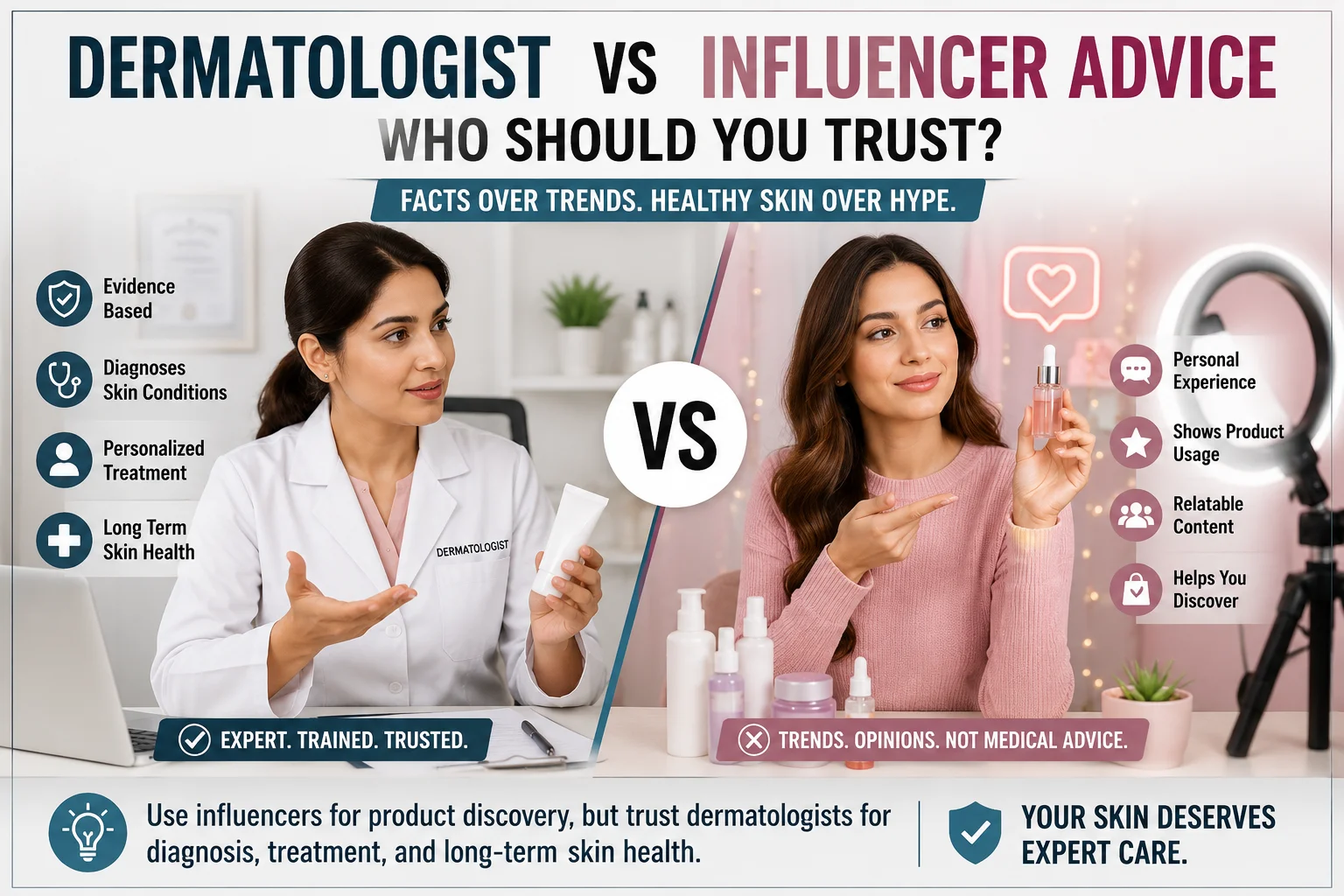
When comparing Dermatologist vs influencer advice, the answer is not about choosing one over the other. Both can offer value, but they serve different purposes. Influencers can share their personal experience with a product, while dermatologists diagnose skin conditions, recommend treatments based on medical knowledge, and help prevent complications.
Knowing the difference can save you money, protect your skin, and help you build a routine based on facts instead of trends.
Why Skincare Advice Online Can Be Confusing?
Years ago, most people relied on doctors, pharmacists, or trusted family members for skincare advice. Today, information comes from Instagram, YouTube, blogs, podcasts, and short-form videos.
Some content is educational. Some is sponsored. Some is based only on personal opinion.
Because every creator has different skin, climate, lifestyle, and goals, a routine that works for one person may not work for another.
This is why blindly following viral skincare trends can sometimes lead to irritation, breakouts, or delayed treatment of an underlying skin condition.
Dermatologist vs Influencer Advice: Understanding the Difference
Instead of asking who is better, ask what type of advice you need.
When Influencers Can Be Helpful
Many skincare influencers test products regularly and share practical details that are difficult to understand from product labels alone.
- Product texture and finish
- White cast of sunscreen
- Whether makeup layers well over skincare
- Packaging quality
- Ease of daily use
- Real-life application experience
This type of information can help you shortlist products before buying them.
However, personal experience should never be treated as universal medical advice.
When Dermatologist Advice Matters More?
Dermatologists are trained to identify the cause of skin problems instead of only treating visible symptoms.
They evaluate factors such as:
- Medical history
- Skin type
- Current medications
- Hormonal changes
- Allergies
- Lifestyle and environmental triggers
This makes their recommendations more suitable for treating conditions rather than simply improving appearance.
Situations Where You Should Trust a Dermatologist First
Professional medical advice becomes especially important when symptoms continue despite using skincare products.
You should consult a dermatologist if you have:
- Persistent or painful acne
- Pigmentation that continues spreading
- Melasma
- Rosacea
- Eczema
- Psoriasis
- Repeated allergic reactions
- Skin infections
- Unexplained rashes
- Hair loss that continues for weeks or months
If you notice symptoms like these, reading about when you need to consult a dermatologist can help you understand the right time to seek professional care.
These conditions often require an accurate diagnosis before treatment begins.
When Influencer Advice Can Be Misleading?
Most influencers genuinely share products they like. The problem begins when personal experiences are presented as guaranteed results.
Your skin is unique.
Its response depends on genetics, hormones, climate, existing skin conditions, and even medications.
That is why statements like these should be viewed carefully:
- “This product works for everyone.”
- “You’ll get glowing skin overnight.”
- “Natural ingredients are always safe.”
- “You don’t need sunscreen.”
- “More products mean better skin.”
Good skincare rarely delivers instant transformations. Healthy skin usually improves gradually with consistency.
Questions to Ask Before Trusting Any Skincare Advice
Before trying a viral skincare recommendation, ask yourself:
- Is the advice based on medical knowledge or personal experience?
- Does the creator clearly disclose sponsored content?
- Does the recommendation match my skin concern?
- Is there evidence supporting the ingredient?
- Could this interact with products I already use?
- Would this advice still make sense if my skin type were different?
These simple questions help separate educational content from marketing.
Watch Out for Skincare Trends That Spread Too Quickly
Social media rewards content that attracts attention. Unfortunately, dramatic skincare claims often spread faster than balanced explanations.
Be cautious of trends promoting:
- Using multiple strong acids together
- Skipping sunscreen completely
- DIY chemical treatments
- Applying toothpaste or harsh household products on acne
- Using prescription medicines without medical supervision
- Copying another person’s complete skincare routine
These practices may damage the skin barrier and make existing concerns worse.
Does Every Skin Problem Need a Dermatologist?
Not necessarily.
If you are choosing between two moisturizers or wondering whether a sunscreen leaves a white cast, influencer reviews may be useful.
However, if your acne keeps returning despite trying multiple products, it may be time to seek professional guidance. You can also learn more about effective acne management before deciding on the next step.
How to Identify Reliable Skincare Information?
You do not need to ignore every influencer or trust every doctor without question. Instead, evaluate the quality of the information.
Reliable skincare advice usually:
- Explains why a product or treatment is recommended.
- Mentions possible side effects or limitations.
- Recognises that different skin types respond differently.
- Avoids unrealistic promises.
- Encourages professional consultation for persistent skin concerns.
If advice sounds too good to be true, it deserves extra scrutiny.
Building a Smarter Skincare Routine
Many people damage their skin by adding too many products at once.
A simple routine is often easier to follow and makes it easier to identify what actually benefits your skin.
Start with the basics:
- A gentle cleanser
- A moisturiser suitable for your skin type
- Broad-spectrum sunscreen during the day
- One targeted treatment if recommended for your concern
Add new products gradually instead of changing your entire routine overnight.
If pigmentation, acne, or another concern persists despite consistent skincare, seeking professional evaluation is more effective than continuously switching products.
When Professional Care Makes the Biggest Difference?
Some skin conditions look similar but require completely different treatments.
For example, acne, rosacea, fungal infections, contact dermatitis, and allergic reactions can sometimes appear alike to someone without medical training.
Using the wrong treatment may delay recovery or worsen symptoms.
Dr. Hera Tabassum, Chief Dermatologist, Cosmetologist, and Trichologist at Dr Hera’s Skin & Hair Clinic, Roorkee, emphasises that an accurate diagnosis is the foundation of effective treatment. Identifying the underlying cause allows treatment plans to be tailored to the individual’s skin condition rather than relying on trial and error.
If you have stubborn pigmentation, learning about hyperpigmentation and melasma treatment can help you understand why expert assessment is often necessary before starting treatment.
Dermatologist vs Influencer Advice: The Final Verdict
When comparing Dermatologist vs influencer advice, both have a place, but they should not be treated as equals for every decision.
Influencers can help you understand how products feel, how they fit into everyday routines, and what real users experience.
Dermatologists provide evidence-based recommendations, diagnose medical conditions, prescribe appropriate treatments, and help prevent long-term skin damage.
The smartest approach is to use influencer content for product discovery while relying on qualified dermatologists for diagnosis, treatment decisions, and personalised skincare guidance.
If a skin problem keeps returning, becomes painful, spreads, or does not improve despite proper skincare, book a consultation instead of continuing to experiment with viral trends.
Frequently Asked Questions
Should I completely stop following skincare influencers?
No. Influencers can provide useful information about product texture, application, and everyday use. Their content is most valuable when it is honest, transparent, and clearly presented as personal experience.
Can influencers recommend products safely?
They can share their experience with products, but recommendations should not replace medical advice for persistent skin conditions or prescription treatments.
Why do dermatologists sometimes recommend different treatments?
Every patient’s skin type, medical history, and diagnosis are different. Treatment plans are personalised rather than based on a single routine that works for everyone.
Is viral skincare always harmful?
No. Some viral products are effective. The important step is checking whether they are appropriate for your skin type and concern before using them.
When should I consult a dermatologist?
You should seek professional advice if you have persistent acne, recurring rashes, severe pigmentation, eczema, unexplained itching, skin infections, sudden hair loss, or reactions that do not improve with basic skincare.
Need Expert Guidance?
If you are unsure whether your skin concern requires professional treatment, consult a qualified dermatologist instead of relying solely on online advice.
Dr. Hera Tabassum Chief Dermatologist, Cosmetologist & Trichologist
Dr Hera’s Skin & Hair Clinic Near Bank of India, Malviya Chowk, Roorkee, Uttarakhand – 247667
Email: info@drheraskinclinic.com