
Skin infection symptoms often start small. Many people ignore mild itching or redness at first. However, these early changes can signal a deeper issue. If you act early, you can avoid pain, spread, and long-term damage.
Your skin protects your body. But it also reacts quickly to infection. So, noticing small changes matters. In this guide, you will learn how to identify early signs and what steps to take next.
Early Detection of Skin Infection Symptoms
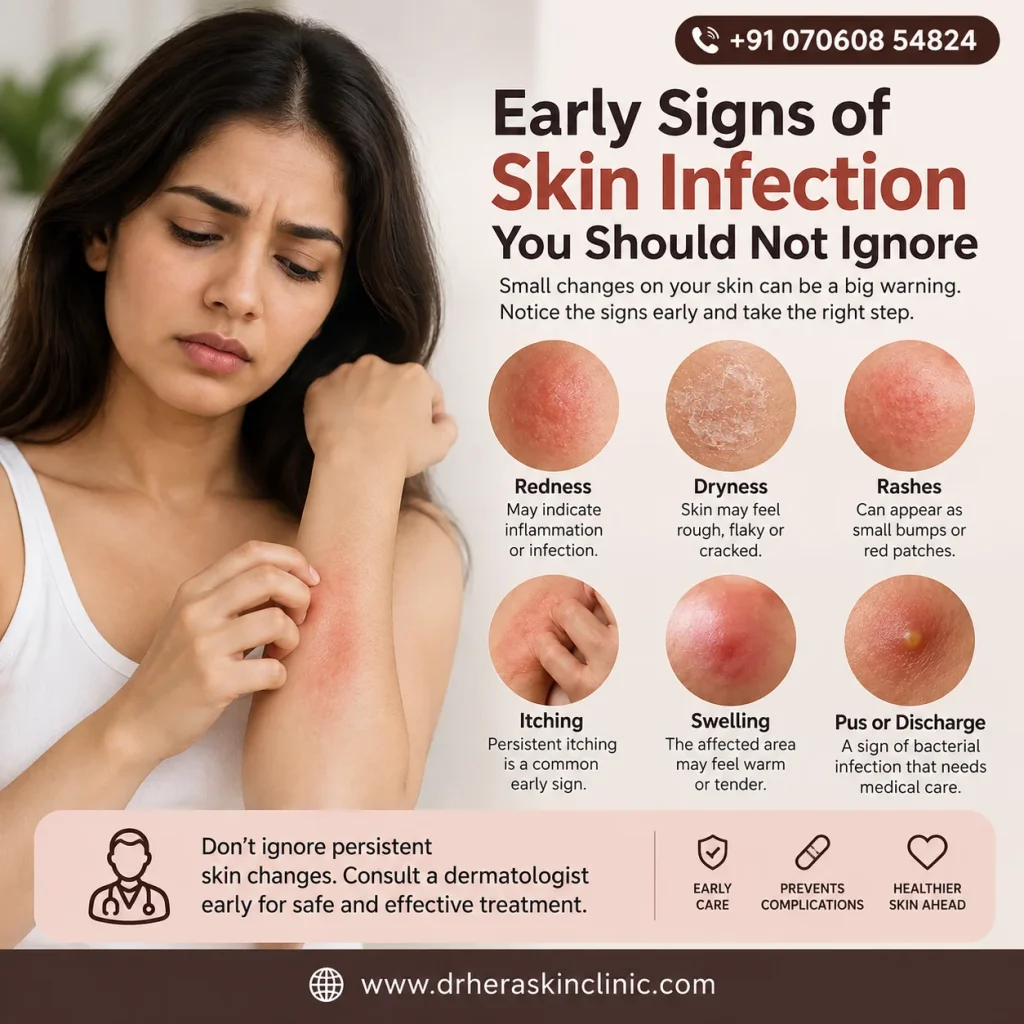
Early action helps control the infection. It also prevents complications. When ignored, infections can spread to nearby areas. In some cases, they may even affect deeper tissues.
Moreover, timely care reduces treatment time. It also lowers the risk of scarring. Therefore, paying attention to early skin infection symptoms is important.
In addition, your skin health depends on balance. The skin microbiome plays a key role. When this balance breaks, infections can develop faster.
Types of Skin Infections and Their Symptoms
Not all infections look the same. Each type shows different signs. So, understanding the type helps in early action.
Fungal Skin Infection Symptoms
Fungal infections are very common. They usually appear in warm and moist areas.
Common signs include itching, redness, and ring-shaped rashes. The skin may also become flaky. In some cases, you may notice mild burning.
If ignored, the infection can spread quickly. You can learn more about early detection in this fungal infections guide.
Bacterial Skin Infection Symptoms
Bacterial infections often start as small bumps. However, they can become painful over time.
Signs include swelling, warmth, and pus. The area may feel tender. Sometimes, the infection spreads rapidly.
Therefore, do not ignore pain or discharge. These are strong skin infection symptoms.
Viral Skin Infection Symptoms
Viral infections usually cause blisters or sores. You may also feel burning or tingling before they appear.
In some cases, fever may occur. So, if skin changes come with fever, seek care early.
Parasitic Skin Infection Symptoms
These infections cause intense itching. The itching often becomes worse at night.
You may notice small bumps or lines on the skin. Early treatment is important to stop spread.
Early vs Advanced Skin Infection Symptoms
Symptoms change as the infection grows. So, knowing the stages helps you act at the right time.
Early stage: mild itching, slight redness, and dryness.
Moderate stage: visible rashes, irritation, and swelling.
Advanced stage: pain, pus, spreading infection, and sometimes fever.
If you notice progression, do not wait. Early care is always easier and safer.
Common Skin Infection Symptoms You Should Not Ignore
Some signs appear in almost all infections. These symptoms may look simple. But they often signal a problem.
Persistent Itching
Itching that does not stop is a warning sign. It may feel mild at first. However, constant itching can damage your skin barrier.
Sometimes, itching links to internal issues. You can explore possible causes in this itching due to deficiency guide.
Redness and Inflammation
Redness shows that your skin is reacting. If it spreads, it may indicate infection.
Also, inflammation can cause discomfort. So, do not ignore warmth or swelling.
Dry, Cracked, or Peeling Skin
Dryness may seem harmless. But cracks allow germs to enter.
In fact, damaged skin needs repair. You can read about barrier repair therapy for better skin protection.
Pus or Fluid Discharge
This is a clear sign of infection. It often means bacteria are present.
If you see discharge, seek medical advice soon.
Pain or Burning Sensation
Pain is not normal in healthy skin. Burning or tenderness suggests deeper involvement.
Therefore, do not ignore discomfort.
Skin Infection Symptoms Based on Body Area
Symptoms may vary by location. So, noticing patterns helps in early diagnosis.
Face
You may see acne-like bumps or redness. Sometimes, infections look like regular pimples.
Avoid squeezing them. Learn why in this pimple care guide.
Scalp
Itching and flakes are common. However, infection can cause redness and irritation.
Many confuse it with dandruff. You can understand more in this dandruff treatment guide.
Feet
Cracks, peeling, and burning are common signs. Moist conditions increase risk.
So, keep feet clean and dry.
Groin Area
Redness and itching are common here. Fungal infections often develop in this region.
Loose clothing can help reduce irritation.
Warning Signs You Should Not Ignore
Some skin infection symptoms need quick attention. These signs show that the infection is getting worse. So, do not delay care in such cases.
Watch for rapidly spreading redness. Also, notice severe pain or swelling. These signs often indicate deeper infection.
Pus, bleeding, or fluid discharge is another warning. In addition, fever with skin changes needs medical care.
Dark or black patches should not be ignored. They may signal tissue damage.
If you notice any of these skin infection symptoms, seek help early. Quick action can prevent serious complications.
Quick Self-Check for Skin Infection Symptoms
You can do a simple self-check at home. This helps you decide your next step.
Ask yourself a few questions. Is the itching lasting more than three days? Is the rash spreading?
Do you feel pain or notice discharge? Is the skin getting worse instead of better?
If the answer is yes to any of these, consult a dermatologist. Early care reduces risk and improves recovery.
When to See a Dermatologist?
Some symptoms require expert care. Do not wait if the condition is not improving.
Visit a dermatologist if the rash spreads fast. Also, seek help if pain increases.
Pus-filled lesions or repeated infections need proper diagnosis. In addition, skin changes with fever should be checked.
If your skin reacts often, it may link to sensitivity or allergy. You can explore this in this skin allergy treatment guide.
Early consultation helps identify the cause. It also prevents long-term skin damage.
Basic Treatment Approach for Skin Infections
Treatment depends on the type of infection. So, correct diagnosis is important.
Doctors may suggest topical creams. These help reduce infection on the surface.
In some cases, oral medicines are needed. This is common in moderate or severe infections.
Along with treatment, skin care matters. Gentle cleansing helps reduce irritation.
Also, avoid harsh products. They can damage your skin barrier. You can learn more in this face wash impact guide.
Do not self-medicate. Wrong treatment can worsen skin infection symptoms.
Simple Tips to Prevent Skin Infection Symptoms
Prevention is always better than treatment. Small habits can protect your skin.
Keep your skin clean and dry. This reduces the risk of fungal growth.
Avoid sharing personal items like towels. Germs spread easily through contact.
Wear loose and breathable clothes. Tight clothes trap sweat and increase irritation.
Take care of your skin barrier. Healthy skin resists infection better. You can follow skin barrier care tips for protection.
Also, follow a simple routine. Overusing products can harm your skin. Read about skin minimalism for better balance.
Frequently Asked Questions
What are the first skin infection symptoms?
Early signs include itching, redness, and mild irritation. These may look harmless. However, they can grow if ignored.
Can skin infections heal on their own?
Some mild infections may improve. But many require treatment. So, do not depend on self-healing if symptoms persist.
How do I know if it is fungal or bacterial?
Fungal infections often itch and spread in rings. Bacterial infections may cause pain and pus. A doctor can confirm the type.
Can poor skin care cause infections?
Yes. Using harsh or too many products can damage your skin. This increases infection risk.
When should I worry about skin infection symptoms?
You should worry if symptoms spread, become painful, or show discharge. Fever is also a warning sign.
Conclusion
Skin infection symptoms should never be ignored. Early signs may seem small. However, they can lead to serious problems if left untreated.
Pay attention to itching, redness, and changes in your skin. Act early and take proper care.
If symptoms do not improve, consult a dermatologist. Timely treatment protects your skin and overall health.