
Understanding medical vs cosmetic dermatology is important if you want the right treatment for your skin. Many people feel confused. Some problems affect health. Others affect appearance. Knowing the difference helps you choose correctly.
In simple words, medical dermatology focuses on skin diseases. Cosmetic dermatology improves how your skin looks. However, both areas often overlap. That is why clarity matters before starting any treatment.
What Is Medical Dermatology?
Medical dermatology deals with skin, hair, and nail conditions that affect health. These conditions need proper diagnosis and treatment. If ignored, they may worsen over time.
Common medical skin concerns include infections, inflammation, and chronic conditions. For example, issues like fungal infections of the skin require medical care. Similarly, allergies and irritation may need expert diagnosis.
Treatment usually involves medicines. It may also include advanced therapies. The goal is to control the disease and prevent complications.
Doctors may use tools to examine the skin closely. They may also take samples when needed. This helps confirm the exact condition.
Medical dermatology improves both health and comfort. In many cases, it also improves appearance as a result of treatment.
What Is Cosmetic Dermatology?
Cosmetic dermatology focuses on improving skin appearance. It is not meant to treat serious diseases. Instead, it enhances skin texture, tone, and overall look.
People often choose cosmetic treatments for glow, smoothness, or anti-aging. For example, procedures like chemical peels for radiant skin help improve texture and brightness.
These treatments are usually optional. They are chosen based on personal goals. Unlike medical care, they are not urgent.
Cosmetic dermatology includes many modern techniques. These may involve lasers, peels, or injectables. Each treatment targets a specific concern.
In addition, some treatments also support skin health indirectly. For example, improving texture can boost confidence and skin care habits.
Medical vs Cosmetic Dermatology: Key Differences
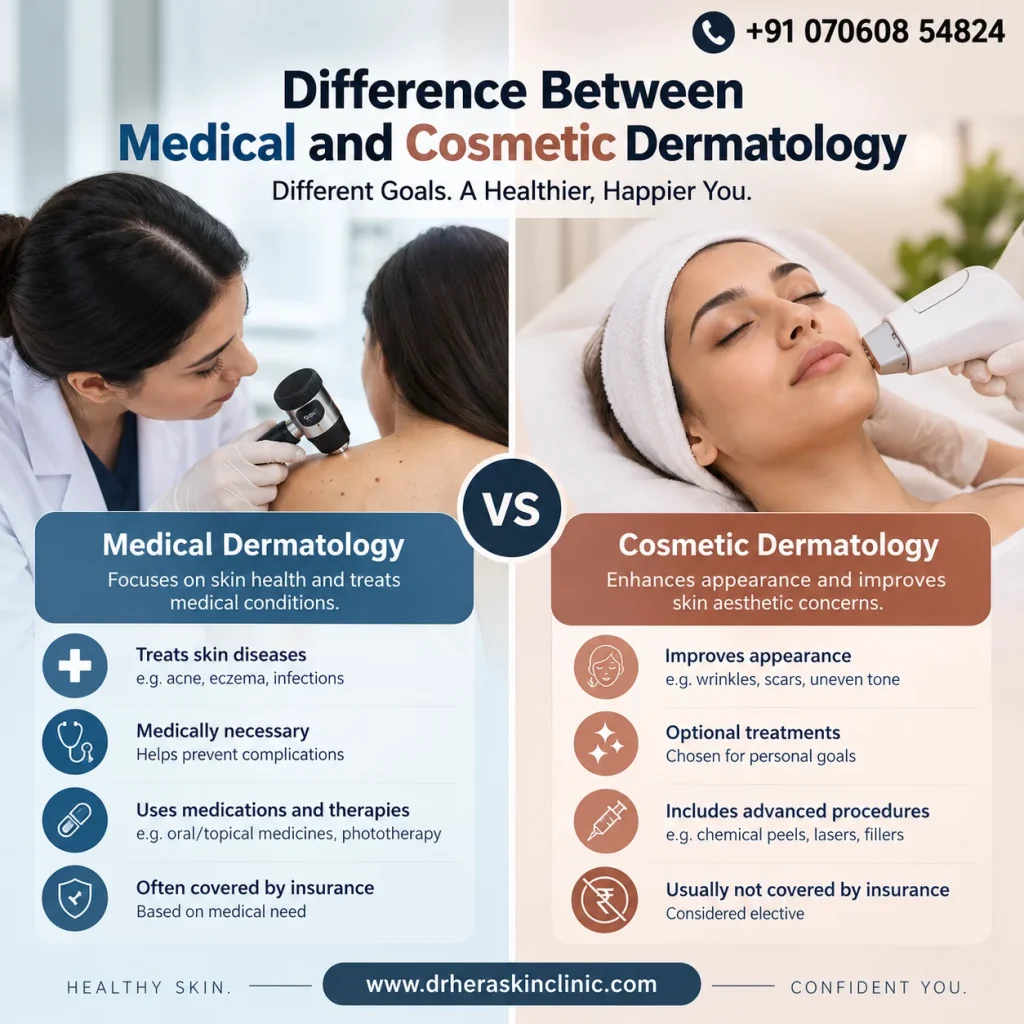
The difference between medical vs cosmetic dermatology becomes clear when you compare their purpose and approach.
| Factor | Medical Dermatology | Cosmetic Dermatology |
|---|---|---|
| Purpose | Treats skin diseases | Improves appearance |
| Need | Medically necessary | Optional |
| Conditions | Acne, infections, eczema | Wrinkles, dull skin, scars |
| Treatment Type | Medicines, therapies | Procedures, enhancements |
| Insurance | Often covered | Usually not covered |
This comparison helps you understand your situation better. It also guides your next step.
Which One Do You Need?
Choosing between medical and cosmetic care depends on your concern. Some conditions clearly need medical treatment. Others are more about appearance.
If you have pain, itching, or infection, you need medical dermatology. For example, conditions like skin allergies require proper diagnosis and treatment.
On the other hand, if your goal is smoother or brighter skin, cosmetic treatments may help. Procedures can improve tone and texture over time.
Sometimes, both approaches are needed. Acne is a good example. It may start as a medical issue. Later, cosmetic treatments help reduce scars. You can explore options like acne scar treatment after active acne is controlled.
When unsure, it is better to consult a dermatologist. They can guide you based on your skin type and condition.
Common Conditions Treated in Medical Dermatology
Medical dermatology covers a wide range of conditions. These issues affect daily comfort and long-term health.
Some common problems include infections, rashes, and chronic skin diseases. For instance, recurring issues like skin infections need timely care.
Inflammation is another common concern. It can cause redness, itching, and discomfort. Conditions linked to skin inflammation often require ongoing treatment.
Hair and scalp problems also fall under this category. Issues like dandruff or hair loss may need medical attention before cosmetic improvement.
Early treatment prevents complications. It also improves quality of life.
Common Procedures in Cosmetic Dermatology
Cosmetic dermatology includes procedures that improve how your skin looks. These treatments focus on texture, tone, and signs of aging.
Many people choose non-invasive options first. For example, HydraFacial treatments help clean and hydrate the skin. They also improve glow over time.
Another popular option is laser therapy. Treatments like laser treatment for skin and hair target pigmentation, hair removal, and uneven tone.
Injectable treatments are also common. These include fillers and skin boosters. You can learn more about options like dermal fillers for improving volume and reducing fine lines.
In addition, procedures like microneedling support skin renewal. They help boost collagen and improve skin texture gradually.
Each treatment has a specific purpose. Therefore, choosing the right one depends on your concern.
Cost and Insurance Differences
Cost is another key factor in medical vs cosmetic dermatology. The pricing structure is different for both.
Medical dermatology treatments are often necessary. Because of this, some treatments may be covered by insurance. This depends on the condition and policy.
On the other hand, cosmetic dermatology is usually self-funded. These treatments are optional. Therefore, insurance does not cover them in most cases.
However, investing in the right treatment matters. Choosing the correct approach saves time and avoids repeated procedures.
Can Medical and Cosmetic Dermatology Overlap?
Yes, there is often overlap between the two. The line between medical vs cosmetic dermatology is not always strict.
Some treatments serve both purposes. For example, treating acne is medical. But improving scars is cosmetic. Both steps may be needed for complete results.
Similarly, pigmentation may start as a medical issue. Later, cosmetic procedures help improve skin tone.
Even hair concerns follow this pattern. Medical treatment controls hair fall. After that, procedures like hair transplant procedures restore appearance.
This combined approach gives better and long-lasting results.
How to Choose the Right Treatment Approach?
Choosing the right option depends on your skin condition. First, understand your main concern. Then decide your goal.
If your issue causes discomfort or health problems, medical treatment is necessary. Conditions like chronic irritation or infection should not be ignored.
If your concern is about appearance, cosmetic treatments can help. These improve confidence and skin quality over time.
However, self-diagnosis is not always accurate. Therefore, professional advice is important.
A dermatologist evaluates your skin in detail. They suggest the right plan. This may include one or both approaches.
Frequently Asked Questions
Is acne medical or cosmetic?
Acne is mainly a medical condition. It needs proper treatment. However, scars left after acne can be treated with cosmetic procedures.
Are cosmetic treatments safe?
Most cosmetic treatments are safe when done by experts. The right technique and proper care reduce risks.
Can medical dermatology improve appearance?
Yes, treating skin diseases often improves appearance. Healthy skin looks clearer and more even.
Which is better: medical or cosmetic dermatology?
Both are important. The better option depends on your need. Some people require only one. Others benefit from both.
Final Thoughts
Understanding medical vs cosmetic dermatology helps you make better decisions. It saves time and avoids confusion.
Medical dermatology protects your skin health. Cosmetic dermatology improves how your skin looks. Both play an important role.
In many cases, combining both approaches gives the best results. Therefore, choosing the right plan matters.
If you are unsure, consult a qualified dermatologist. A proper evaluation helps you start the right treatment at the right time.