
What’s the Truth About Diet and Acne?
For years, people have heard mixed advice about acne. Some say chocolate and oily food cause breakouts. Others believe diet has nothing to do with skin health.
This confusion has made the diet and acne relationship one of the most debated topics in skincare.
Today, science offers a more balanced answer. Diet may not be the only cause of acne, but it can influence how your skin behaves. In this blog, we break down acne myths and facts and explain what research really says.
What Causes Acne? Understanding the Science Behind Breakouts
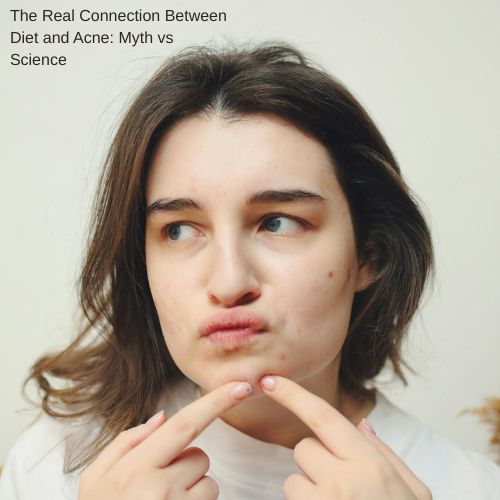
Before linking food to acne, it’s important to understand how acne develops.
Acne forms due to several internal and external factors:
- Excess oil (sebum production): Overactive oil glands clog pores
- Clogged pores: Dead skin cells block follicles
- Bacteria growth: Leads to swelling and redness
- Inflammation: Worsens breakouts and slows healing
Hormones also play a key role. Conditions like puberty or PCOS can trigger hormonal acne causes by increasing oil production.
Other contributing factors include stress, pollution, certain medications, and genetics. This shows that acne is complex, and diet is just one piece of the puzzle.
Does Diet Really Affect Acne? What Science Says
For a long time, experts believed there was no link between food and acne.
However, recent studies suggest a possible connection. Research shows that certain eating patterns may influence hormones and inflammation, which are key drivers of acne.
The diet and acne relationship is not direct, but it exists. Food can affect insulin levels, hormone balance, and skin inflammation. These changes may increase the chances of breakouts in some people.
Still, science does not claim that diet alone causes acne. It only shows that diet can be a contributing factor.
Foods That May Trigger Acne (Based on Research)
Some foods are more likely to affect skin health. These do not cause acne for everyone, but they may trigger breakouts in sensitive individuals.
High Sugar Foods and Acne
Foods high in sugar can spike insulin levels. This leads to hormonal changes that increase oil production.
Examples include sweets, sugary drinks, and desserts. Frequent intake is linked to sugar and acne breakouts.
Dairy Products and Acne Connection
Milk and dairy products may influence hormones. Some studies suggest a link between milk consumption and acne severity.
This is why the dairy and acne connection is widely discussed in dermatology.
High Glycemic Index Foods
Foods like white bread, pasta, and processed snacks raise blood sugar quickly.
These high glycemic foods acne triggers can increase inflammation and worsen breakouts.
Fast Food and Inflammatory Diets
Fast food often combines high fat and high sugar. This combination may increase inflammation in the body.
A diet high in processed food is often linked to junk food and pimples, especially in adults.
Acne Myths vs Facts – What You Should Stop Believing
Let’s clear some common misconceptions about acne:
- Myth: Chocolate always causes acne Fact: No strong evidence proves this
- Myth: Oily food directly causes pimples Fact: It may contribute indirectly through inflammation
- Myth: Diet has no role in acne Fact: Research shows diet can influence acne in some cases
Understanding these acne myths and facts helps you make better choices without unnecessary restrictions.
How Diet Influences Acne Internally (The Science Explained)
Diet affects the body in ways that can impact skin health.
- Insulin and acne link: High sugar intake raises insulin levels, which can trigger oil production
- Hormonal imbalance: Certain foods may affect hormones linked to acne
- Inflammation: Poor diet increases inflammation in the body
- Gut health: An unhealthy gut may worsen skin conditions
This explains how the diet and acne relationship works from inside the body.
Can Changing Your Diet Cure Acne?
Diet alone is not a complete solution.
There is no single diet that can cure acne for everyone. However, improving eating habits may reduce breakouts in some people.
The impact depends on individual triggers, lifestyle, and overall health.
A balanced approach works best. Combine good nutrition with proper skincare and medical advice when needed.
Best Diet Tips for Acne-Prone Skin
Simple dietary changes can support healthier skin:
- Choose low glycemic foods like whole grains and vegetables
- Add anti-inflammatory foods such as fruits, nuts, and seeds
- Stay hydrated throughout the day
- Limit sugary and processed foods
These steps can help maintain clearer skin and support the diet and acne relationship in a positive way.
When to See a Dermatologist for Acne
If acne does not improve with basic care, professional help is important.
You should consult experts in cases like:
- Persistent or severe acne
- Painful cystic acne
- Adult acne that suddenly appears
- Acne leaving scars
Getting advice from experienced dermatologist in Roorkee can help you find the right treatment plan.
Key Takeaways – Diet and Acne Connection Simplified
- Acne is caused by multiple factors, not just diet
- Diet can influence hormones and inflammation
- Sugar and dairy may trigger acne in some people
- There is no universal acne diet
- A balanced lifestyle gives the best results
FAQs
Does dairy cause acne?
Dairy may trigger acne in some people due to hormonal effects, but it does not affect everyone.
Can drinking water reduce acne?
Water supports overall skin health but does not directly cure acne.
Is chocolate bad for acne?
There is no strong evidence linking chocolate directly to acne.
What foods should I avoid for acne?
High sugar, processed foods, and excessive dairy may worsen acne in some cases.
How long does diet affect acne?
Changes in diet may take a few weeks to show visible effects on the skin.
About Dr Hera’s Skin & Hair Clinic
For those seeking expert care, Dr Hera’s Skin & Hair Clinic is a trusted name in skincare. It is a leading dermatology clinic in Roorkee offering advanced treatments for various skin concerns.
Dr. Hera Tabassum is known among experienced dermatologists in Roorkee for treating conditions like acne, eczema, fungal infections, hair loss, warts, and vitiligo.
Her approach focuses on accurate diagnosis and personalized treatment plans. Patients benefit from her experience and commitment to quality care, which helps achieve consistent and effective results.