
Screen time is higher than ever. People spend hours on phones, laptops, and tablets every day. This has raised a common concern: can blue light from screens cause pigmentation?
You may have heard that blue light damages skin like sunlight. Others say it’s just a myth. The truth lies somewhere in between.
In this guide, we explain the science behind blue light and skin pigmentation in simple terms. You’ll also learn how to protect your skin from daily screen exposure.
What Is Blue Light? (Understanding HEV Light & Skin Exposure)
Blue light, also called High Energy Visible (HEV) light, is part of the visible light spectrum. It has shorter wavelengths and higher energy compared to other visible light.
It comes from:
- The sun
- Smartphones and laptops
- LED lights and TVs
Unlike UV rays, blue light is visible. But it can still affect the skin, especially with long exposure.
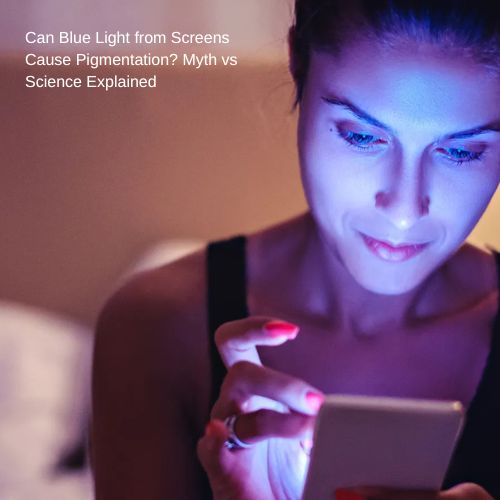
Can Blue Light from Screens Really Cause Pigmentation?
Let’s answer clearly.
Yes, blue light can contribute to pigmentation—but not as strongly as UV rays.
Research shows that blue light can trigger skin changes. This includes mild hyperpigmentation, especially in people with darker skin tones or existing conditions like melasma.
So, if you’re asking can blue light from screens cause pigmentation, the answer is simple: it can play a role, but it is not the main cause.
How Blue Light Affects Skin Pigmentation (Science Explained)
1. Melanin Production & Dark Spots
Blue light can stimulate melanocytes. These are the cells that produce melanin.
More melanin can lead to:
- Dark spots
- Uneven skin tone
- Mild hyperpigmentation
This is one reason people ask whether blue light from screens causes pigmentation when they notice changes in their skin.
2. Deep Skin Penetration & Oxidative Stress
Blue light can go deeper into the skin compared to UVB rays. It reaches the dermis, where collagen is present.
This can cause:
- Oxidative stress
- Free radical damage
- Inflammation
These factors may indirectly increase pigmentation over time.
3. Prolonged Screen Exposure & Cumulative Effect
One major issue is duration. Many people use screens for 6–10 hours daily.
This continuous exposure can lead to:
- Gradual skin damage
- Worsening of existing pigmentation
While short exposure may not cause visible changes, long-term use can have an effect.
Blue Light vs UV Rays – Which Is More Harmful for Pigmentation?
FactorBlue LightUV RaysSourceScreens + SunSunStrengthMild–ModerateHighSkin DamageGradualStrongPigmentation RiskLow–ModerateHigh
UV rays remain the primary cause of pigmentation. Blue light adds to the overall exposure, especially indoors.
Who Is More Prone to Blue Light Pigmentation?
Some people are more sensitive to blue light exposure:
- Individuals with darker skin tones
- People with melasma
- Those with post-acne marks (PIH)
- People with long screen hours
In these cases, the concern can blue light from screens cause pigmentation becomes more relevant.
Does Screen Time Worsen Existing Pigmentation Like Melasma?
Yes, it can.
Studies suggest that visible light may worsen melasma. Blue light is part of this spectrum.
If you already have:
- Melasma
- Sunspots
- Uneven skin tone
Then long screen exposure may gradually make it worse.
How to Protect Your Skin from Blue Light Exposure
1. Use Sunscreen (Even Indoors)
Choose a broad-spectrum sunscreen with zinc oxide or iron oxide. These help block visible light.
2. Use Antioxidant Skincare
Look for ingredients like vitamin C, niacinamide, and resveratrol. These reduce free radical damage.
3. Reduce Screen Time
Take breaks during long working hours. Simple habits can reduce cumulative exposure.
4. Use Blue Light Filters
Most devices offer built-in filters. Screen protectors can also help reduce exposure.
Can Blue Light Cause Other Skin Problems?
Yes, apart from pigmentation, blue light may also contribute to:
- Premature aging
- Fine lines
- Dull skin
- Collagen breakdown
The effect is gradual but becomes noticeable with long-term exposure.
Treatments for Blue Light-Induced Pigmentation
If pigmentation becomes visible, treatment options include:
- Chemical peels
- Laser treatments such as PICO and Q-switch
- Medical skincare
A dermatologist can suggest the right treatment based on your skin type.
When Should You See a Dermatologist?
Consult a skin expert if you notice:
- Persistent dark spots
- Worsening melasma
- Uneven skin tone
If you are looking for experienced dermatologists in Roorkee, expert advice can help you manage pigmentation effectively.
Conclusion
So, can blue light from screens cause pigmentation?
Yes, but its impact is limited compared to UV rays. It becomes more relevant with long exposure and in people prone to pigmentation.
The best approach is prevention. Use sunscreen, include antioxidants in your routine, and manage screen time. These steps can help protect your skin over time.
About Dr Hera’s Skin & Hair Clinic
Dr Hera’s Skin & Hair Clinic is a leading dermatology clinic in Roorkee, offering complete care for skin, hair, and nail concerns.
Dr. Hera Tabassum is one of the most trusted dermatologists in Roorkee. She treats conditions like acne, pigmentation, eczema, fungal infections, hair loss, warts, and vitiligo.
With years of clinical experience, she focuses on personalized treatment plans. Patients receive care based on their skin type and condition. The clinic combines medical expertise with modern techniques to deliver effective and reliable results.
FAQs
Can mobile screens cause pigmentation on the face?
Mobile screens emit blue light, which may contribute slightly to pigmentation with long exposure.
Is blue light harmful for skin?
Blue light is less harmful than UV rays but may still affect skin over time.
Can blue light worsen melasma?
Yes, it can make melasma worse in some individuals.
Do I need sunscreen indoors?
Yes, especially if you spend long hours using screens.
How to protect skin from laptop screen exposure?
Use sunscreen, apply antioxidants, and reduce screen time where possible.