
Social media and skincare have become closely connected over the past decade. Platforms like Instagram, YouTube, and TikTok are no longer just places to share photos. They have become major sources of skincare advice, product recommendations, ingredient education, and beauty trends. For many people, the first step in treating a skin concern is searching social media instead of consulting a dermatologist.
This shift has brought both opportunities and challenges. On one hand, people have easier access to educational content from qualified dermatologists and skincare professionals. On the other hand, viral skincare hacks, heavily filtered images, and sponsored product reviews can create unrealistic expectations about what healthy skin should look like.
Understanding how social media influences skincare decisions can help you make informed choices and avoid habits that may do more harm than good.
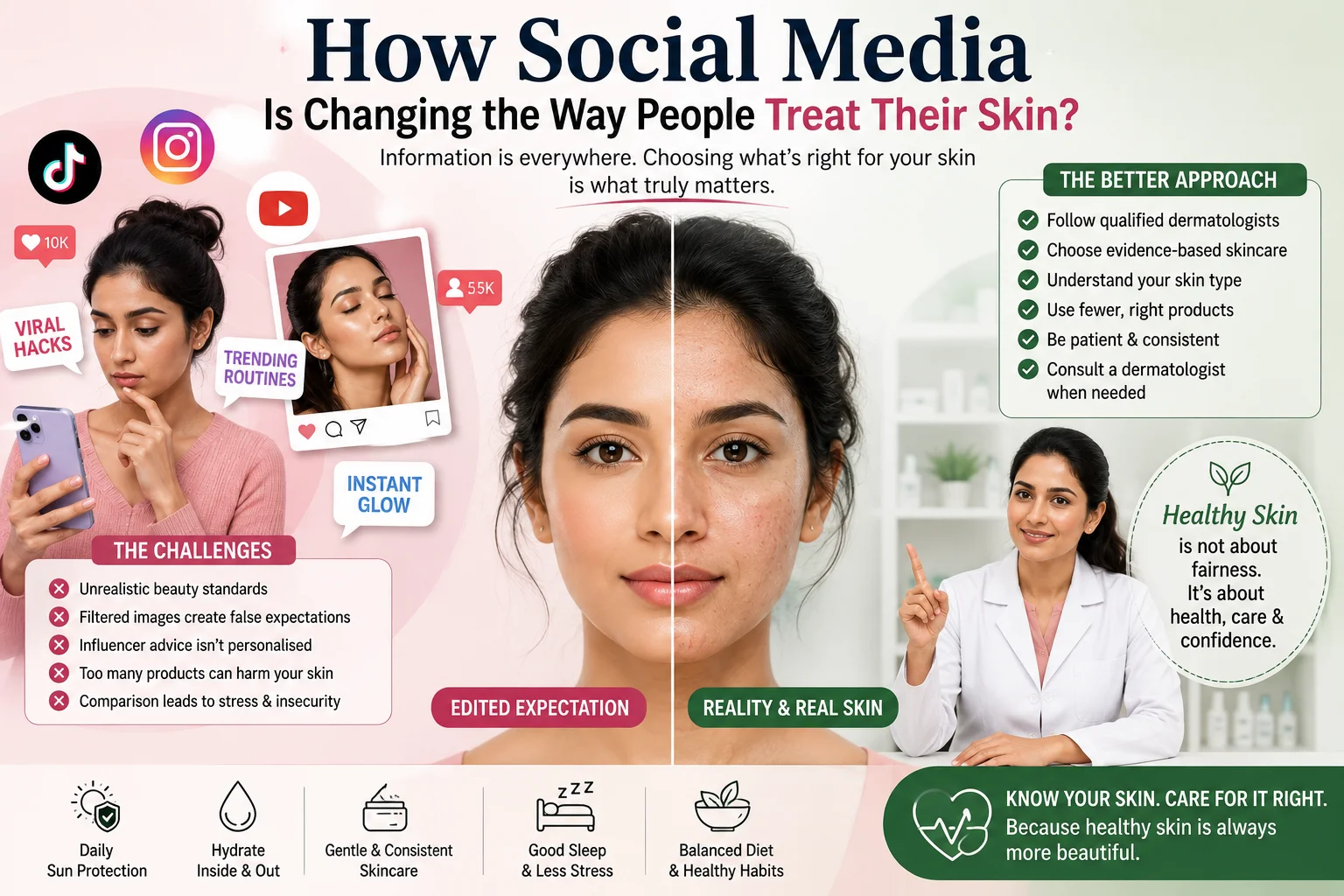
Social Media Has Changed How People See Their Skin
Years ago, people usually compared themselves with celebrities seen in magazines or television. Today, comparison happens every time someone opens a social media app.
Perfect-looking skin appears everywhere. However, many of these images are edited using filters, lighting adjustments, makeup, or professional photo editing. As a result, normal skin features like pores, fine lines, freckles, acne marks, and uneven skin tone often disappear from what people see online.
Recent survey findings highlight just how common this has become. Only 3% of respondents said they had never shared a filtered selfie. On average, more than half of all selfies posted online include some type of filter.
When edited images become the standard, many people begin believing that completely flawless skin is normal. This can affect confidence and change how they approach skincare.
People Are Becoming More Conscious About Skin Imperfections
The pressure to look perfect online has increased awareness of skin imperfections. While noticing changes in your skin is not necessarily unhealthy, becoming overly focused on every small blemish can create unnecessary stress.
The survey found that 73% of people actively try to hide imperfections before sharing photos. Uneven skin tone ranked as the most common concern, followed by body image, natural hair, posture, and other physical features.
Many users now spend considerable time editing photos before posting them. Others avoid taking pictures altogether when they experience acne, pigmentation, or redness.
This growing focus on appearance has encouraged more people to invest in skincare products, cosmetic treatments, and complicated skincare routines.
The Positive Side of Social Media and Skincare
Despite its challenges, social media has also improved public awareness about skin health.
Dermatologists, researchers, and skincare educators regularly share evidence-based information about acne, eczema, rosacea, melasma, psoriasis, sunscreen, anti-ageing, and hair loss. Educational videos have made complex skincare topics easier for the general public to understand.
According to the survey, 76% of respondents believe social platforms have positively influenced skincare awareness. Nearly half said social media helped them understand skin health better, while many felt more informed about taking care of their skin.
Another encouraging finding was that millennials are increasingly following advice from qualified dermatologists instead of relying entirely on beauty influencers.
If you notice persistent acne, pigmentation, or other skin concerns, seeking advice from a qualified dermatologist remains far more reliable than depending only on trending videos. Learn more about when you should consult a dermatologist.
Influencer Advice Is Not Always Personalised
Influencers have introduced millions of people to skincare ingredients like niacinamide, Vitamin C, retinol, ceramides, and hyaluronic acid. Some creators genuinely encourage healthy skincare habits.
However, influencer recommendations are usually based on personal experiences rather than medical evaluation.
The survey revealed that more than half of respondents had tried at least one influencer skincare hack, and most said they would likely do so again.
The problem is that no two people have identical skin. Age, hormones, genetics, medical conditions, climate, and lifestyle all affect how skin responds to products.
A product that works for an influencer may trigger irritation, breakouts, allergic reactions, or worsen existing skin conditions in someone else.
This is why dermatologists recommend understanding your skin type before following trends. You can begin by learning how to identify your skin type and choosing products that match your skin’s needs.
Social Media Is Encouraging Earlier Treatment
Another noticeable change is that people are seeking professional help earlier than before. Instead of accepting acne scars, pigmentation, melasma, or chronic skin conditions as permanent, many individuals now recognise that effective medical treatments are available.
Educational content has helped reduce misconceptions surrounding dermatologist visits and encouraged more people to seek timely diagnosis.
At Dr Hera’s Skin & Hair Clinic, Dr. Hera Tabassum, Chief Dermatologist, Cosmetologist, and Trichologist, believes that successful skincare starts with identifying the underlying cause of a concern rather than simply following viral routines. An evidence-based treatment plan is often safer and more effective than experimenting with multiple products recommended online.
How to Use Social Media for Better Skin Decisions?
Social media does not have to harm your skin. It can become a valuable learning tool when you know how to evaluate the information you see.
- Follow qualified dermatologists. Give more importance to content created by board-certified dermatologists than viral creators.
- Check the evidence. Look for advice supported by clinical research instead of dramatic before-and-after videos.
- Avoid trying multiple new products together. Introducing several active ingredients at the same time increases the risk of irritation and makes it difficult to identify what is actually working.
- Be patient. Most skincare products require several weeks of consistent use before noticeable improvements appear.
- Know when professional treatment is needed. Persistent acne, pigmentation, rosacea, eczema, or unusual skin changes should be evaluated by a qualified dermatologist instead of relying only on social media advice.
Signs That Social Media May Be Influencing Your Skin in an Unhealthy Way
Ask yourself these questions:
- Do you frequently compare your skin with filtered photos?
- Do you buy skincare products simply because they are trending?
- Have you changed your routine multiple times within a few months?
- Do you feel anxious before posting an unfiltered photo?
- Do you spend more time hiding skin imperfections than understanding their cause?
If your answer is “yes” to several of these questions, it may be worth stepping back and focusing on evidence-based skincare rather than online trends.
Healthy Skin Is More Important Than Perfect Skin
Social media often celebrates flawless skin, but healthy skin is not the same as filter-perfect skin. Every person has visible pores, natural texture, occasional breakouts, and changes caused by age, weather, hormones, or stress.
Instead of chasing unrealistic perfection, focus on building habits that support long-term skin health.
- Cleanse your skin gently.
- Use a moisturiser suited to your skin type.
- Apply broad-spectrum sunscreen every day.
- Choose products based on your skin concerns instead of viral popularity.
- Maintain a consistent routine instead of constantly switching products.
If you are unsure where to begin, a simple daily skincare routine is usually more effective than following complicated trends.
When Should You See a Dermatologist?
Social media can provide useful education, but it cannot replace a medical consultation.
If you experience persistent acne, acne scars, melasma, pigmentation, severe dryness, recurring rashes, sudden hair loss, or changing moles, consult a qualified dermatologist for an accurate diagnosis and personalised treatment plan.
Dr. Hera Tabassum, Chief Dermatologist, Cosmetologist, and Trichologist at Dr Hera’s Skin & Hair Clinic, Roorkee, encourages patients to treat social media as a source of awareness—not as a substitute for professional medical advice. Every person’s skin is unique, and treatment should be based on an individual’s skin type, medical history, and clinical evaluation.
Conclusion
Social media and skincare now influence each other more than ever before. Online platforms have made skincare education, ingredient awareness, and access to dermatologists easier than ever. At the same time, filters, edited images, and viral beauty trends have increased pressure to achieve unrealistic standards.
The healthiest approach is to use social media as a learning resource rather than a source of comparison. Choose scientifically supported skincare, follow trusted medical professionals, and remember that healthy skin naturally has texture, variation, and individuality.
The goal should never be to look like a filtered image. It should be to maintain strong, healthy skin that feels comfortable and functions well for years to come.