
Acne is one of the most common skin concerns, affecting teenagers and adults alike. While active breakouts can be frustrating, the marks and scars left behind often take much longer to improve. Many people ask, how to prevent acne scars? The answer lies in treating acne early, protecting your skin from unnecessary damage, and following a dermatologist-recommended skincare routine.
Acne scars develop when inflammation from pimples damages the deeper layers of the skin. During healing, the body produces collagen to repair the damaged tissue. Too little collagen may leave depressed scars, while excess collagen can create raised scars. Although not every pimple results in a scar, delaying treatment or picking at acne increases the risk significantly.
The good news is that acne scars can often be prevented. Early intervention, gentle skincare, and timely medical treatment play an important role in keeping your skin healthy and reducing the chances of permanent marks.
Why Do Acne Scars Form?
Acne scars are the result of inflammation beneath the skin’s surface. When a pore becomes clogged with oil, dead skin cells, and bacteria, it may swell and eventually rupture. If the surrounding skin tissue is damaged, the healing process can leave behind a permanent scar.
Several factors increase the likelihood of scarring, including:
- Moderate to severe inflammatory acne
- Deep cysts or nodules
- Frequent picking, squeezing, or scratching pimples
- Delayed acne treatment
- A family history of acne scarring
Not all post-acne marks are true scars. Red or brown spots that remain after acne heals are known as post-inflammatory erythema or post-inflammatory hyperpigmentation. These often fade over time, unlike permanent acne scars that involve changes in skin texture.
How to Prevent Acne Scars?
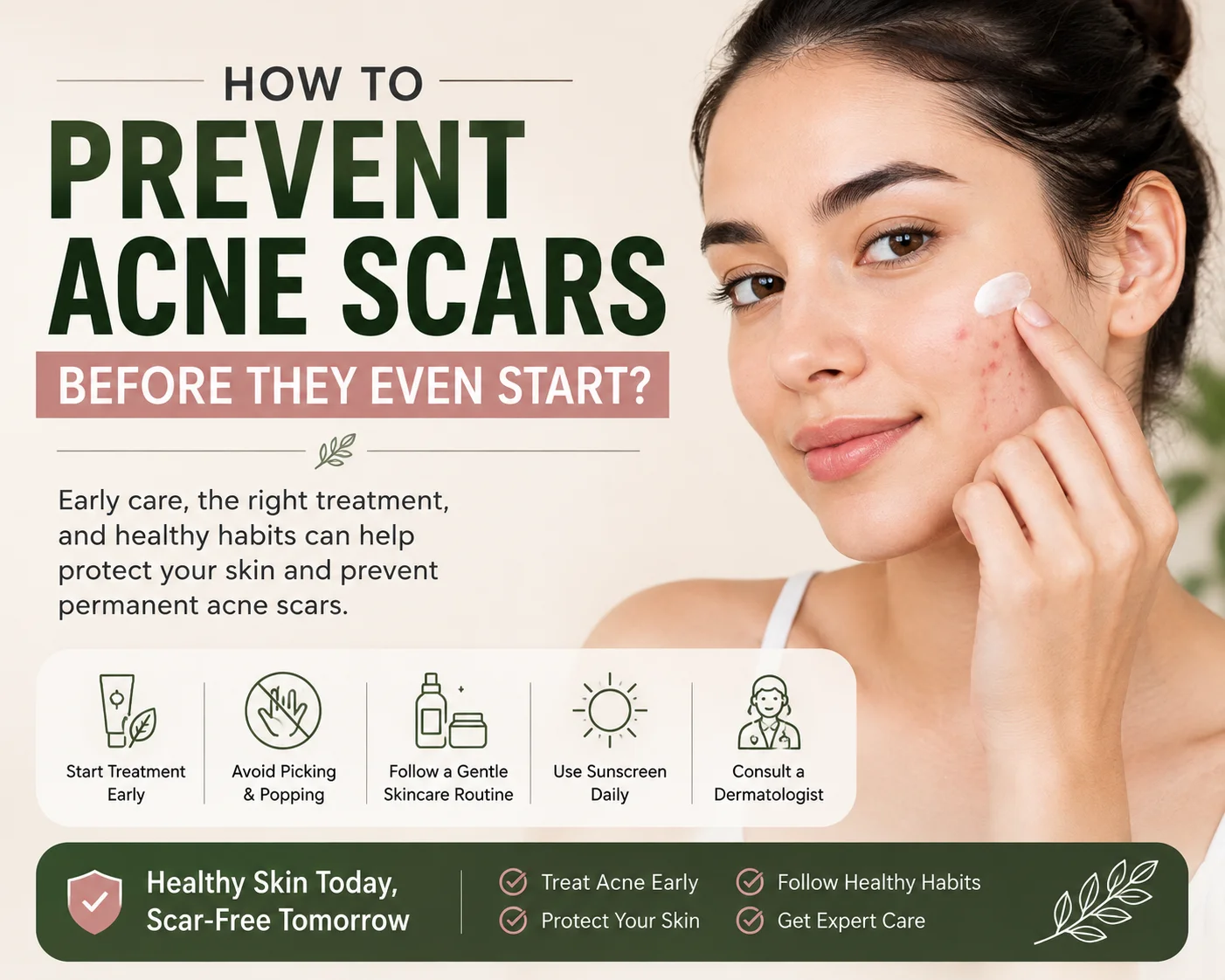
1. Start Acne Treatment as Early as Possible
The most effective way to prevent acne scars is to control acne before it becomes severe. Mild acne may improve with dermatologist-recommended over-the-counter products, but persistent or painful breakouts usually require professional evaluation.
Early treatment helps reduce inflammation, prevents new lesions from developing, and lowers the risk of skin damage. A dermatologist may recommend topical retinoids, benzoyl peroxide, salicylic acid, azelaic acid, antibiotics, or other prescription treatments depending on the severity of acne.
If your acne continues despite regular skincare, consider consulting a dermatologist instead of experimenting with multiple products. Early treatment is often easier than treating scars later.
Learn more about professional acne treatment when breakouts become persistent or recurrent.
2. Never Pick or Pop Pimples
One of the biggest mistakes people make is squeezing pimples. Although it may seem like a quick solution, picking forces bacteria and debris deeper into the skin. This increases inflammation, delays healing, and significantly raises the risk of permanent scarring.
Touching your face repeatedly also transfers bacteria from your hands to your skin, which may trigger additional breakouts.
If a painful pimple needs attention, seek professional care instead of trying to remove it yourself.
3. Follow a Gentle Skincare Routine
Healthy skin heals more efficiently. A simple skincare routine helps strengthen the skin barrier while reducing irritation.
Your daily routine should include:
- A mild, non-comedogenic cleanser twice daily
- An oil-free moisturizer to maintain hydration
- Dermatologist-recommended acne treatment products
- Broad-spectrum sunscreen every morning
Avoid harsh scrubs, rough exfoliating brushes, alcohol-based toners, and excessive cleansing. Over-cleansing can irritate the skin and worsen inflammation.
4. Protect Your Skin from Sun Exposure
Sun exposure does not directly cause acne scars, but it can make existing marks appear darker and more noticeable. Ultraviolet rays also slow the skin’s natural healing process.
Daily sunscreen with SPF 30 or higher helps prevent post-inflammatory pigmentation and supports healthier skin recovery. Choose a lightweight, non-comedogenic sunscreen that does not clog pores.
5. Treat Acne According to Your Skin Type
Not every acne treatment works for every person. Oily, combination, dry, and sensitive skin all require different approaches.
Using products that are too harsh for your skin may increase irritation instead of improving acne. A personalized treatment plan from a qualified dermatologist provides the safest and most effective results.
Lifestyle Habits That Support Healthy Skin Healing
Good skincare works best when combined with healthy daily habits. While lifestyle changes alone cannot cure acne, they support better skin recovery and may reduce future breakouts.
- Avoid touching your face unnecessarily.
- Wash pillowcases and makeup brushes regularly.
- Remove makeup before sleeping.
- Manage stress through healthy routines.
- Sleep adequately to support skin repair.
- Eat a balanced diet rich in fruits, vegetables, and protein.
- Stay hydrated throughout the day.
These habits help maintain overall skin health while supporting your prescribed acne treatment plan.
Professional Treatments That May Help Prevent Long-Term Acne Scars
Some people are naturally more likely to develop acne scars, especially if they experience cystic or nodular acne. In these situations, professional treatment can reduce inflammation early and lower the chances of permanent skin damage.
Depending on your skin type and acne severity, a dermatologist may recommend:
- Prescription topical medications to control inflammation and prevent new breakouts.
- Oral medications for moderate to severe acne when topical treatments alone are not enough.
- Chemical peels to improve skin cell turnover and reduce post-acne pigmentation.
- Light and laser therapies for selected patients with active acne or early acne marks.
- Professional extraction of blackheads and whiteheads to reduce skin trauma caused by squeezing pimples at home.
If scars have already started to develop, early intervention often provides better outcomes than waiting for months or years.
You can also explore available options for acne scar treatment after a dermatologist evaluates your skin.
Common Mistakes That Increase the Risk of Acne Scars
Many acne scars develop because of everyday habits that damage the skin during healing. Avoiding these mistakes can make a noticeable difference.
- Picking or squeezing pimples.
- Using multiple acne products at the same time without professional advice.
- Skipping sunscreen during acne treatment.
- Using harsh scrubs to remove pimples.
- Stopping treatment as soon as acne starts improving.
- Ignoring painful cystic acne.
- Trying unverified home remedies that irritate the skin.
Patience is important. Most acne treatments require several weeks before visible improvement appears. Switching products too frequently may worsen irritation instead of helping your skin.
Can Acne Scars Be Completely Prevented?
Not every acne scar can be prevented because genetics, skin type, and the severity of inflammation also play a role. However, most people can significantly reduce their risk by treating acne early, avoiding skin trauma, and following a consistent skincare routine.
The earlier inflammation is controlled, the lower the chance of permanent changes in skin texture.
When Should You See a Dermatologist?
Professional care becomes important when acne is painful, leaves dark marks after healing, or continues despite using over-the-counter products.
Consider consulting a dermatologist if you notice:
- Large, painful cysts or nodules.
- Acne that continues for several months.
- New scars developing after breakouts heal.
- Repeated acne flare-ups despite proper skincare.
- Acne affecting your confidence or emotional well-being.
Early diagnosis often prevents long-term complications and helps you receive treatment that matches your skin type and acne severity.
If you are unsure when professional care is needed, you can also read more about when to consult a dermatologist.
Expert Advice from Dr. Hera Tabassum
According to Dr. Hera Tabassum, Chief Dermatologist, Cosmetologist, and Trichologist at Dr Hera’s Skin & Hair Clinic, preventing acne scars starts with treating inflammation before it damages deeper skin layers. Every patient’s skin responds differently, which is why treatment should be tailored to individual needs instead of relying on self-medication or viral skincare trends.
Patients experiencing persistent acne, painful breakouts, or early signs of scarring should seek timely evaluation from a qualified dermatologist. Early treatment often reduces the need for more extensive scar management later.
Frequently Asked Questions
Can every pimple leave a scar?
No. Small, superficial pimples often heal without permanent scarring. Deep inflammatory acne, especially cysts and nodules, carries a much higher risk.
Does popping pimples always cause scars?
Not every popped pimple becomes a scar, but squeezing acne increases inflammation and tissue damage, making permanent scarring more likely.
Can sunscreen help prevent acne scars?
Sunscreen cannot stop scars from forming, but it helps prevent acne marks from becoming darker and supports healthy skin healing.
How long does acne take to heal?
Mild acne may improve within several weeks with appropriate treatment. Moderate or severe acne often requires longer treatment under the guidance of a dermatologist.
Can acne scars be treated later if they already exist?
Yes. Several dermatological procedures, including microneedling, chemical peels, laser treatments, and other scar management techniques, may improve the appearance of acne scars. The most suitable option depends on the scar type and skin condition.
Conclusion
If you have been wondering how to prevent acne scars?, the answer begins with early acne treatment, gentle skincare, sun protection, and avoiding the urge to pick or squeeze pimples. Small daily habits can make a significant difference in how your skin heals.
Persistent acne or signs of early scarring should never be ignored. A timely consultation with a qualified dermatologist can help control breakouts, reduce inflammation, and lower the risk of permanent acne scars. With the right treatment plan and consistent skincare, healthier and clearer skin is an achievable goal.