
Healthy skin needs protection from sun damage, pollution, irritation, and inflammation.
One skincare ingredient that dermatologists consistently recommend for these concerns is zinc oxide.
Known for its soothing and protective properties, zinc oxide has become a key ingredient in sunscreens, acne creams, rash treatments, and sensitive skin formulations.
From reducing redness and calming irritated skin to protecting against harmful UV rays, zinc oxide offers multiple skincare benefits for almost every skin type. Whether you struggle with acne, oily skin, sun sensitivity, or post-treatment irritation, understanding zinc oxide uses for skin can help you choose the right skincare products for healthier and more protected skin.
If you frequently deal with acne breakouts, pigmentation, or skin sensitivity, you may also benefit from learning about how to get rid of acne and maintaining a dermatologist-approved skincare routine.
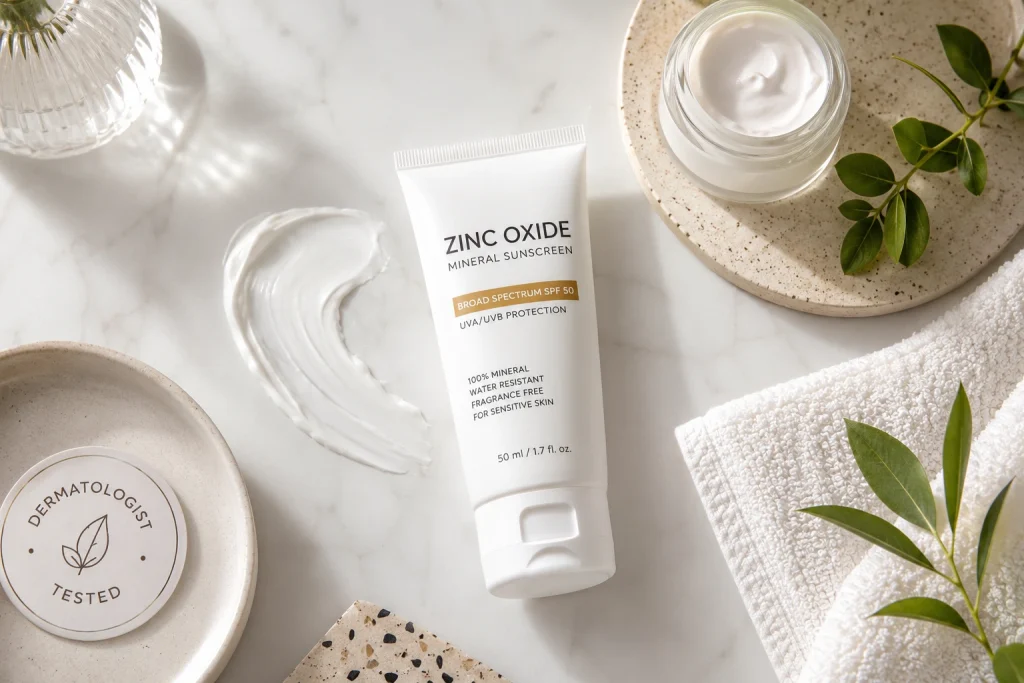
What Is Zinc Oxide?
Zinc oxide is a naturally occurring mineral compound commonly used in skincare and dermatology products.
It appears as a white powder and is widely known for its anti-inflammatory, antibacterial, wound-healing, and sun-protective properties.
In skincare, zinc oxide is commonly found in:
- Mineral sunscreens
- Diaper rash creams
- Calamine lotions
- Acne treatments
- Sensitive skin creams
- Healing ointments
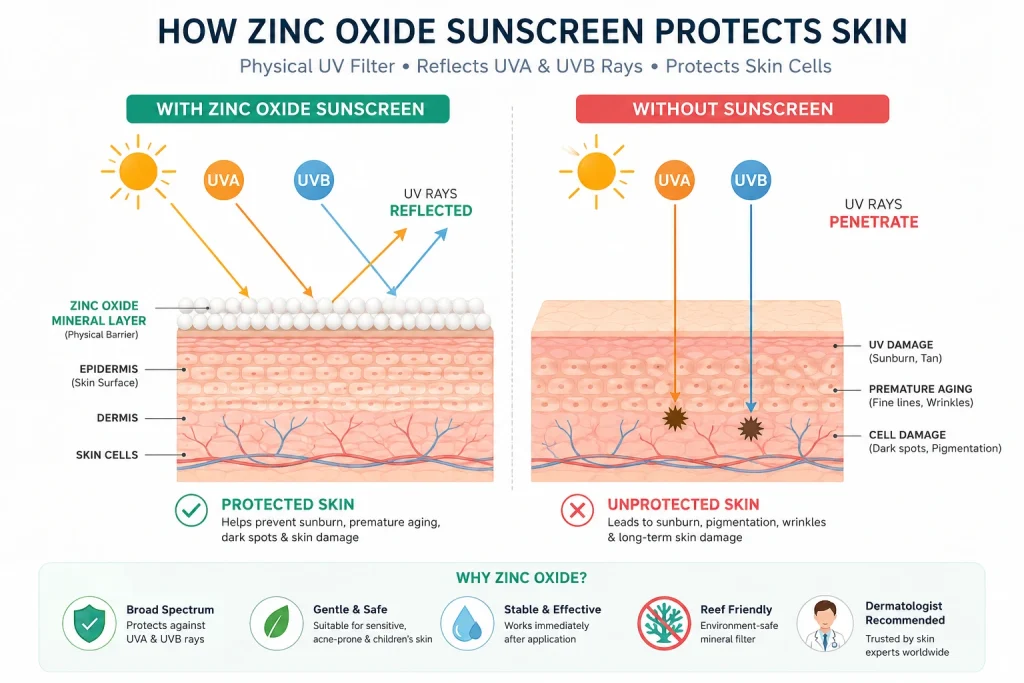
Unlike chemical sunscreen filters, zinc oxide acts as a physical barrier on the skin that reflects harmful ultraviolet rays away from the skin surface.
Because of its gentle nature, zinc oxide is considered suitable for sensitive skin, acne-prone skin, oily skin, rosacea-prone skin, and even children.
Top Zinc Oxide Uses for Skin
1. Zinc Oxide for Sun Protection
One of the most important zinc oxide uses for skin is protection against harmful UV rays. Zinc oxide is a broad-spectrum mineral sunscreen ingredient that helps shield the skin from both UVA and UVB radiation.
Unlike chemical sunscreens that absorb UV rays, zinc oxide creates a protective layer over the skin that reflects sunlight away from the skin surface.
Benefits of Zinc Oxide Sunscreen
- Provides broad-spectrum UV protection
- Helps prevent sunburn
- Reduces premature aging
- Protects collagen from UV damage
- Helps lower the risk of hyperpigmentation
- Suitable for sensitive skin
Daily use of zinc oxide sunscreen may also help reduce signs of photoaging such as wrinkles, fine lines, uneven skin tone, and sun spots. Along with sunscreen, following proper summer skincare routine tips can further protect your skin from UV damage.
2. Zinc Oxide for Acne and Pimples
Another major zinc oxide uses for skin benefit is acne management. Zinc oxide has antibacterial and anti-inflammatory properties that may help reduce acne breakouts and calm inflamed skin.
How Zinc Oxide Helps Acne-Prone Skin
- Reduces redness and swelling
- Helps control excess oil
- Supports skin healing
- Calms irritated pimples
- Protects damaged skin barrier
- May reduce post-acne marks
People with oily and acne-prone skin often prefer mineral sunscreens containing zinc oxide because they are non-comedogenic and less likely to clog pores.
If you are struggling with persistent acne, acne scars, or recurring pimples, professional acne treatment in Roorkee may help improve long-term skin health.
3. Zinc Oxide for Oily Skin
Excess oil production can contribute to acne, clogged pores, and greasy-looking skin. One lesser-known zinc oxide uses for skin is oil control.
Zinc oxide works as a mild astringent that helps absorb excess oil without excessively irritating the skin.
Benefits for Oily Skin
- Helps reduce shine
- Supports balanced sebum production
- Provides a matte finish
- Reduces greasy appearance
- Helps improve sunscreen wearability
People with oily skin should also understand which treatments are best for oily skin for better acne prevention and oil control.
4. Zinc Oxide for Sensitive Skin
Sensitive skin requires gentle ingredients that protect the skin barrier without causing burning or irritation. Zinc oxide is widely recommended by dermatologists for sensitive skin because it is soothing and minimally reactive.
Why Zinc Oxide Is Suitable for Sensitive Skin
- Non-irritating
- Fragrance-free formulations available
- Gentle physical UV protection
- Helps calm redness
- Less likely to trigger allergic reactions
People with damaged skin barriers may also benefit from understanding barrier repair therapy for damaged skin.
5. Zinc Oxide for Rosacea and Redness
Facial redness and rosacea flare-ups can worsen due to sun exposure and inflammation. Zinc oxide uses for skin include helping calm visible redness and protecting compromised skin.
Benefits for Rosacea-Prone Skin
- Reduces irritation
- Minimizes heat-triggered inflammation
- Protects against UV-induced flare-ups
- Supports skin barrier recovery
- Provides gentle daily sun protection
Those experiencing persistent redness can also read about the best treatments for rosacea redness.
6. Zinc Oxide for Skin Barrier Protection
The skin barrier helps prevent moisture loss and protects against environmental damage. When the barrier becomes damaged, skin may become dry, irritated, inflamed, or sensitive.
Zinc oxide creates a protective layer over the skin that helps defend against external irritants and transepidermal water loss.
Zinc Oxide Barrier Benefits
- Reduces moisture loss
- Protects against pollution
- Helps reduce friction irritation
- Supports healing after irritation
- Calms inflamed skin
You can also learn more about transepidermal water loss and skin barrier health.
7. Zinc Oxide for Burns, Cuts, and Irritation
Zinc oxide is widely used in topical creams for minor burns, cuts, and skin irritation because of its soothing and protective properties.
Benefits for Minor Skin Damage
- Helps soothe irritation
- Supports wound healing
- Creates a protective barrier
- Reduces friction
- Helps prevent bacterial contamination
8. Zinc Oxide for Hyperpigmentation and Melasma Prevention
Zinc oxide does not bleach the skin, but it may help prevent worsening of dark spots caused by UV exposure.
Conditions like melasma and post-inflammatory hyperpigmentation can worsen without proper sun protection.
How Zinc Oxide Helps
- Blocks UV rays
- Helps prevent sun-induced pigmentation
- Protects healing skin
- Reduces future darkening
If you are dealing with pigmentation concerns, you may also benefit from reading about how to treat hyperpigmentation and advanced melasma treatment options.
9. Zinc Oxide After Laser and Chemical Peel Treatments
After professional skin treatments, the skin becomes more vulnerable to irritation and sun damage.
Dermatologists frequently recommend zinc oxide sunscreen after laser treatments, chemical peels, microneedling, and acne procedures.
Benefits After Procedures
- Gentle protection
- Reduces irritation risk
- Helps calm inflammation
- Protects healing skin
- Prevents post-treatment pigmentation
If you are considering advanced skin procedures, you can also explore benefits of chemical peels for skin rejuvenation and laser treatment for skin concerns.
Zinc Oxide for Different Skin Types
Zinc Oxide for Oily Skin
- Helps control oil
- Lightweight mineral formulas available
- Less pore-clogging risk
And, Zinc Oxide for Dry Skin
Dry skin users should choose zinc oxide products with hydrating ingredients such as ceramides, hyaluronic acid, glycerin, and nourishing moisturizers.
People experiencing flaking or rough skin should also explore solutions for dry skin treatment and hydration.
Zinc Oxide for Acne-Prone Skin
- Non-comedogenic
- Anti-inflammatory
- Reduces redness
Also, Zinc Oxide for Sensitive Skin
- Less irritating
- Fragrance-free options available
- Gentle mineral protection
Zinc Oxide for Combination Skin
Combination skin may benefit from lightweight zinc oxide lotions that balance oil without causing excessive dryness.
Zinc Oxide vs Chemical Sunscreen
| Feature | Zinc Oxide | Chemical Sunscreen |
| UV Protection | Broad-spectrum | Depends on ingredients |
| Skin Type Suitability | Sensitive skin friendly | May irritate sensitive skin |
| Acne-Friendly | Usually yes | Sometimes pore-clogging |
| Works Immediately | Yes | Needs absorption time |
| White Cast | Possible | Usually invisible |
| Reef Safe | More eco-friendly | Some filters controversial |
How to Use Zinc Oxide on Face?
1. Cleanse Your Face
Start with a gentle cleanser suitable for your skin type.
2. Apply Moisturizer
If you have dry skin, apply moisturizer before zinc oxide sunscreen.
3. Apply Zinc Oxide Sunscreen
Use a sufficient amount on the face, neck, ears, and other exposed areas.
4. Reapply Every 2 Hours
Reapply sunscreen after sweating, swimming, or prolonged sun exposure.
5. Use Daily
Even indoor UV exposure through windows can contribute to skin damage and pigmentation.
Following a proper daily skincare routine alongside sunscreen use can improve overall skin protection.
Can Zinc Oxide Cause White Cast?
One common concern with zinc oxide sunscreen is the white residue it may leave behind.
Why White Cast Happens
- High zinc oxide concentration
- Thick mineral formulations
- Larger particle size
How to Reduce White Cast
- Use tinted mineral sunscreen
- Choose lightweight formulations
- Blend properly into skin
- Select micronized zinc oxide products
Potential Side Effects of Zinc Oxide
Zinc oxide is generally considered safe, but some people may experience mild side effects.
Possible Side Effects
- Dryness
- White cast
- Product pilling
- Mild irritation
- Rare allergic reaction
Powder-based zinc oxide products should not be inhaled.
Who Should Avoid Zinc Oxide?
Although zinc oxide is suitable for most people, some individuals should be cautious.
- People with extremely dry skin
- Those allergic to sunscreen ingredients
- Individuals experiencing severe irritation
- People using heavy makeup layering
- Anyone sensitive to specific formulations
Dermatologist’s Insight
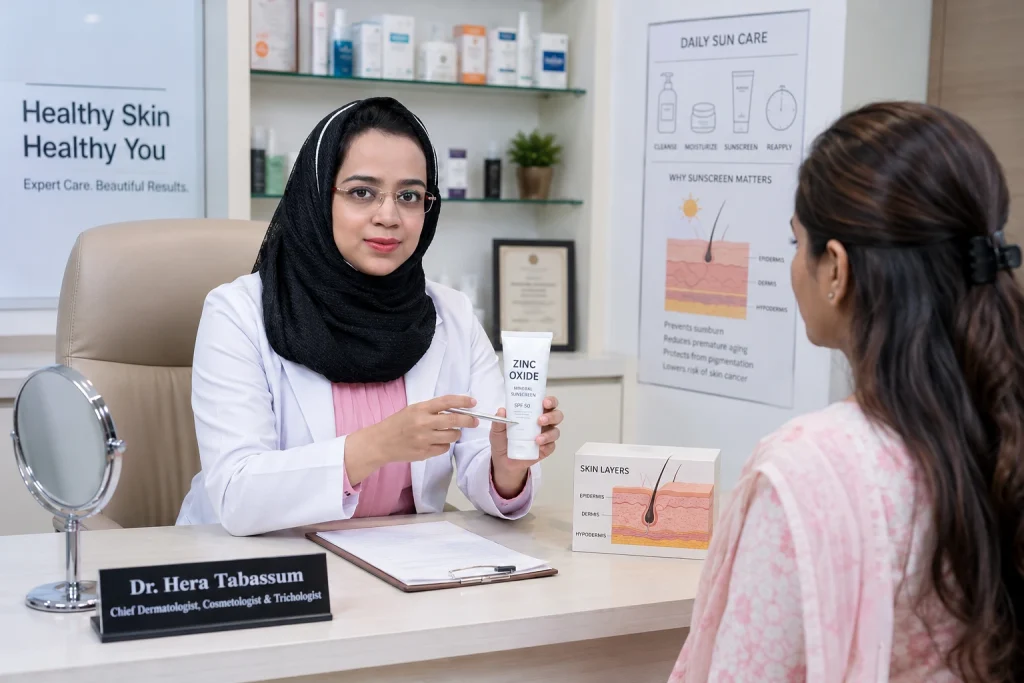
Reviewed by DR. HERA TABASSUM
Chief Dermatologist, Cosmetologist & Trichologist
Dr Hera Tabassum is one of the leading dermatologists, dermatosurgeons, and cosmetologists with expertise in clinical dermatology, acne management, laser treatments, and advanced skin procedures.
She completed her MBBS and MD in Dermatology from prestigious JNMCH, AMU (Aligarh), and also earned MRCP-SCE certification in dermatology from the Royal College of Physicians, London.
Dr Hera Tabassum has worked with reputed institutions including Sir Ganga Ram Hospital, New Delhi. She has extensive experience in treating acne, pigmentation, sensitive skin disorders, inflammatory skin conditions, and aesthetic concerns.
She is also a life member of IADVL and has multiple publications in national and international journals.
If you are looking for professional skincare guidance, you can also consult a dermatologist in Roorkee.
Email: info@drheraskinclinic.com
Frequently Asked Questions
Is zinc oxide safe for daily use?
Yes, zinc oxide is generally considered safe for daily skincare and sunscreen use.
Can zinc oxide clog pores?
Most zinc oxide formulations are non-comedogenic and suitable for acne-prone skin.
Is zinc oxide good for acne?
Yes, zinc oxide may help reduce inflammation, redness, and irritation associated with acne.
Does zinc oxide remove dark spots?
Zinc oxide does not directly remove dark spots, but it helps prevent pigmentation from worsening due to UV exposure.
Is zinc oxide suitable for sensitive skin?
Yes, zinc oxide is commonly recommended for sensitive and reactive skin types.
Can zinc oxide help rosacea?
Zinc oxide may help reduce redness and protect rosacea-prone skin from UV-triggered flare-ups.
Is nano zinc oxide safe?
Current research suggests properly formulated nano zinc oxide in skincare products is generally considered safe for topical use.
Can I use zinc oxide sunscreen every day?
Yes, dermatologists recommend daily sunscreen use for long-term skin protection.
Final Thoughts
Zinc oxide is one of the most versatile skincare ingredients used in dermatology and cosmetic formulations today. From protecting against harmful UV rays to calming acne-prone and sensitive skin, zinc oxide offers multiple skin benefits when used correctly.
Whether you are looking for better sun protection, soothing skincare, acne support, or skin barrier protection, understanding zinc oxide uses for skin can help you choose safer and more effective skincare products for long-term skin health. For personalized skincare recommendations and advanced dermatology treatments, you can also book an appointment with Dr Hera Skin & Hair Clinic.