
Hair fall is a common concern for both men and women. Stress, genetics, hormonal changes, and medical conditions can all contribute to hair loss. One important but often overlooked cause is Vitamin D Deficiency and Hair Fall. Vitamin D supports many functions in the body, including healthy hair follicle growth. When your vitamin D levels become low, your hair growth cycle may get disrupted, leading to excessive shedding and slower regrowth.
If you notice increased hair fall along with fatigue, muscle weakness, or bone pain, it is worth discussing your symptoms with a qualified dermatologist. Identifying the underlying cause early can help prevent further hair thinning and improve the chances of healthy hair regrowth.
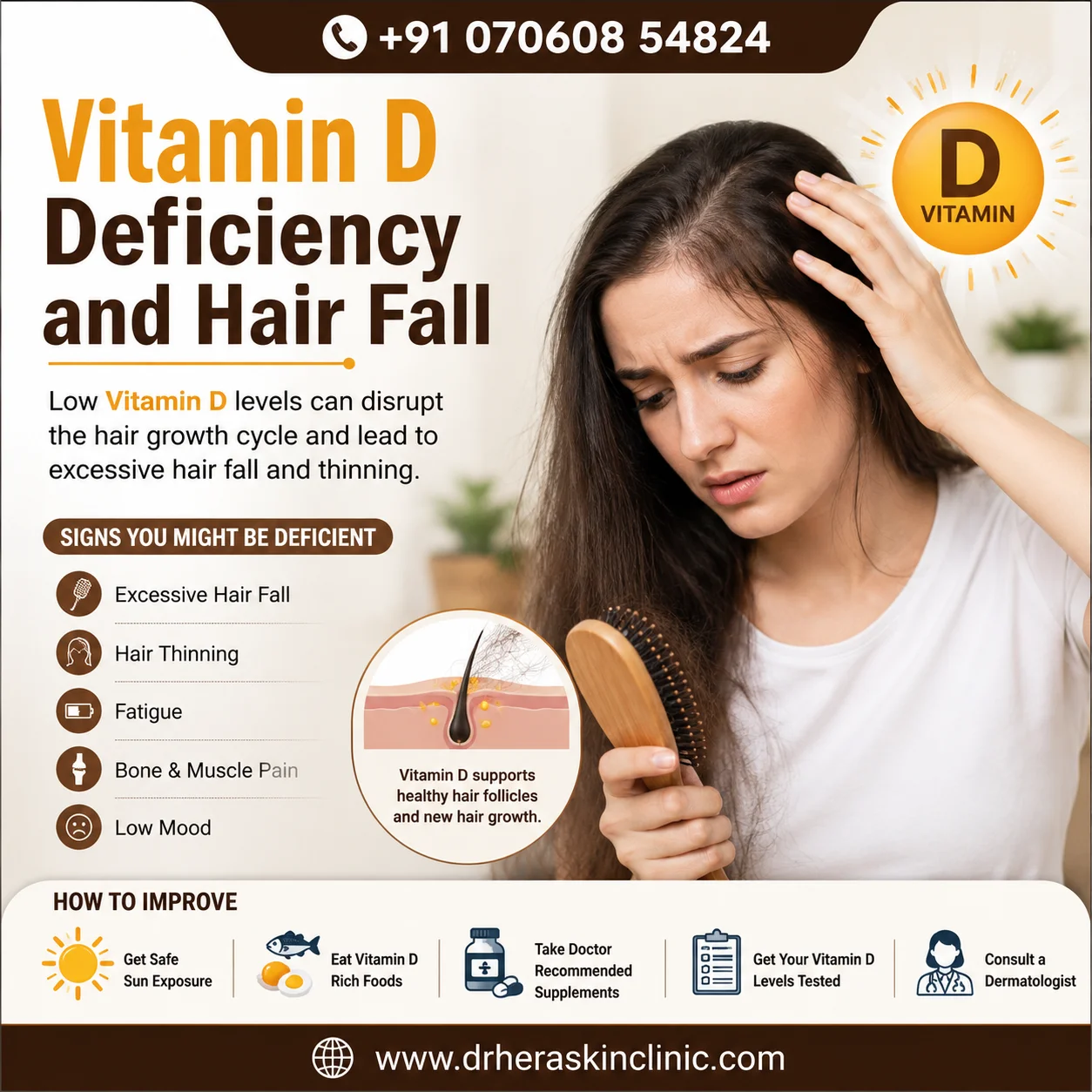
Can Vitamin D Deficiency Cause Hair Fall?
Yes. Vitamin D Deficiency and Hair Fall are closely connected. Vitamin D plays an important role in maintaining healthy hair follicles. Hair follicles contain vitamin D receptors that help regulate the normal hair growth cycle. Low vitamin D levels may interfere with this process and cause hair follicles to enter the resting phase earlier than expected.
This may result in:
- Increased daily hair shedding
- Slow hair regrowth
- Diffuse hair thinning
- Weak and fragile hair strands
- Reduced hair density over time
Vitamin D deficiency is not always the only reason behind hair loss. Iron deficiency, thyroid disorders, hormonal imbalance, nutritional deficiencies, autoimmune diseases, and chronic stress can also contribute. A proper medical evaluation is essential before starting treatment.
How Vitamin D Supports Healthy Hair Growth
Healthy hair grows through a natural cycle consisting of three phases.
1. Anagen Phase
This is the active growth phase. Hair follicles continuously produce new hair during this stage, which may last for several years.
2. Catagen Phase
This is a short transition phase where hair growth slows before entering the resting stage.
3. Telogen Phase
This is the resting phase. Old hair naturally sheds, allowing new hair to grow.
When Vitamin D Deficiency and Hair Fall occur together, more hair follicles may enter the telogen phase prematurely. This causes noticeable hair shedding and delays the growth of new hair.
Who Is More Likely to Develop Vitamin D Deficiency?
Anyone can develop vitamin D deficiency. However, some people have a higher risk because of their lifestyle or medical conditions.
- People who spend most of their time indoors
- Individuals with limited sunlight exposure
- Older adults
- Pregnant or breastfeeding women
- People with darker skin tones
- Individuals with obesity
- People with digestive disorders affecting nutrient absorption
- Patients with autoimmune diseases
Many office workers spend long hours indoors. They may not receive enough sunlight to produce adequate vitamin D naturally.
Common Symptoms of Vitamin D Deficiency
Hair fall may be one of several symptoms. Some people experience other signs long before hair loss becomes noticeable.
| Hair & Scalp Symptoms | General Body Symptoms |
|---|---|
| Excessive hair shedding | Persistent fatigue |
| Hair thinning | Bone or back pain |
| Slow hair regrowth | Muscle weakness |
| Reduced hair volume | Frequent infections |
| Weak hair strands | Low mood or depression |
If several of these symptoms appear together, medical evaluation is recommended instead of relying only on home remedies.
How Is Vitamin D Deficiency Diagnosed?
Diagnosing Vitamin D Deficiency and Hair Fall requires more than simply looking at the scalp. Your dermatologist will first review your medical history, diet, medications, lifestyle, and pattern of hair loss.
A blood test measuring 25-hydroxy Vitamin D is commonly recommended to assess vitamin D levels.
Depending on your symptoms, your doctor may also advise additional investigations such as:
- Complete Blood Count (CBC)
- Serum Ferritin
- Vitamin B12
- Thyroid Profile
- Serum Zinc
- Serum Calcium
You can also learn more about the importance of a blood test for hair loss before starting any treatment plan.
Understanding Vitamin D Blood Test Results
| Vitamin D Level | Interpretation |
|---|---|
| Below 10 ng/mL | Severe deficiency |
| 10–20 ng/mL | Deficiency |
| 20–30 ng/mL | Insufficiency |
| 30–50 ng/mL | Generally considered sufficient for most healthy adults |
Your doctor will interpret these values along with your symptoms, medical history, and examination findings. Self-diagnosis or self-medication should always be avoided.
Expert Opinion
Dr. Hera Tabassum, Chief Dermatologist, Cosmetologist & Trichologist, has extensive experience in diagnosing and treating various hair and scalp disorders. She completed her MBBS and MD in Dermatology from JNMCH, AMU (Aligarh), earned the MRCP-SCE in Dermatology from the Royal College of Physicians (London), and has received advanced training in dermatosurgery, aesthetics, and lasers. Her clinical experience at institutions including Sir Ganga Ram Hospital, New Delhi, along with publications in national and international journals, supports an evidence-based approach to managing hair loss.
If persistent hair fall continues despite improving your diet and lifestyle, consulting an experienced Dermatologist in Roorkee can help identify the exact cause and create a personalised treatment plan.
Treatment for Vitamin D Deficiency and Hair Fall
The treatment for Vitamin D Deficiency and Hair Fall depends on the underlying cause and the severity of the deficiency. Restoring normal vitamin D levels may help improve the hair growth cycle, but results usually take time. Hair grows slowly, so patience and consistency are important.
1. Vitamin D Supplements
If blood tests confirm deficiency, your dermatologist may prescribe vitamin D supplements in an appropriate dosage. Avoid taking high-dose supplements without medical advice because excessive vitamin D intake can lead to unwanted health complications.
2. Healthy Sunlight Exposure
Sunlight helps your body produce vitamin D naturally. Spending 15–30 minutes in early morning sunlight several days a week may be beneficial for many people. The ideal duration depends on your skin type, location, and season.
3. Improve Your Diet
Adding vitamin D-rich foods to your meals supports overall health. These foods alone may not correct a severe deficiency, but they contribute to maintaining healthy vitamin D levels.
| Food | Vitamin D Source |
|---|---|
| Fatty fish (Salmon, Mackerel, Sardines) | Excellent |
| Egg yolks | Good |
| Fortified milk and cereals | Good |
| Mushrooms exposed to UV light | Moderate |
| Cod liver oil | Rich source |
A balanced diet with enough protein, iron, zinc, and vitamin B12 is equally important because hair health depends on multiple nutrients. You can also explore foods that support healthier hair in our guide on foods to prevent hair thinning and promote regrowth.
4. Treat Other Contributing Conditions
Hair loss may result from more than one factor. Iron deficiency, thyroid disorders, hormonal imbalance, chronic illness, or autoimmune conditions may also require treatment. Addressing all contributing causes gives the best chance of improving hair growth.
How Long Does Hair Regrowth Take?
Hair regrowth is gradual. Most people do not notice immediate improvement after starting treatment.
| Timeline | Expected Progress |
|---|---|
| First 4 weeks | Vitamin D levels begin improving |
| 2–3 months | Hair shedding may gradually reduce |
| 3–6 months | New hair growth may become noticeable |
| 6–12 months | Hair density may continue improving depending on the underlying cause |
Results vary from person to person. Genetics, age, nutritional status, hormonal health, and the duration of deficiency all influence recovery.
Can Clinical Hair Treatments Help?
Some patients continue to experience hair thinning even after correcting vitamin D deficiency. In such situations, your dermatologist may recommend additional treatment options based on the cause of hair loss.
These may include:
- PRP Hair Therapy
- Mesotherapy for Hair
- Prescription medications
- Scalp evaluation and targeted treatment
Depending on your condition, your dermatologist may discuss options such as PRP Hair Treatment or Mesotherapy for Hair as part of a personalised treatment plan.
Tips to Prevent Vitamin D Deficiency and Hair Fall
- Spend some time outdoors regularly.
- Eat a balanced diet rich in protein and essential vitamins.
- Avoid crash dieting.
- Get enough sleep every night.
- Manage stress through regular exercise or relaxation techniques.
- Avoid smoking.
- Seek medical advice if hair fall continues for several months.
- Get periodic blood tests if you have recurrent nutritional deficiencies.
When Should You See a Dermatologist?
Hair fall should not be ignored if it becomes persistent or is accompanied by other symptoms.
Consult a dermatologist if you notice:
- Hair fall lasting longer than three months.
- Sudden increase in daily hair shedding.
- Patchy hair loss.
- Visible thinning along the scalp.
- Scalp itching, redness, or scaling.
- Hair loss with fatigue, bone pain, or muscle weakness.
Early diagnosis often improves treatment outcomes. If you are experiencing persistent hair loss, you may also find our guide on Hair Fall Treatment helpful for understanding available treatment options.
Frequently Asked Questions
Can vitamin D deficiency alone cause hair fall?
Yes. Low vitamin D can contribute to hair shedding by affecting the normal hair growth cycle. However, many people have additional causes that should also be evaluated.
Which blood test checks vitamin D levels?
The 25-hydroxy vitamin D blood test is commonly used to assess vitamin D status.
Can hair grow back after correcting vitamin D deficiency?
In many cases, hair regrowth is possible after vitamin D levels are restored, provided the hair follicles remain healthy and no other untreated condition is present.
Should I take vitamin D supplements without testing?
It is better to consult a healthcare professional before taking supplements. Excessive vitamin D intake may cause health problems.
Is sunlight enough to correct vitamin D deficiency?
Mild deficiency may improve with regular sunlight exposure and dietary changes. Moderate or severe deficiency often requires supplements prescribed by a doctor.
About the Author
Dr. Hera Tabassum is the Chief Dermatologist, Cosmetologist, and Trichologist at Dr. Hera’s Skin & Hair Clinic. She completed her MBBS and MD in Dermatology from JNMCH, AMU (Aligarh), and earned the MRCP-SCE in Dermatology from the Royal College of Physicians, London. She has also completed advanced training in dermatosurgery, aesthetic procedures, and laser treatments. Dr. Hera has served as Senior Registrar at JN Medical College and has worked at Sir Ganga Ram Hospital, New Delhi. She has authored publications in national and international journals and is a life member of IADVL.
E-mail: info@drheraskinclinic.com
Conclusion
Vitamin D Deficiency and Hair Fall are closely linked, but low vitamin D is only one possible reason for hair loss. A proper diagnosis is essential because nutritional deficiencies, hormonal imbalance, thyroid disorders, stress, genetics, and autoimmune conditions can also affect hair growth.
If you have ongoing hair thinning or excessive shedding, seek a professional evaluation instead of relying on self-diagnosis. Timely treatment, a balanced diet, healthy lifestyle habits, and appropriate medical care can support healthier hair and long-term scalp health.