
Yes, makeup can cause acne in some people. However, makeup itself is not always the problem. Breakouts usually happen when products clog pores, are not removed properly, or are not suitable for your skin type. Using expired makeup, sharing brushes, or sleeping with makeup can also increase the risk of acne.
If you already have acne-prone skin, choosing the right products and following a proper skincare routine can help reduce the chances of new breakouts.
Can Makeup Cause Acne?
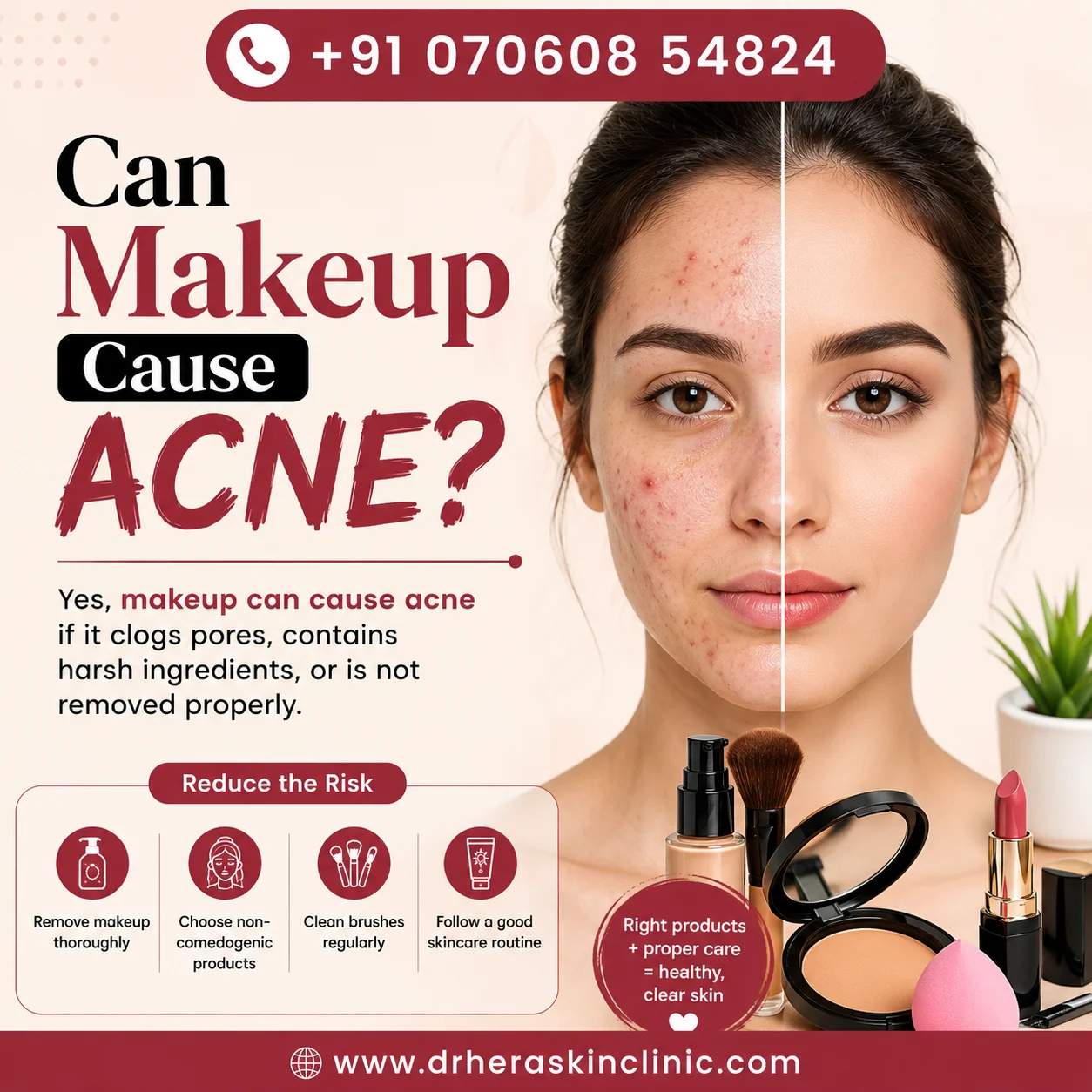
Many people ask, “Can makeup cause acne?” The answer is yes, but it depends on several factors. Modern makeup products are often formulated to be skin-friendly. Still, even high-quality products may trigger breakouts if they block pores or irritate your skin.
Your skin naturally produces oil called sebum. Dead skin cells also collect on the surface. When these mix with pore-clogging makeup, the pores become blocked. This creates an ideal environment for acne-causing bacteria to grow. As a result, whiteheads, blackheads, pimples, or inflamed acne may develop.
The risk becomes higher if makeup stays on the skin for long hours or is not removed completely before sleeping.
How Does Makeup Trigger Acne?
Acne develops through a combination of clogged pores, excess oil, bacteria, and inflammation. Makeup may contribute to this process in several ways.
- Heavy products can trap oil and dead skin cells.
- Comedogenic ingredients may block pores.
- Dirty makeup brushes transfer oil and bacteria.
- Expired cosmetics may irritate the skin.
- Sleeping with makeup prevents normal skin renewal.
- Using multiple heavy products together increases pore blockage.
This condition is often called acne cosmetica. It usually appears as small, uniform bumps on the cheeks, forehead, chin, or along the hairline.
Signs That Your Makeup May Be Causing Acne
Not every breakout is caused by makeup. Hormones, stress, genetics, and certain medical conditions also play important roles. Still, some signs suggest that your cosmetics may be contributing.
- Breakouts started after changing your makeup.
- Pimples appear only where makeup is applied.
- You notice tiny white bumps instead of large painful pimples.
- Your skin feels rough after wearing foundation.
- Acne improves when you stop using a particular product.
If you experience these changes, discontinue the suspected product for a few weeks and observe whether your skin improves.
Can Non-Comedogenic Makeup Still Cause Acne?
Many products are labelled as “non-comedogenic.” This means they are designed to reduce the risk of clogging pores. However, this does not guarantee that every person’s skin will respond the same way.
Your skin type, climate, skincare routine, and product layering all influence how your skin reacts. Even non-comedogenic makeup may contribute to breakouts if it is not removed properly or if it causes irritation.
Patch testing a new product before regular use is always a sensible step.
Ingredients That May Increase the Risk of Breakouts
Reading ingredient labels can help you make better choices. Some ingredients have a greater tendency to clog pores in acne-prone skin.
| Ingredient | Why It May Be Problematic |
|---|---|
| Isopropyl Myristate | May clog pores in some people. |
| Coconut Oil | Can feel heavy on acne-prone skin. |
| Cocoa Butter | May contribute to blocked pores. |
| Lanolin Derivatives | Can trigger congestion in sensitive skin. |
| Heavy Waxes | May trap oil and debris. |
This does not mean everyone should avoid these ingredients. Skin responses vary from person to person.
Skin-Friendly Ingredients for Acne-Prone Skin
If you are concerned about breakouts, look for products containing ingredients that support healthy skin.
- Niacinamide: Helps improve the skin barrier and reduce excess oil.
- Salicylic Acid: Helps keep pores clear.
- Ceramides: Support the natural skin barrier.
- Hyaluronic Acid: Provides lightweight hydration.
- Zinc: Helps calm oily skin.
Choosing lightweight formulas often feels more comfortable for acne-prone skin.
Common Makeup Mistakes That Can Lead to Acne
- Sleeping with makeup.
- Not washing makeup brushes regularly.
- Using expired cosmetics.
- Sharing makeup products.
- Applying makeup on sweaty skin.
- Using too many heavy layers.
- Skipping cleansing before bedtime.
These habits increase the chance of clogged pores and bacterial buildup.
Can Different Makeup Products Cause Acne?
Foundation
Heavy or long-wear foundations may contribute to clogged pores if they are not removed properly. Choosing lightweight formulas can reduce this risk.
Primer
Some primers create a smooth finish by forming a film on the skin. For some people, this may trap oil when combined with heavy foundation.
Concealer
Thick concealers used repeatedly over active pimples may increase congestion if applied in multiple layers.
Sunscreen Under Makeup
Sunscreen should never be skipped. Instead, choose a sunscreen suitable for acne-prone skin so it works well under makeup.
Myths and Facts About Makeup Acne
| Myth | Fact |
|---|---|
| Only oily skin gets makeup acne. | Any skin type can develop acne if pores become blocked. |
| Natural makeup never causes acne. | Some natural oils may still clog pores. |
| Foundation always causes acne. | The formulation, skin type, and cleansing routine matter more than the product category. |
| More cleansing always prevents acne. | Over-cleansing may damage the skin barrier and cause irritation. |
How to Remove Makeup Properly?
Removing makeup completely is one of the most effective ways to reduce makeup-related breakouts.
- Remove makeup gently using micellar water, cleansing oil, or cleansing balm.
- Wash your face with a gentle cleanser.
- Pat the skin dry with a clean towel.
- Apply a suitable moisturizer.
Double cleansing may be beneficial if you wear long-lasting or waterproof makeup. You can also learn more about proper cleansing techniques in our guide on The Importance of Double Cleansing.
When Acne May Not Be Caused by Makeup?
Not every breakout is linked to cosmetics. Hormonal changes, stress, genetics, certain medications, and underlying skin conditions can also contribute to acne.
If your acne appears mainly around the jawline, becomes painful, or worsens around your menstrual cycle, hormonal factors may also be involved. You may find our article on Recognizing the Signs of Hormonal Acne helpful.
Expert Insight from Dr. Hera Tabassum
According to Dr. Hera Tabassum, Chief Dermatologist, Cosmetologist, and Trichologist, makeup does not automatically cause acne. The real concern is using products that do not suit your skin or following poor makeup hygiene.
Dr. Hera Tabassum completed her MBBS and MD in Dermatology from JNMCH, AMU (Aligarh). She also earned the MRCP-SCE in Dermatology from the Royal College of Physicians, London. Her training includes dermatosurgery, aesthetic dermatology, and lasers. She has worked at Sir Ganga Ram Hospital, New Delhi, and has contributed to national and international dermatology publications. She is also a life member of IADVL.
She recommends choosing products according to your skin type, removing makeup every night, avoiding unnecessary layering, and seeking professional advice if acne persists despite proper skincare.
How to Choose Makeup If You Have Acne-Prone Skin?
Choosing the right makeup products can reduce the chances of clogged pores. While no product works the same way for everyone, a few simple habits can help you make better decisions.
- Look for products labelled as non-comedogenic.
- Choose lightweight or water-based formulas.
- Avoid products that feel excessively greasy.
- Replace expired makeup regularly.
- Wash makeup brushes and beauty sponges every week.
- Introduce only one new product at a time.
- Always patch test if you have sensitive skin.
Simple Daily Makeup Routine for Acne-Prone Skin
A consistent routine is often more effective than using too many products.
Morning
- Cleanse your face with a gentle cleanser.
- Apply a lightweight moisturizer.
- Use a broad-spectrum sunscreen suitable for acne-prone skin.
- Apply light makeup if needed.
Night
- Remove makeup completely.
- Cleanse your skin thoroughly.
- Apply your prescribed acne treatment if recommended.
- Finish with a suitable moisturizer.
If you are looking for more everyday skincare advice, you may also like our guide on building an effective skincare routine.
Makeup Hygiene Checklist
Good hygiene is just as important as choosing the right makeup.
| Habit | Recommended Practice |
|---|---|
| Foundation Brush | Clean once every week. |
| Beauty Sponge | Wash after regular use and replace when worn out. |
| Mascara | Replace every few months according to product instructions. |
| Shared Makeup | Avoid sharing with others. |
| Storage | Keep products in a cool and clean place. |
When Should You Stop Using a Makeup Product?
Discontinue a cosmetic product if you notice any of the following after using it repeatedly.
- Persistent new pimples.
- Burning or stinging.
- Redness that does not settle.
- Itching or swelling.
- Clusters of whiteheads after application.
Do not continue using a product if you suspect it is worsening your skin. Introduce another product only after your skin has settled.
When Should You See a Dermatologist?
Occasional breakouts often improve with proper skincare and makeup habits. However, professional evaluation is important if:
- Acne continues for several weeks despite changing products.
- You develop painful cystic acne.
- Your acne leaves scars or dark marks.
- Breakouts frequently return.
- You are unsure whether the condition is acne, allergy, or another skin disorder.
If your acne is persistent or severe, consult a qualified dermatologist instead of repeatedly changing cosmetics. You can also read our article on when you should consult a dermatologist for additional guidance.
Treatment Options for Makeup-Related Acne
The treatment depends on the severity of your acne and its underlying cause. Mild cases often improve after removing the triggering product and following a gentle skincare routine.
For persistent acne, a dermatologist may recommend:
- Topical retinoids.
- Salicylic acid-based products.
- Benzoyl peroxide in selected cases.
- Prescription medicines when appropriate.
- Professional acne procedures if indicated.
If active acne continues despite home care, explore our detailed guide on how to get rid of acne. You can also learn about available acne treatment options when professional care is required.
Tips to Prevent Makeup-Related Acne
- Always remove makeup before going to bed.
- Choose products suitable for your skin type.
- Clean makeup brushes regularly.
- Avoid applying thick layers of makeup every day.
- Do not touch your face frequently.
- Replace old or expired cosmetics.
- Keep your skincare routine simple and consistent.
- Never squeeze or pick pimples.
Frequently Asked Questions
Can makeup cause acne even if I wash my face?
Yes. Makeup may still contribute to acne if it contains ingredients that do not suit your skin or if residue remains after cleansing.
Can I wear makeup if I already have acne?
Yes. Many people with acne can continue wearing makeup. Choose suitable products, remove them properly, and avoid heavy layering.
Does sleeping with makeup increase the risk of acne?
Yes. Leaving makeup on overnight allows oil, dirt, and cosmetic residue to remain on the skin for several hours. This may increase the likelihood of clogged pores.
Can dirty makeup brushes cause acne?
Yes. Brushes and sponges collect oil, dead skin cells, and bacteria over time. Regular cleaning helps reduce contamination.
How long does makeup-related acne take to improve?
If the triggering product is discontinued and a proper skincare routine is followed, mild makeup-related acne may gradually improve over several weeks. Persistent or severe acne should be assessed by a dermatologist.
Conclusion
So, can makeup cause acne? It can, but makeup is only one part of the picture. The ingredients, your skin type, makeup hygiene, and cleansing habits all influence how your skin responds. Choosing suitable products, removing makeup every night, and maintaining a consistent skincare routine can significantly reduce the risk of breakouts.
If acne continues despite changing your makeup and improving your skincare routine, professional evaluation is recommended. A dermatologist can identify the actual cause and suggest a treatment plan based on your skin condition instead of relying on trial and error.
Dr. Hera Tabassum
Chief Dermatologist, Cosmetologist & Trichologist
MBBS, MD (Dermatology), MRCP-SCE (Dermatology, Royal College of Physicians, London)
Life Member, IADVL
Email: info@drheraskinclinic.com