
Healthy skin needs more than regular care. It also needs the right diagnosis and treatment. Many people visit a beauty salon for acne, pigmentation, dull skin, or unwanted facial hair. While salons offer cosmetic services, they are not designed to diagnose or treat medical skin conditions. This is why choosing a Dermatologist Instead of a Beauty Salon can make a significant difference to your skin’s health.
A qualified dermatologist understands the science behind skin, hair, and nail disorders. They identify the root cause of a problem before suggesting a treatment plan. This approach helps reduce the risk of unnecessary procedures and supports long-term skin health.
Some cosmetic concerns may look simple but can be linked to hormonal changes, allergies, fungal infections, or chronic skin diseases. Treating only the visible symptoms may delay proper care. Choosing a Dermatologist Instead of a Beauty Salon gives you access to medical expertise, personalised treatment, and professional follow-up.
What Does a Qualified Dermatologist Do?
A dermatologist is a medical doctor who specialises in diagnosing and treating conditions related to the skin, hair, nails, and scalp. Their training includes understanding how internal health, hormones, lifestyle, medications, and environmental factors affect the skin.
A dermatologist can:
- Diagnose skin diseases accurately.
- Treat acne and acne scars.
- Manage pigmentation disorders.
- Identify fungal and bacterial infections.
- Treat eczema, psoriasis, and vitiligo.
- Recommend prescription medicines when needed.
- Perform medically supervised cosmetic procedures.
- Monitor treatment progress through follow-up visits.
If you are unsure about the role of a dermatologist, you can read more about what a dermatologist does.
What Services Does a Beauty Salon Offer?
Beauty salons focus on cosmetic grooming and appearance enhancement. Their services are suitable for general beauty maintenance but not for diagnosing medical skin conditions.
Common beauty salon services include:
- Facials
- Cleanup treatments
- Waxing
- Threading
- Hair spa
- Basic skincare
- Makeup services
These services may improve your appearance temporarily. However, they cannot identify the medical reason behind persistent skin concerns.
For example, recurring acne, melasma, severe pigmentation, or hair loss usually require medical evaluation. In such situations, choosing a Dermatologist Instead of a Beauty Salon is the safer option.
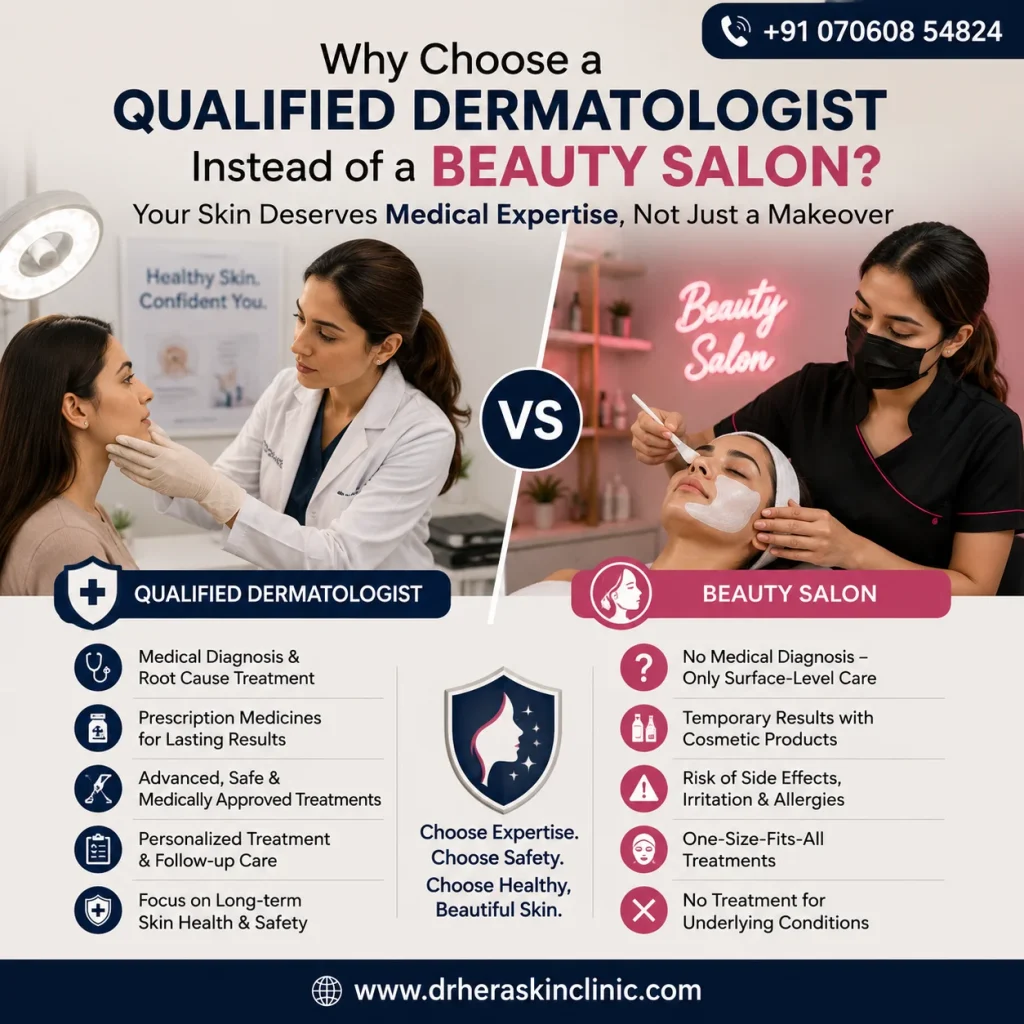
Dermatologist Instead of a Beauty Salon: Key Differences
| Feature | Qualified Dermatologist | Beauty Salon |
|---|---|---|
| Medical Qualification | Yes | No |
| Diagnoses Skin Diseases | Yes | No |
| Prescription Medicines | Yes | No |
| Treats Medical Skin Conditions | Yes | Limited |
| Medical-Grade Procedures | Yes | Not Recommended |
| Follow-Up Care | Yes | Usually Limited |
The goal is not to compare one profession against another. Beauty salons and dermatology clinics serve different purposes. Knowing the difference helps you make informed decisions for your skin.
Many skin problems look similar. Their causes can be completely different.
For example, two people may have acne. One person may have hormonal acne. Another may have fungal acne. Someone else may have acne triggered by cosmetic products or medication.
The treatment for each condition is different.
A facial or cosmetic product may temporarily improve the appearance. It may not solve the actual problem. In some cases, the wrong treatment can make the condition worse.
This is one of the biggest reasons to choose a Dermatologist Instead of a Beauty Salon. A dermatologist first identifies the underlying cause and then recommends the most suitable treatment.
If you experience frequent breakouts, this guide on how to get rid of acne explains the importance of proper treatment planning. People dealing with persistent acne can also explore professional acne treatment options.
Common Skin Concerns That Need a Dermatologist
Some conditions should never be treated with home remedies or salon procedures alone.
- Persistent acne
- Acne scars
- Melasma
- Hyperpigmentation
- Rosacea
- Eczema
- Psoriasis
- Vitiligo
- Fungal infections
- Unexplained skin rashes
- Hair loss
- Changing moles
These conditions often require proper diagnosis, medical treatment, and regular monitoring.
If pigmentation is your primary concern, you can learn more about pigmentation treatment. People experiencing excessive hair fall may also benefit from understanding available hair fall treatment options.
Medical Procedures Should Always Be Performed Under Expert Supervision
Modern dermatology includes many advanced cosmetic procedures. These treatments require medical knowledge, proper patient assessment, and careful aftercare.
Examples include:
- Chemical peels
- Laser treatments
- Botox
- Dermal fillers
- Microneedling
- PRP therapy
- Laser hair removal
Each procedure has specific indications and precautions. A dermatologist evaluates your skin type, medical history, current medications, allergies, and treatment goals before recommending any procedure.
This personalised approach reduces unnecessary risks and helps achieve more predictable outcomes.
If you are planning cosmetic procedures, you may also find these guides useful:
About Dr. Hera Tabassum
DR. HERA TABASSUM
Chief Dermatologist, Cosmetologist & Trichologist
Dr. Hera Tabassum provides evidence-based care for skin, hair, and nail conditions. Every patient receives an individual assessment before a treatment plan is recommended.
E-mail: info@drheraskinclinic.com
Clinic:
Dr Hera’s Skin & Hair Clinic, Near Bank of India, Malviya Chowk, Roorkee, Uttarakhand – 247667
What Can Go Wrong When You Choose a Beauty Salon for Medical Skin Problems?
Beauty salons play an important role in personal grooming. However, they are not equipped to diagnose or manage medical skin conditions.
Some treatments may not suit your skin type or medical history. This can increase the risk of unwanted side effects.
Possible concerns include:
- Skin irritation
- Allergic reactions
- Burns from improper use of devices
- Post-inflammatory pigmentation
- Worsening acne
- Delayed diagnosis of skin diseases
- Temporary or permanent scarring in some cases
If a skin concern continues despite regular salon visits, it is time to consult a qualified dermatologist.
You can also read more about when you should consult a dermatologist.
When Should You Visit a Dermatologist Instead of a Beauty Salon?
The following situations require medical attention rather than cosmetic care.
| Skin Concern | Recommended Action |
|---|---|
| Acne lasting for several weeks | Visit a dermatologist. |
| Repeated pigmentation | Medical evaluation is recommended. |
| Rapid hair fall | Identify the underlying cause. |
| Persistent itching or rashes | Seek medical diagnosis. |
| Changing mole | Do not delay medical consultation. |
| Vitiligo patches | Begin treatment early. |
| Fungal infection | Medical treatment is needed. |
| Severe acne scars | Professional treatment planning is important. |
Choosing a Dermatologist Instead of a Beauty Salon helps you receive the right diagnosis before starting treatment.
Medical Equipment and Cosmetic Equipment Are Not the Same
Many people assume that all skin machines work in a similar way. This is not correct.
Medical procedures require trained professionals, proper patient assessment, and suitable treatment settings.
A dermatologist considers:
- Skin type
- Medical history
- Current medications
- Existing allergies
- Previous skin treatments
- Recovery expectations
This information helps reduce avoidable complications.
For advanced procedures like laser skin treatment, chemical peels, or HydraFacial, a medical evaluation is always a better starting point.
Cost Should Never Be the Only Decision Factor
Many people compare treatments only by price.
A lower price may look attractive in the beginning. However, an unsuitable treatment may not address the actual problem.
This can lead to additional consultations, more procedures, and a longer recovery period.
Instead of focusing only on the initial cost, consider:
- Correct diagnosis
- Treatment safety
- Expected recovery
- Professional follow-up
- Long-term skin health
Choosing a Dermatologist Instead of a Beauty Salon is often about receiving appropriate care rather than simply selecting a cosmetic procedure.
Common Myths About Dermatologists and Beauty Salons
| Myth | Reality |
|---|---|
| Every facial can treat acne. | Acne often needs medical diagnosis and treatment. |
| All laser treatments are the same. | Different skin concerns require different laser technologies. |
| Beauty salons can diagnose skin diseases. | Diagnosis should be made by a qualified dermatologist. |
| Prescription creams are not necessary. | Some conditions improve only with appropriate medical treatment. |
| If skin looks better, the problem is cured. | Visible improvement does not always mean the underlying condition has resolved. |
Skin treatment rarely ends after one visit.
Many conditions need regular monitoring.
A dermatologist reviews your progress and adjusts the treatment plan if required.
Follow-up visits may help:
- Monitor improvement.
- Reduce side effects.
- Modify medicines when necessary.
- Prevent recurrence.
- Support long-term skin health.
This level of medical follow-up is one of the important reasons many patients choose a Dermatologist Instead of a Beauty Salon.
Why Patients Choose Dr. Hera’s Skin & Hair Clinic
Skin concerns are different for every individual. A personalised approach is important.
At Dr. Hera’s Skin & Hair Clinic, every treatment plan begins with a detailed skin assessment.
The focus is on:
- Understanding the root cause.
- Evidence-based treatment planning.
- Individual skin assessment.
- Professional follow-up.
- Patient education.
- Medically appropriate cosmetic procedures.
Patients looking for expert guidance can also explore Dermatology Consultation in Roorkee, Skin Specialist Services, or book an online dermatologist consultation.
Conclusion
Beauty salons and dermatology clinics serve different purposes.
Salons are suitable for routine beauty care and grooming.
Medical skin conditions require proper diagnosis, treatment planning, and follow-up.
Choosing a Dermatologist Instead of a Beauty Salon can help you understand the real cause of your skin concern and receive care based on your individual needs.
If you notice persistent acne, pigmentation, unusual hair loss, skin allergies, recurring infections, or other ongoing concerns, consulting a qualified dermatologist is a sensible first step.
Frequently Asked Questions
1. Why should I choose a dermatologist instead of a beauty salon for acne?
Acne may develop due to hormones, blocked pores, bacteria, medications, or other medical reasons. A dermatologist identifies the cause before recommending treatment.
2. Can a beauty salon diagnose skin diseases?
No. Beauty salons provide cosmetic services. Medical diagnosis should always be performed by a qualified dermatologist.
3. Is laser treatment safer under a dermatologist?
Laser procedures should be planned after evaluating your skin type, medical history, and treatment goals. A dermatologist is trained to make these clinical decisions.
4. Should I visit a dermatologist for pigmentation?
Yes. Pigmentation can have different causes. A medical evaluation helps determine the most suitable treatment.
5. Can a dermatologist also perform cosmetic procedures?
Yes. Dermatologists commonly perform procedures such as chemical peels, laser treatments, microneedling, Botox, dermal fillers, and other medically supervised aesthetic treatments when appropriate.