
Many people wonder if the location of a pimple can reveal something about their health. This idea is known as Acne Face Mapping. It suggests that breakouts on different parts of the face may have different causes. Some traditional systems even link specific facial areas to internal organs.
Modern dermatology takes a different approach. Current research does not support the idea that pimples on a particular part of the face directly indicate a problem with a specific organ. However, the location of acne can still provide useful clues. It may point to factors such as excess oil production, friction, hormones, skincare habits, or hair products.
Understanding Acne Face Mapping – What Your Pimples Mean can help you identify possible triggers and make better skincare decisions. It should not replace a proper medical evaluation. Persistent or severe acne should always be assessed by a qualified dermatologist.
What Is Acne Face Mapping?
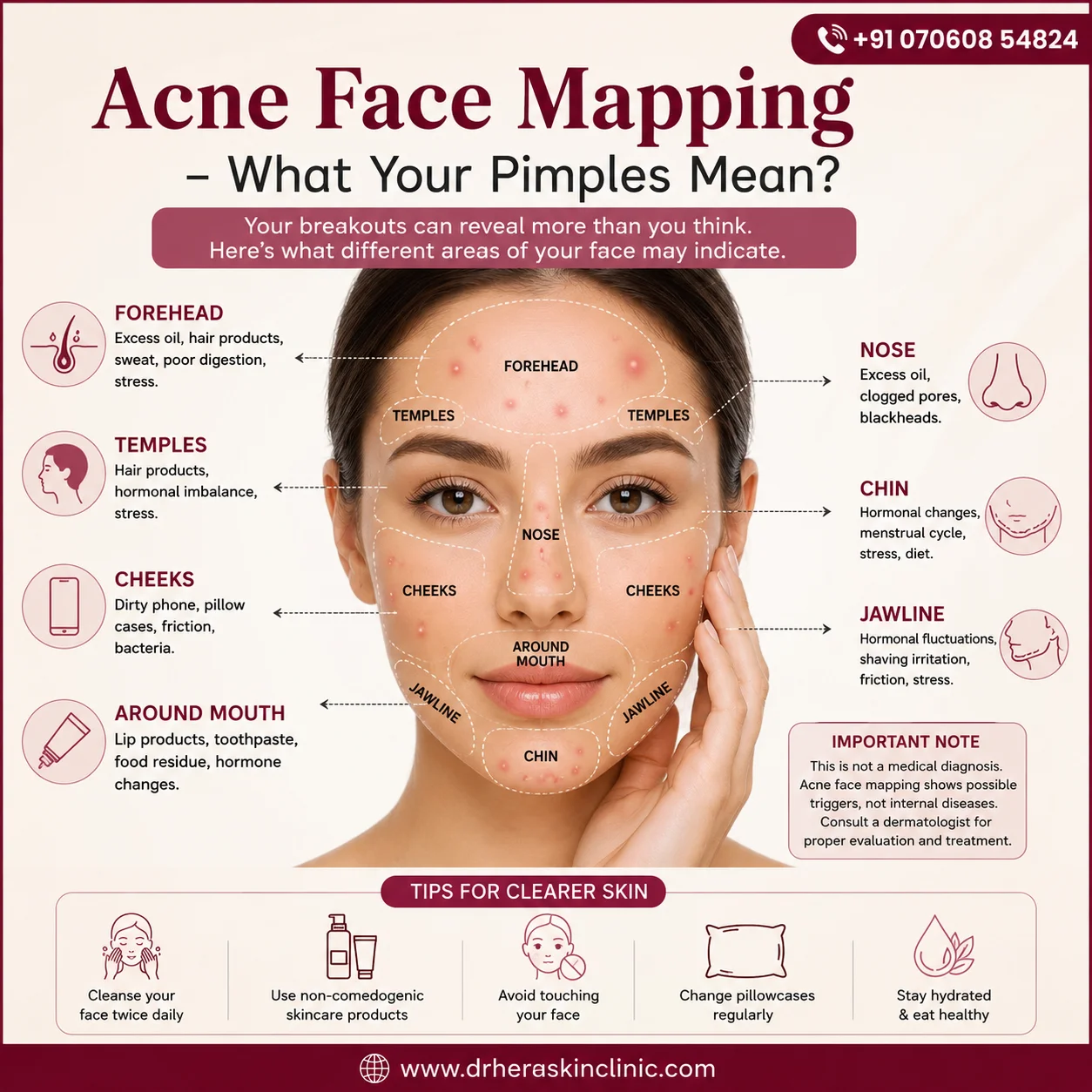
Acne Face Mapping is a method of looking at where pimples appear on the face and identifying possible reasons behind those breakouts. Traditional Chinese Medicine and Ayurveda have used face mapping for many years. These systems believed that different areas of the face reflected the health of different organs.
Today, dermatologists use a more evidence-based approach. Instead of linking acne to internal organs, they evaluate skin type, oil production, hormones, lifestyle, medications, skincare products, and environmental factors.
In simple words, Acne Face Mapping – What Your Pimples Mean should be viewed as a guide to possible skin-related triggers rather than a diagnostic tool for internal diseases.
| Traditional Face Mapping | Modern Dermatology |
|---|---|
| Links acne to internal organs. | Looks at skin, hormones, oil, bacteria, and lifestyle. |
| Based on traditional practices. | Based on clinical examination and scientific evidence. |
| Cannot confirm a medical condition. | Helps identify possible acne triggers. |
Does Acne Face Mapping Really Work?
There is limited scientific evidence that acne on a specific part of the face is connected to a disease in a particular organ. Dermatologists generally agree that acne develops because of clogged pores, excess sebum, inflammation, bacteria, and hormonal changes.
That said, the location of your breakouts can still offer useful information. For example, forehead acne may be linked to oily hair products, while jawline acne is commonly associated with hormonal fluctuations in some individuals.
Understanding Acne Face Mapping – What Your Pimples Mean can help you recognize patterns. It should always be combined with professional medical advice if acne is persistent or severe.
Acne Face Mapping Chart
| Face Area | Possible Causes |
|---|---|
| Forehead | Excess oil, sweat, dandruff, hair products, hats |
| Temples | Hair wax, pomades, oils, hair sprays |
| Nose | Large oil glands, clogged pores |
| Cheeks | Mobile phones, pillowcases, friction, masks |
| Chin | Hormonal changes, irritation, cosmetics |
| Jawline | Hormonal fluctuations, friction, shaving |
| Around Mouth | Lip products, toothpaste, food residue |
Forehead Acne – What Does It Mean?
The forehead is one of the most common places for acne. This area produces more oil than many other parts of the face. Sweat, dead skin cells, and excess sebum can easily clog pores.
Hair products also play an important role. Hair oils, waxes, gels, and sprays may spread onto the forehead. These products can block pores and lead to breakouts. This condition is often called pomade acne.
If you frequently notice pimples on your forehead, it is worth reviewing your haircare routine. You may also find our guide on forehead pimple causes helpful for understanding common triggers.
Common Causes of Forehead Acne
- Excess oil production
- Heavy hair oils or styling products
- Dandruff
- Sweating after exercise
- Wearing helmets, caps, or headbands for long periods
- Not cleansing the skin properly
Temple Acne
Breakouts near the temples often develop because of products applied to the hair. Hair wax, pomades, serums, and oil-based styling products may transfer onto the surrounding skin.
Choosing non-comedogenic hair products and keeping hair away from the face can reduce this problem. Washing your face after applying styling products may also help.
Nose Acne
The nose contains many active sebaceous glands. These glands naturally produce sebum to protect the skin. Excess sebum can combine with dead skin cells and clog pores, leading to blackheads, whiteheads, and inflamed pimples.
Touching the nose frequently or leaving makeup on overnight may increase the risk of clogged pores.
Tips to Reduce Nose Breakouts
- Cleanse the face twice daily with a gentle cleanser.
- Remove makeup before sleeping.
- Use non-comedogenic skincare products.
- Avoid squeezing pimples.
Cheek Acne
Cheek acne is commonly associated with friction and bacteria from everyday objects. Mobile phones, pillowcases, makeup brushes, and face masks can all contribute to repeated breakouts if they are not cleaned regularly.
Touching your face throughout the day may also transfer dirt and bacteria onto the skin.
If acne leaves marks after healing, early treatment can lower the risk of long-term scarring. Learn more about preventing acne scars and explore available options for pimple scar treatment.
Possible Reasons for Cheek Acne
- Dirty pillowcases
- Mobile phone contact
- Mask-related friction
- Touching the face often
- Unclean makeup tools
- Excess oil and clogged pores
Chin Acne
Chin acne is one of the most discussed topics in Acne Face Mapping – What Your Pimples Mean. Many people believe every chin breakout is caused by hormones. In reality, hormones are only one possible factor.
Hormonal fluctuations may increase oil production. This can make acne more likely, especially during puberty, menstrual cycles, pregnancy, or periods of increased stress. However, skincare products, friction, and poor cleansing habits can also contribute.
Common Causes of Chin Acne
- Hormonal changes
- Excess sebum production
- Cosmetic products that clog pores
- Touching the face frequently
- Friction from masks or clothing
Jawline Acne
Jawline acne often follows similar patterns to chin acne. Some people notice repeated breakouts in this area during hormonal changes. Others may develop acne due to shaving irritation, sweat, or skincare products.
Recurring jawline acne should not be ignored. A dermatologist can identify the underlying cause and recommend a treatment plan based on your skin type and medical history.
Acne Around the Mouth
Pimples around the mouth may develop because of lip products, toothpaste ingredients, shaving, or food residue left on the skin. Constantly touching this area can also increase irritation.
If breakouts are painful or resemble boils rather than acne, they may need a different diagnosis. Read more about the difference between a boil and a pimple.
What Causes Acne Besides Face Location?
While Acne Face Mapping – What Your Pimples Mean can help identify possible triggers, acne is usually caused by several factors working together.
- Excess oil production
- Clogged pores
- Dead skin cells
- Cutibacterium acnes bacteria
- Hormonal fluctuations
- Stress
- Certain medications
- Heavy or pore-clogging skincare products
- Friction from masks, helmets, or sports equipment
Finding the exact cause often requires a detailed skin examination instead of relying only on acne location.
How to Prevent Acne Breakouts?
Healthy skincare habits can reduce the risk of new breakouts.
- Wash your face twice a day with a gentle cleanser.
- Choose non-comedogenic skincare and makeup products.
- Remove makeup before sleeping.
- Avoid picking or squeezing pimples.
- Wash pillowcases regularly.
- Clean your mobile phone screen frequently.
- Keep hair products away from facial skin.
- Use sunscreen suitable for acne-prone skin.
- Manage stress through healthy daily habits.
You may also benefit from reading our guide on common skincare mistakes that can worsen acne.
Treatment Options for Acne
The right treatment depends on the type and severity of acne. Mild acne often responds to topical products, while moderate or severe acne may require prescription treatment.
Common Treatment Options
- Salicylic acid to unclog pores.
- Benzoyl peroxide to reduce acne-causing bacteria.
- Topical retinoids to improve skin cell turnover.
- Prescription medicines for persistent acne.
- Chemical peels for selected patients.
- Professional acne procedures advised by a dermatologist.
If over-the-counter products are not giving results, read our article on why your acne treatment might not be working.
Some patients may also benefit from professional procedures such as chemical peels for acne-prone skin, depending on their skin condition.
When Should You See a Dermatologist?
You should seek medical advice if:
- Your acne is painful or cystic.
- Breakouts leave scars.
- Home treatments have not helped after several weeks.
- You develop frequent acne around the jawline or chin.
- Your acne affects your confidence or daily life.
Early treatment can reduce the chance of permanent scars. Learn more about acne treatments that help prevent scars and post-acne skincare.
Dr. Hera Tabassum is the Chief Dermatologist, Cosmetologist, and Trichologist at Dr. Hera’s Skin & Hair Clinic, Roorkee. She believes that acne should never be judged only by its location. Every patient has different skin characteristics, medical history, lifestyle factors, and treatment needs.
A detailed clinical evaluation helps identify the actual cause of acne and supports a personalized treatment plan. This approach can improve skin health while reducing the risk of recurring breakouts and acne scars.
Dr. HERA TABASSUM
Chief Dermatologist, Cosmetologist & Trichologist
E-mail: info@drheraskinclinic.com
Dr Hera’s Skin & Hair Clinic, Near Bank of India, Malviya Chowk, Roorkee, Uttarakhand – 247667
Frequently Asked Questions
Is Acne Face Mapping scientifically proven?
No. Current scientific evidence does not confirm that pimples on specific facial areas are linked to diseases of internal organs. However, acne location can provide clues about possible skin-related triggers.
Does forehead acne always mean digestive problems?
No. Forehead acne is more commonly linked to excess oil, sweat, hair products, dandruff, and clogged pores.
Is jawline acne always hormonal?
No. Hormones may contribute, but friction, shaving, cosmetics, and excess oil can also play a role.
Can stress make acne worse?
Stress may influence hormonal activity and inflammation in some people, which can contribute to acne flare-ups.
Can acne scars be prevented?
Early treatment, avoiding pimple picking, and consulting a dermatologist can reduce the risk of permanent acne scars.
Conclusion
Understanding Acne Face Mapping – What Your Pimples Mean can help you recognize patterns and identify possible triggers behind recurring breakouts. Modern dermatology shows that acne is usually caused by a combination of excess oil, clogged pores, bacteria, hormones, and lifestyle factors rather than problems with specific internal organs.
If acne is persistent, painful, or leaving scars, consult a qualified dermatologist instead of relying on face mapping alone. A professional skin assessment can identify the underlying cause and guide you toward safe, evidence-based treatment for healthier, clearer skin.