
Many people believe that drinking more water is the secret to naturally glowing skin. It is one of the most common skincare tips shared online. But does drinking water give you glowing skin? The short answer is that drinking enough water supports your overall health, but it is not the only factor responsible for healthy, radiant skin.
If you are wondering does drinking water give you glowing skin, the answer is more balanced than a simple yes or no. Proper hydration helps your body function well and prevents dehydration. However, glowing skin also depends on your skincare routine, nutrition, sleep, sun protection, hormones, genetics, and the health of your skin barrier.
In this article, you will learn how hydration affects your skin, why water alone cannot create a natural glow, and what dermatologists recommend for healthy-looking skin.
Does Drinking Water Give You Glowing Skin?
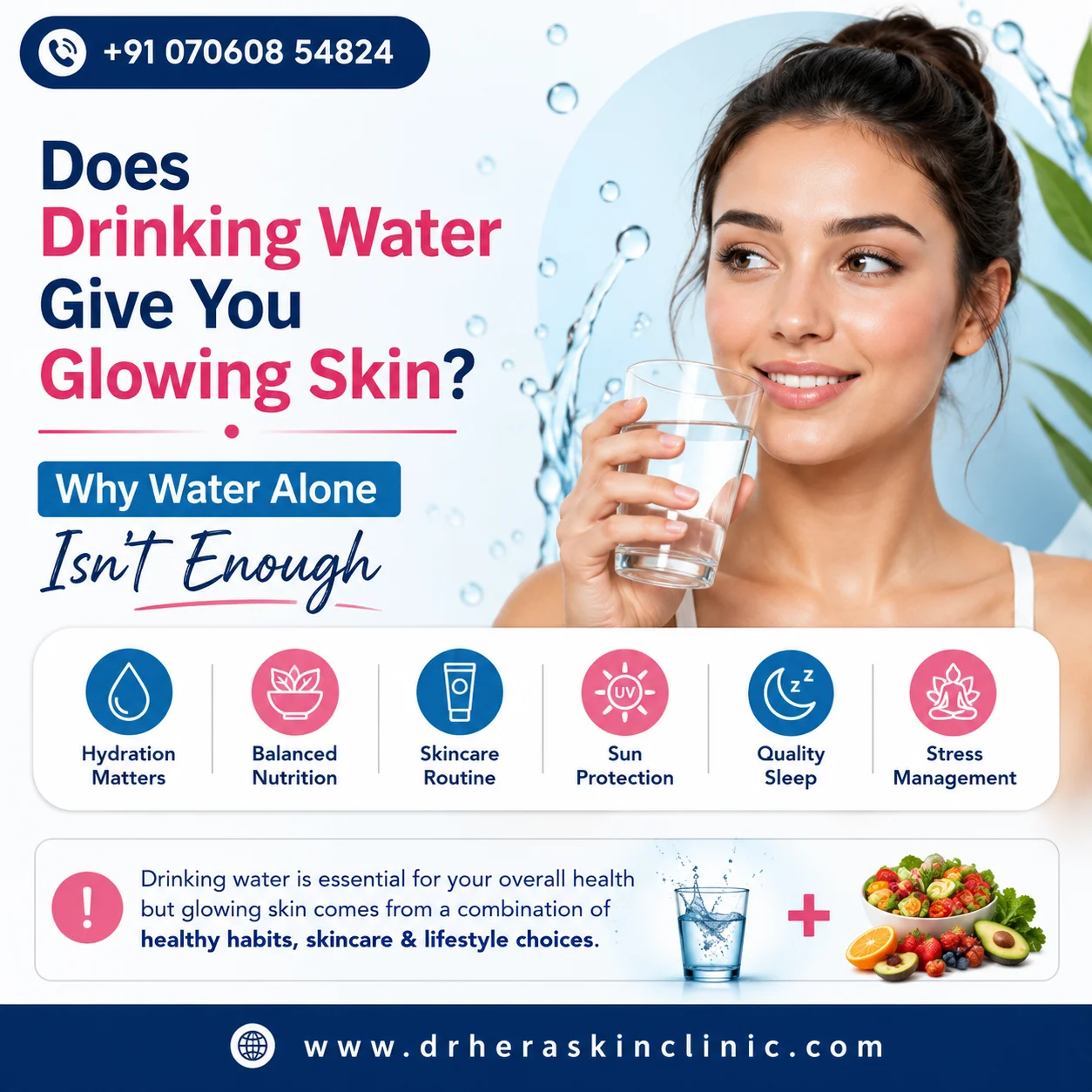
Does drinking water give you glowing skin? Drinking enough water is important for maintaining overall health and preventing dehydration. However, water alone cannot make your skin glow or remove wrinkles. Healthy, glowing skin develops through a combination of good hydration, balanced nutrition, proper skincare, adequate sleep, and daily sun protection.
If your body is dehydrated, your skin may appear dull, tight, or less elastic. Drinking enough fluids can improve hydration in these situations. But if you are already well hydrated, simply drinking extra water is unlikely to transform your skin.
How Water Supports Healthy Skin?
Your skin is the body’s largest organ. It acts as a protective barrier against pollution, bacteria, UV rays, and moisture loss. Like every other organ, your skin needs adequate water to function normally.
Water supports several important processes.
- Helps maintain normal skin hydration.
- Supports blood circulation.
- Assists nutrient delivery to skin cells.
- Supports normal healing processes.
- Helps regulate body temperature.
These functions are essential for healthy skin. Still, they do not automatically result in brighter or glowing skin.
Hydrated Skin vs Glowing Skin: They Are Not the Same
One of the biggest misconceptions in skincare is that hydrated skin and glowing skin mean the same thing.
| Hydrated Skin | Glowing Skin |
|---|---|
| Contains adequate water. | Looks healthy, smooth, and even toned. |
| Feels soft and comfortable. | Has a strong skin barrier. |
| May reduce dryness caused by dehydration. | Depends on multiple lifestyle and skincare factors. |
| Improves skin comfort. | Requires consistent skincare and sun protection. |
This is why people often ask, does drinking water give you glowing skin, but notice little change after increasing their water intake. Hydration is only one piece of the puzzle.
Why Water Alone Isn’t Enough for Glowing Skin?
Your skin reflects your overall health. Water supports that process, but several other factors determine how your skin looks.
1. Your Skin Barrier Matters
The outer layer of your skin acts as a protective barrier. It helps retain moisture while keeping irritants out.
If this barrier becomes damaged, your skin may lose moisture more quickly. This process is known as transepidermal water loss. Even if you drink enough water, a damaged skin barrier can still leave your skin feeling dry and looking dull.
A good moisturizer helps support the skin barrier by reducing moisture loss from the surface.
2. Nutrition Plays a Bigger Role Than Many People Realize
Healthy skin needs more than water.
Your body also requires nutrients that support collagen production, skin repair, and protection from oxidative stress.
Include foods rich in:
- Vitamin C
- Vitamin E
- Healthy fats
- Protein
- Zinc
- Antioxidants
A balanced diet often contributes more to healthy-looking skin than simply increasing water intake.
3. Sun Exposure Can Reduce Your Skin’s Natural Glow
Daily UV exposure is one of the biggest causes of premature skin ageing. It can contribute to pigmentation, uneven skin tone, collagen breakdown, and fine lines.
Even if you drink plenty of water, skipping sunscreen can make your skin appear dull over time.
You can also learn more about why sunscreen alone may not stop hyperpigmentation progression and why daily sun protection remains an important part of healthy skin.
4. Sleep Affects Skin Repair
Your skin performs many repair processes while you sleep.
Poor sleep may contribute to:
- Dull complexion
- Dark circles
- Tired-looking skin
- Reduced skin recovery
Good hydration cannot fully compensate for inadequate sleep.
5. Stress Can Affect Skin Health
Long-term stress may influence your skin in several ways. It can worsen acne, increase inflammation, and affect your skin barrier.
Managing stress through healthy habits is another important step toward naturally healthy skin.
Signs Your Skin May Be Dehydrated
If you are asking does drinking water give you glowing skin, it is also helpful to know the signs of dehydration.
Common symptoms include:
- Skin feels tight after washing.
- Dull appearance.
- Rough texture.
- Fine dehydration lines.
- Increased sensitivity.
- Skin feels less elastic.
These signs may improve when dehydration is corrected. However, persistent dryness may also result from skin conditions or a weakened skin barrier rather than low water intake alone.
Internal Hydration vs External Hydration
Healthy skin benefits from both internal and external care.
| Internal Hydration | External Hydration |
|---|---|
| Drink enough water. | Use a suitable moisturizer. |
| Eat water-rich fruits and vegetables. | Apply sunscreen every morning. |
| Maintain a balanced diet. | Choose gentle cleansers. |
| Stay physically active. | Protect the skin barrier. |
Both approaches work together. Focusing on only one may not give the desired improvement in skin appearance.
Expert Insight from Dr. Hera Tabassum
According to Dr. Hera Tabassum (MBBS, MD Dermatology, MRCP-SCE, London), healthy skin requires much more than adequate water intake. Skin hydration is important, but maintaining the skin barrier, following an appropriate skincare routine, eating a balanced diet, and protecting the skin from UV damage are equally important for naturally healthy-looking skin.
Dr. Hera Tabassum is Chief Dermatologist, Cosmetologist, and Trichologist at Dr. Hera’s Skin & Hair Clinic, Roorkee. She completed her MBBS and MD in Dermatology from JNMCH, AMU, earned the Specialty Certificate Examination (MRCP-SCE) from the Royal College of Physicians, London, and has worked at renowned institutions including Sir Ganga Ram Hospital, New Delhi. She has published research in national and international journals and is a life member of IADVL.
If persistent dryness, dullness, pigmentation, or other skin concerns continue despite healthy habits, consulting a qualified dermatologist can help identify the underlying cause and recommend suitable treatment.
Foods That Support Naturally Healthy and Glowing Skin
If your goal is healthy, radiant skin, hydration should be combined with a nutrient-rich diet. Many foods contain water, vitamins, antioxidants, and healthy fats that support normal skin function.
Some good choices include:
- Cucumber
- Watermelon
- Oranges
- Tomatoes
- Leafy green vegetables
- Berries
- Yogurt
- Nuts and seeds
- Fatty fish rich in omega-3 fatty acids
These foods provide more than hydration. They also supply nutrients that help support collagen production and protect skin from environmental damage.
A Simple Daily Routine for Healthy-Looking Skin
If you still wonder does drinking water give you glowing skin, remember that healthy skin comes from consistent daily habits rather than a single solution.
Morning Routine
- Wash your face with a gentle cleanser.
- Apply a Vitamin C serum if suitable for your skin.
- Use a moisturizer.
- Apply a broad-spectrum sunscreen before going outdoors.
Night Routine
- Cleanse your skin thoroughly.
- Apply dermatologist-recommended treatment products if needed.
- Finish with a moisturizer to support the skin barrier overnight.
If you want to build a consistent skincare routine, you may also find this guide on daily skincare routine helpful.
Common Myths About Drinking Water and Skin
Myth 1: Drinking More Water Removes Wrinkles
No. Wrinkles develop due to ageing, collagen loss, repeated facial expressions, genetics, and sun exposure. Drinking water is important for health but cannot erase wrinkles.
Myth 2: Water Can Shrink Open Pores
No. Pore size is mainly influenced by genetics, skin type, ageing, and oil production. Water does not reduce pore size.
Myth 3: Drinking Water Cures Acne
Adequate hydration supports overall skin health, but acne has multiple causes, including hormones, excess oil production, clogged pores, bacteria, and inflammation.
If acne is persistent, proper evaluation is more helpful than simply increasing water intake. You may also like our guide on how to get rid of acne.
Myth 4: More Water Always Means Better Skin
No. Once your body is adequately hydrated, drinking excessive amounts of water is unlikely to make your skin noticeably brighter.
When Should You See a Dermatologist?
Healthy habits are important. However, some skin concerns need professional evaluation.
Consider consulting a dermatologist if you notice:
- Persistent dry skin despite regular moisturising.
- Unexplained pigmentation.
- Repeated acne breakouts.
- Redness or skin irritation.
- Painful rashes.
- Chronic itching.
- Sudden changes in your skin.
Early diagnosis can help identify the underlying cause and allow appropriate treatment before the condition worsens.
You can also read when you should consult a dermatologist to understand the warning signs that should not be ignored.
Frequently Asked Questions
Does drinking water give you glowing skin?
Drinking enough water supports normal skin hydration and overall health. However, glowing skin also depends on nutrition, skincare, sleep, sun protection, and the health of your skin barrier.
How much water should I drink for healthy skin?
There is no single amount that works for everyone. Your daily water needs depend on your activity level, climate, health conditions, and diet. Drink enough fluids to stay hydrated and pay attention to your body’s thirst signals.
Can dehydration make my skin look dull?
Yes. Dehydration may cause your skin to appear dull, tight, or less elastic. Rehydrating can improve these symptoms, but it may not address other causes of dull skin.
Can drinking water remove wrinkles?
No. Wrinkles are mainly associated with ageing, collagen loss, and sun damage. Drinking water cannot reverse these natural changes.
What is the fastest way to achieve healthier-looking skin?
A combination of daily sunscreen, gentle cleansing, regular moisturising, balanced nutrition, adequate hydration, quality sleep, and avoiding smoking offers the best long-term support for healthy skin.
Final Thoughts
So, does drinking water give you glowing skin? Drinking enough water is an important part of maintaining overall health and preventing dehydration. It helps your skin function normally, but it is not a standalone solution for achieving naturally glowing skin.
Healthy skin is influenced by several factors working together. A balanced diet, consistent skincare routine, daily sun protection, sufficient sleep, stress management, and a healthy skin barrier all play an important role. Water supports these processes, but it cannot replace them.
If you have persistent dullness, dryness, pigmentation, acne, or other skin concerns, seeking personalised advice from a qualified dermatologist is the safest approach.
An expert evaluation can help identify the underlying cause and recommend treatment based on your skin type and concerns.