
Many people apply sunscreen daily but still notice dark patches, uneven skin tone, or stubborn marks getting worse. This happens because sunscreen alone cannot fully control every trigger behind pigmentation. Hyperpigmentation Treatment often requires a combination of sun protection, skincare correction, and professional guidance.
Although sunscreen protects the skin from UV damage, several internal and external factors continue to stimulate excess melanin production. As a result, pigmentation may progress slowly over time.
If dark spots continue to return despite using sunscreen correctly, consulting a Dermatologist In Roorkee can help identify the actual cause and create a personalized treatment plan.
What Is Hyperpigmentation?
Hyperpigmentation is a common skin condition where certain areas become darker than the surrounding skin. It develops when the skin produces excess melanin.
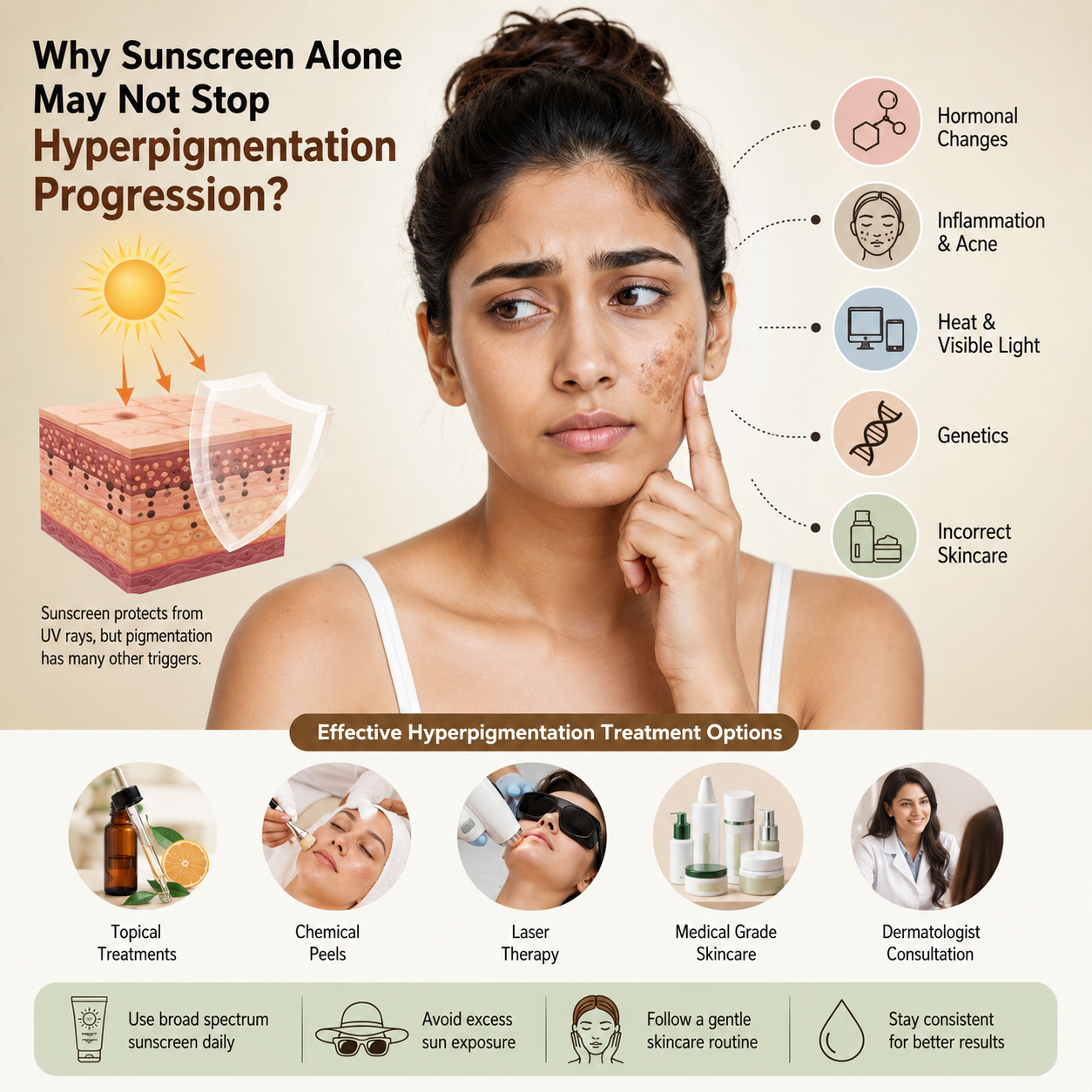
This condition can appear as:
- Melasma
- Sun spots
- Post-acne marks
- Age spots
- Inflammatory pigmentation
Some pigmentation stays close to the surface. However, deeper pigmentation becomes more difficult to fade without proper Hyperpigmentation Treatment.
Why Sunscreen Alone Cannot Fully Stop Pigmentation?
Sunscreen plays an important role in protecting the skin. Still, it cannot completely block all pigmentation triggers.
1. Existing Pigmentation Continues Beneath the Skin
Many dark spots already develop in deeper skin layers before they become visible. Sunscreen prevents additional UV damage, but it does not actively remove stored pigmentation.
Therefore, people often need targeted treatments along with sun protection.
2. Hormonal Changes Trigger Melanin Production
Hormonal imbalance is one of the biggest causes of melasma and stubborn pigmentation. Pregnancy, stress, thyroid issues, and hormonal medications can stimulate melanin activity.
In such cases, sunscreen alone shows limited improvement.
3. Heat and Visible Light Also Affect Pigmentation
Many people only focus on UV rays. However, heat exposure and visible light from screens or sunlight can also worsen pigmentation, especially melasma.
According to the American Academy of Dermatology, visible light may contribute to persistent pigmentation in many individuals.
4. Inflammation Keeps Dark Spots Active
Acne, eczema, harsh scrubbing, or skin irritation can trigger inflammation. This process increases melanin production and leaves behind dark marks.
Without controlling inflammation, pigmentation often returns repeatedly.
5. Incorrect Sunscreen Use Reduces Protection
Many users apply less sunscreen than required. Others skip reapplication during the day. Some products also fail to provide broad-spectrum protection.
As a result, the skin remains exposed to damage even after sunscreen use.
Signs That Your Pigmentation Needs More Than Sunscreen
You may require professional Hyperpigmentation Treatment if:
- Dark patches keep spreading
- Pigmentation returns quickly
- Acne marks stay for months
- Your skin tone looks uneven
- Over-the-counter products show little improvement
Effective Hyperpigmentation Treatment Options
Modern dermatology offers several solutions for pigmentation management. The right option depends on skin type, pigmentation depth, and underlying triggers.
Topical Treatments
Dermatologists often recommend active ingredients that reduce melanin production and improve skin renewal.
- Vitamin C
- Azelaic acid
- Kojic acid
- Retinoids
- Niacinamide
- Tranexamic acid
These ingredients gradually improve skin clarity and support long-term pigmentation control.
Chemical Peels
Chemical peels remove damaged surface cells and encourage fresh skin growth. They help improve superficial pigmentation and acne marks.
However, professional supervision remains important to avoid irritation.
Laser and Advanced Procedures
Laser therapies target deeper pigmentation deposits. Dermatologists may recommend laser sessions for stubborn melasma, sun damage, or resistant dark spots.
At Dr Hera’s Skin & Hair Clinic, treatment plans focus on skin sensitivity, pigmentation depth, and long-term skin health instead of temporary brightening.
Customized Dermatology Care
Every pigmentation case is different. Some patients need inflammation control, while others require hormonal evaluation or barrier repair.
Dr. Hera Tabassum carefully evaluates skin conditions and creates customized solutions for concerns related to acne marks, melasma, uneven tone, and chronic pigmentation issues.
How To Prevent Hyperpigmentation Progression?
Prevention plays a major role in maintaining clear skin.
Use Broad-Spectrum Sunscreen Daily
Choose SPF 30 or higher with UVA and UVB protection. Reapply every few hours during outdoor exposure.
Avoid Excess Heat Exposure
Heat can worsen melasma and inflammation. Therefore, limit direct sun exposure during peak afternoon hours.
Do Not Pick Acne or Irritate the Skin
Skin trauma increases post-inflammatory pigmentation. Gentle skincare helps reduce unnecessary irritation.
Follow a Consistent Skincare Routine
Consistency matters more than using multiple products together. A dermatologist-guided routine often gives safer and better results.
When Should You Visit a Dermatologist?
You should seek medical advice if pigmentation:
- Becomes darker rapidly
- Spreads unevenly
- Does not improve with skincare
- Affects confidence or skin texture
Early treatment often prevents pigmentation from becoming deeper and harder to manage.
Dr Hera’s Skin & Hair Clinic in Roorkee provides advanced dermatology care for skin, hair, and nail concerns. The clinic focuses on personalized treatment plans and evidence-based skincare solutions for long-term improvement.
Conclusion
Sunscreen is important, but it cannot completely stop hyperpigmentation progression on its own. Hormones, inflammation, visible light, heat, and skin damage continue to affect melanin production.
A complete Hyperpigmentation Treatment approach combines proper sun protection, targeted skincare, and professional dermatology care. Early attention and personalized treatment can significantly improve skin tone and prevent worsening pigmentation over time.
About Dr Hera’s Skin & Hair Clinic
Dr Hera’s Skin & Hair Clinic is a leading dermatology clinic located near Bank of India, Malviya Chowk, Roorkee, Uttarakhand 247667. The clinic offers comprehensive care for skin, hair, and nail disorders.
Dr. Hera Tabassum specializes in treating acne, fungal infections, eczema, hair loss, vitiligo, warts, pigmentation concerns, and several chronic dermatological conditions with customized treatment strategies.
Phone: 070608 54824