
Psoriasis is more than a skin condition. It is strongly connected to the immune system and emotional health. Many people notice that stress and psoriasis flare-ups happen together.
In fact, stress can directly affect skin cells and immune reactions inside the body. When stress levels rise, the body releases hormones like cortisol and adrenaline.
These hormones can increase inflammation and make psoriasis symptoms worse. As a result, redness, itching, scaling, and irritation may appear more often.
People dealing with long-term psoriasis symptoms should seek guidance from a qualified Dermatologist In Roorkee to understand triggers and manage flare-ups properly.
Understanding the Link Between Stress and Psoriasis Flare-Ups
Stress affects the body in many ways. It changes hormone balance, weakens the immune system, and increases inflammatory activity. Because psoriasis is an immune-mediated skin condition, stress can easily trigger symptoms. Researchers have found that emotional stress activates inflammatory pathways in the body.
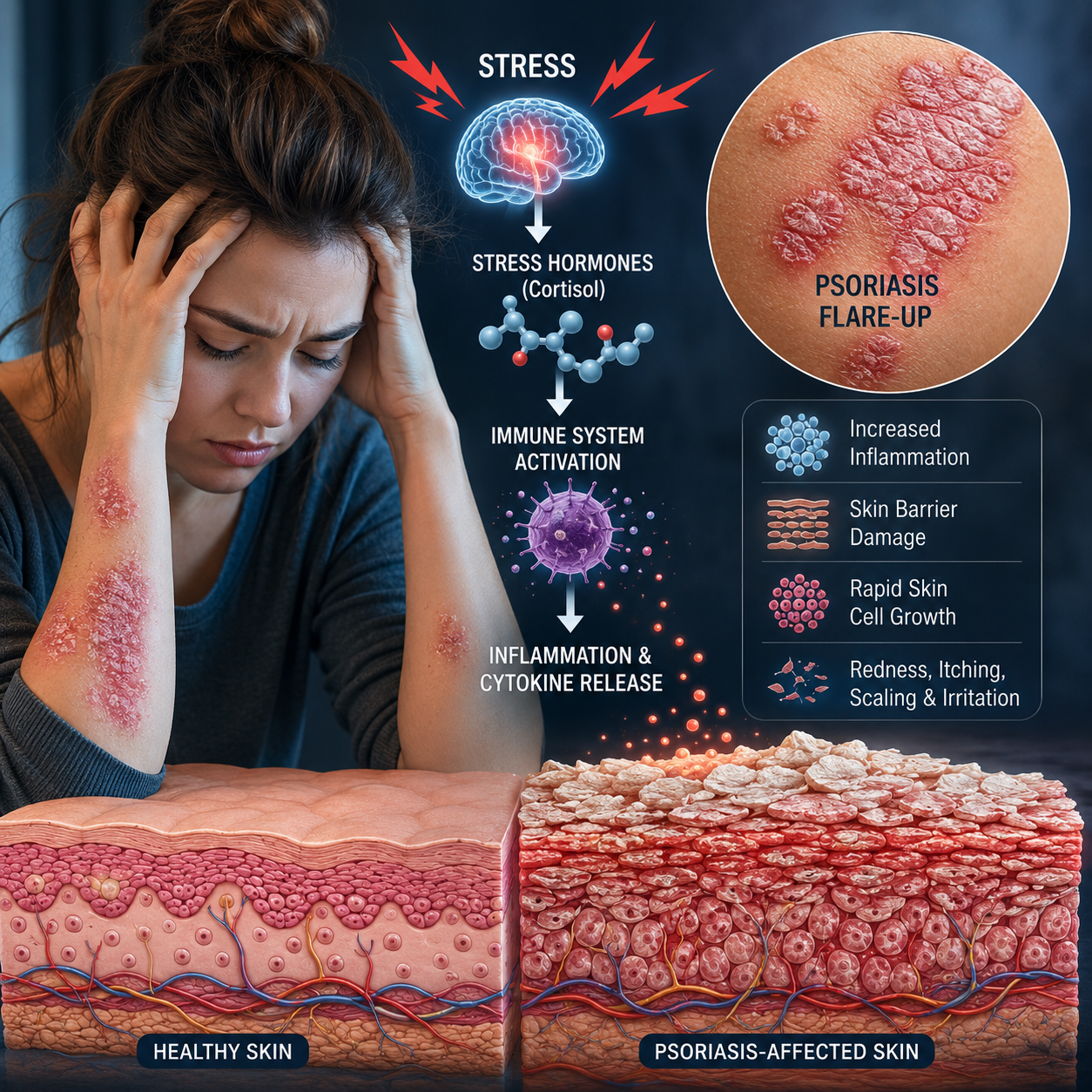
This process increases skin irritation and speeds up psoriasis flare-ups. Moreover, people with psoriasis often experience stress because of visible skin patches.
This creates a cycle where stress worsens psoriasis, and psoriasis increases emotional pressure. According to the National Psoriasis Foundation , stress is one of the most common psoriasis triggers reported by patients.
What Happens Inside the Body During Stress?
When a person feels stressed, the brain sends signals to the adrenal glands.
These glands release stress hormones like cortisol and adrenaline. At first, cortisol helps the body respond to danger. However, chronic stress keeps cortisol levels high for a long time. This continuous hormonal activity increases inflammation and weakens the skin barrier. As a result, the immune system becomes overactive. In people with psoriasis, this reaction speeds up skin cell production and worsens flare-ups.
Role of Cortisol in Skin Inflammation
Cortisol directly affects immune cells and inflammatory chemicals inside the body. High cortisol levels can disturb the normal balance of skin repair and protection. Additionally, stress hormones increase the production of cytokines.
Cytokines are proteins that trigger inflammation in psoriasis patients. Because of this, skin cells multiply too quickly. Dead cells then build up on the skin surface and form thick psoriasis plaques.
How Stress Affects the Immune System
The immune system normally protects the body from infections. However, stress changes how immune cells behave. During chronic stress, inflammatory T-cells become more active.
These immune cells attack healthy skin tissues and increase redness, swelling, and irritation. Therefore, stress and psoriasis flare-ups are closely connected at the cellular level.
How Stress Hormones Trigger Psoriasis at the Cellular Level
Psoriasis develops because of abnormal immune signaling.
Stress hormones can worsen this process by increasing inflammatory reactions inside skin tissues. At the cellular level, stress causes communication problems between immune cells and skin cells. This imbalance leads to rapid skin turnover and chronic inflammation. Consequently, psoriasis symptoms become more severe and difficult to control.
Cytokines and Inflammatory Response
Cytokines play a major role in psoriasis inflammation. Stress hormones stimulate the release of inflammatory cytokines such as TNF-alpha and interleukins. These chemicals increase swelling and irritation in the skin. They also trigger excessive skin cell production. Because of this inflammatory response, psoriasis patches may spread faster during stressful periods.
Skin Barrier Damage and Rapid Cell Growth
Stress weakens the protective skin barrier. A damaged skin barrier loses moisture easily and becomes sensitive to irritation. At the same time, psoriasis causes skin cells to grow much faster than normal. Instead of taking weeks to mature, cells reach the surface within days.
This rapid buildup creates thick, dry, and itchy plaques. Many patients visiting Dr Hera’s Skin & Hair Clinic report worsening symptoms during emotional stress, lack of sleep, or anxiety-related periods.
Common Signs of Stress-Induced Psoriasis Flare-Ups
Stress-related psoriasis symptoms may appear suddenly or become more severe over time. Common signs include:
Increased redness and itching Dry and cracked skin
Burning sensation
Thick scaling patches
Scalp irritation
Sleep disturbance due to itching
More frequent flare-ups during emotional stress
In some people, stress can also make existing treatments less effective.
Why Emotional Stress Makes Psoriasis Worse?
Emotional stress affects both the brain and immune system. Anxiety, depression, and mental pressure can increase inflammatory activity throughout the body. Furthermore, stress often reduces sleep quality. Poor sleep increases cortisol production and worsens skin inflammation. People under stress may also neglect skincare routines, hydration, and healthy eating habits. These lifestyle changes can further aggravate psoriasis symptoms. Therefore, managing emotional health is an important part of psoriasis treatment.
How to Reduce Stress and Control Psoriasis Symptoms?
Reducing stress can help lower inflammation and improve skin health. Small lifestyle changes often make a noticeable difference. Healthy stress management supports both emotional wellbeing and immune balance.
Lifestyle Changes That Support Skin Health
Several habits may help reduce stress and psoriasis flare-ups: Practice meditation or deep breathing Maintain regular sleep patterns Exercise regularly Drink enough water Avoid smoking and excessive alcohol Use gentle skin moisturizers Follow a healthy anti-inflammatory diet Additionally, spending time outdoors and limiting mental exhaustion may improve emotional balance.
Medical Treatment and Dermatologist Guidance
Severe psoriasis symptoms may require medical treatment. Dermatologists can recommend topical medicines, phototherapy, or advanced therapies based on the condition severity. Dr. Hera Tabassum at Dr Hera’s Skin & Hair Clinic provides personalized treatment plans for psoriasis, eczema, fungal infections, hair loss, and other skin disorders. The clinic focuses on patient-specific care and long-term skin management. Professional treatment becomes important when flare-ups occur repeatedly or affect daily life.
When to See a Dermatologist for Psoriasis?
You should consult a dermatologist if: Psoriasis symptoms spread quickly Home remedies stop working Itching becomes severe Skin cracks or bleeds Stress and psoriasis flare-ups happen frequently Joint pain develops along with psoriasis Early treatment can help reduce inflammation and prevent complications. Dr Hera’s Skin & Hair Clinic, located near Bank of India, Malviya Chowk, Roorkee, Uttarakhand, offers advanced dermatology care for skin, hair, and nail conditions.
Conclusion
Stress can strongly influence psoriasis at the cellular level. Hormones like cortisol increase inflammation, damage the skin barrier, and overstimulate immune responses. As a result, stress and psoriasis flare-ups often become deeply connected. Managing stress through healthy habits and proper dermatological care can improve skin health and reduce flare-up frequency. Early medical guidance also helps control symptoms before they become severe.