
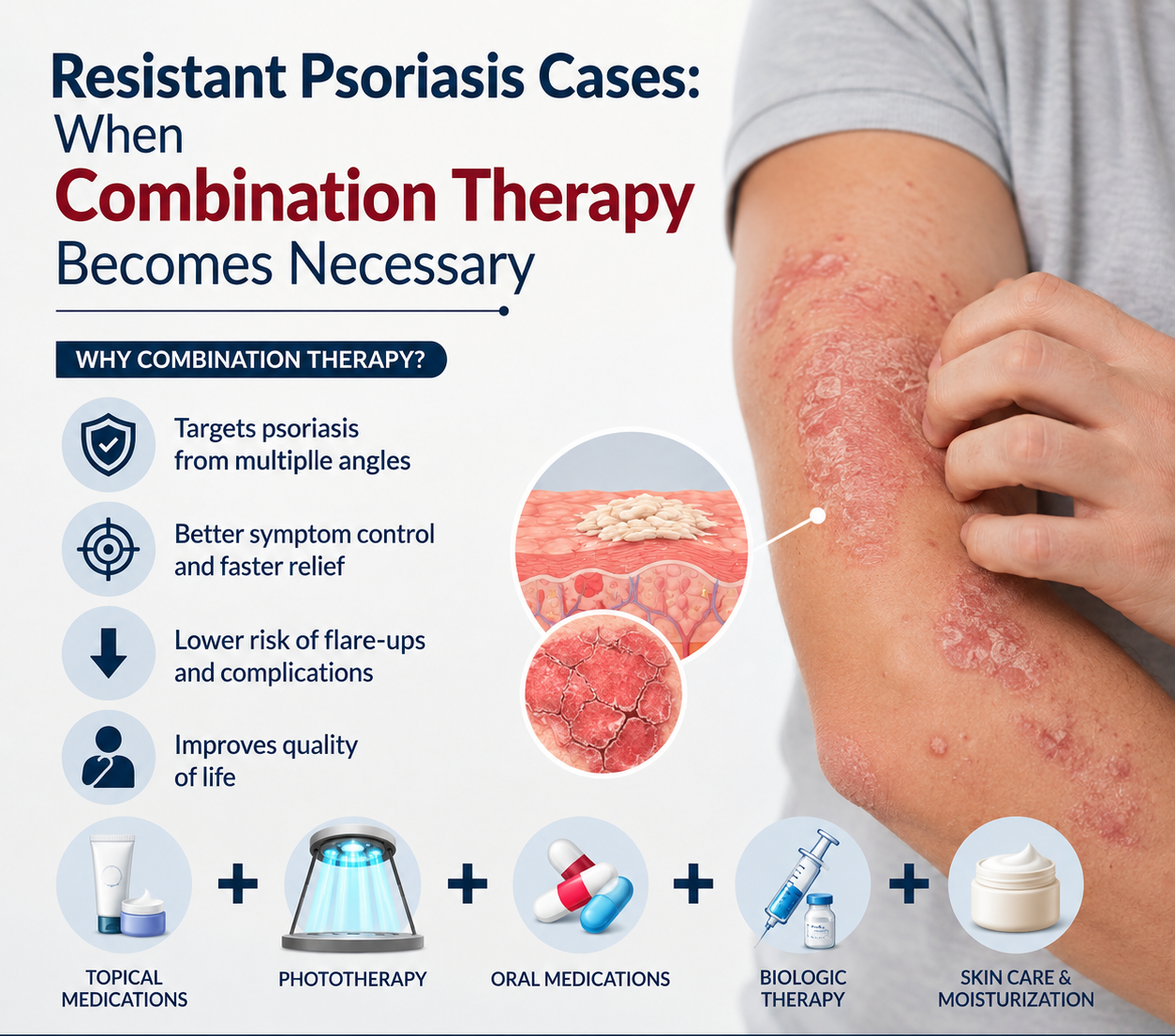
Combination Therapy for Psoriasis becomes important when a single treatment no longer controls symptoms properly. Many patients with severe or long-term psoriasis notice recurring flare-ups, itching, redness, and thick skin patches even after regular treatment. In such cases, dermatologists often combine different therapies to improve results and reduce inflammation more effectively.
Psoriasis is a chronic autoimmune skin disease. It affects the skin barrier and speeds up skin cell growth. As a result, thick scales and painful plaques develop on different body parts. Some patients respond well to creams or medicines alone. However, resistant psoriasis may require a more advanced treatment approach.
What Is Resistant Psoriasis?
Resistant psoriasis refers to psoriasis that does not improve enough with standard treatment. Symptoms may return quickly after treatment stops. In some cases, medicines lose effectiveness over time.
This condition can affect the scalp, elbows, knees, nails, back, and even joints. Stress, infections, obesity, smoking, and poor sleep can also worsen symptoms.
According to the American Academy of Dermatology, severe psoriasis often needs long-term medical management and personalized treatment combinations.
Why Single Treatments Sometimes Stop Working
Psoriasis behaves differently in every patient. Therefore, one medicine may not work for everyone. Some treatments control inflammation for a short time only. Others may become less effective after repeated use.
Topical creams alone may fail in moderate or severe psoriasis cases. Similarly, oral medicines can cause side effects if used at higher doses for long periods.
As a result, dermatologists combine therapies to improve treatment response while lowering the risk of complications.
What Is Combination Therapy for Psoriasis?
Combination Therapy for Psoriasis means using two or more treatments together to control symptoms better. Dermatologists choose therapies based on psoriasis severity, skin sensitivity, medical history, and affected body areas.
This approach helps target psoriasis from multiple angles. It can reduce scaling, itching, redness, and inflammation more effectively than a single treatment.
Combination therapy may include:
- Topical corticosteroids
- Vitamin D analog creams
- Phototherapy
- Biologic injections
- Oral immune-modifying medicines
- Moisturizing skin care products
Common Combination Therapy Options for Psoriasis
Topical Medicines with Phototherapy
Dermatologists often combine medicated creams with UVB phototherapy. This combination can slow skin cell growth and reduce plaque thickness.
It also improves treatment penetration into affected skin areas. Many patients experience faster symptom relief with this method.
Biologics with Topical Treatments
Biologics target specific immune system pathways linked to psoriasis. However, stubborn plaques may still remain in some areas.
Therefore, dermatologists may add topical creams along with biologic therapy. This combination improves localized symptom control.
Oral Medicines Combined with Moisturizers
Oral medicines reduce internal inflammation. At the same time, moisturizers protect the skin barrier and reduce dryness.
Simple skin care support can improve comfort and reduce cracking or irritation.
Signs That You May Need Combination Therapy for Psoriasis
You may require Combination Therapy for Psoriasis if:
- Your symptoms return quickly after treatment
- Large body areas are affected
- You experience joint pain with psoriasis
- Skin plaques become thick and painful
- Topical creams stop showing improvement
- Flare-ups become frequent
Early medical attention can help prevent worsening symptoms and long-term skin damage.
Benefits of Combination Therapy in Severe Psoriasis Cases
Combination therapy offers several benefits for resistant psoriasis patients.
- Better symptom control
- Reduced inflammation
- Lower medicine dosage requirements
- Improved quality of life
- Faster plaque healing
- Longer remission periods
In many cases, combining therapies also helps minimize side effects associated with high-dose single treatments.
Possible Risks and Side Effects
Although Combination Therapy for Psoriasis can be effective, it still requires proper medical supervision. Some medicines may increase skin sensitivity or weaken the immune response.
Patients may experience dryness, irritation, headaches, or temporary redness depending on the treatment type.
Therefore, regular dermatology follow-ups remain important during treatment.
Lifestyle Changes That Support Psoriasis Treatment
Healthy habits can improve psoriasis treatment outcomes. Small daily changes often reduce flare frequency.
- Manage stress levels
- Maintain healthy body weight
- Avoid smoking and alcohol
- Use gentle skin care products
- Stay hydrated
- Sleep properly
Additionally, regular exercise may help reduce inflammation naturally.
When to Visit a Dermatologist for Resistant Psoriasis
If psoriasis symptoms continue despite treatment, professional evaluation becomes necessary. A qualified Dermatologist In Roorkee can identify triggers, evaluate severity, and recommend advanced therapies.
Early diagnosis and customized treatment planning can prevent complications and improve long-term skin health.
How Dr. Hera’s Skin & Hair Clinic Helps Psoriasis Patients
Dr. Hera’s Skin & Hair Clinic provides personalized dermatology care for patients dealing with chronic skin conditions. Treatment plans are designed according to skin type, psoriasis severity, and patient response.
Dr. Hera Tabassum focuses on evidence-based skin treatments and patient-centered care. The clinic offers management solutions for psoriasis, eczema, acne, fungal infections, hair disorders, and nail diseases.
Patients receive detailed guidance regarding skin care, medication use, and lifestyle support for better long-term control.
Dr. Hera’s Skin & Hair Clinic Address: Dr Hera’s Skin & Hair Clinic, near Bank of India, Malviya chowk, Roorkee, Uttarakhand 247667
Phone No. 070608 54824
Email: dr.heraskinandhairclinic@gmail.com
Conclusion
Combination Therapy for Psoriasis can help patients who no longer respond well to single treatments. Resistant psoriasis often requires a personalized and multi-step approach for effective symptom control.
With the right combination of medicines, skin care, lifestyle changes, and expert dermatology support, many patients achieve better skin health and improved comfort.
Frequently Asked Questions
Is combination therapy safe for psoriasis?
Yes. Dermatologists carefully select treatments based on patient condition and medical history.
Can psoriasis become resistant to treatment?
Yes. Some patients stop responding to certain medicines after long-term use.
How long does combination therapy take to show results?
Results vary depending on psoriasis severity and treatment type. Some patients notice improvement within weeks.
Can lifestyle changes improve psoriasis symptoms?
Yes. Stress control, proper sleep, hydration, and healthy habits can reduce flare-ups.