
Skin pigmentation treatment is not the same for everyone. Some people respond well to laser sessions, while others develop irritation or darker patches after treatment. This difference often depends on Fitzpatrick Skin Types.
Dermatologists use this skin classification system to understand how different skin tones react to sunlight, inflammation, heat, and cosmetic procedures. Therefore, identifying the correct skin type before starting pigmentation treatment improves both safety and results.
People with medium to darker skin tones usually carry more melanin in the skin. Because of this, their skin may react differently to lasers, chemical peels, or harsh active ingredients.
Choosing treatment without proper skin assessment can increase the risk of redness, burns, uneven skin tone, or post-inflammatory hyperpigmentation.
That is why skin analysis remains one of the most important steps before starting any professional pigmentation procedure.
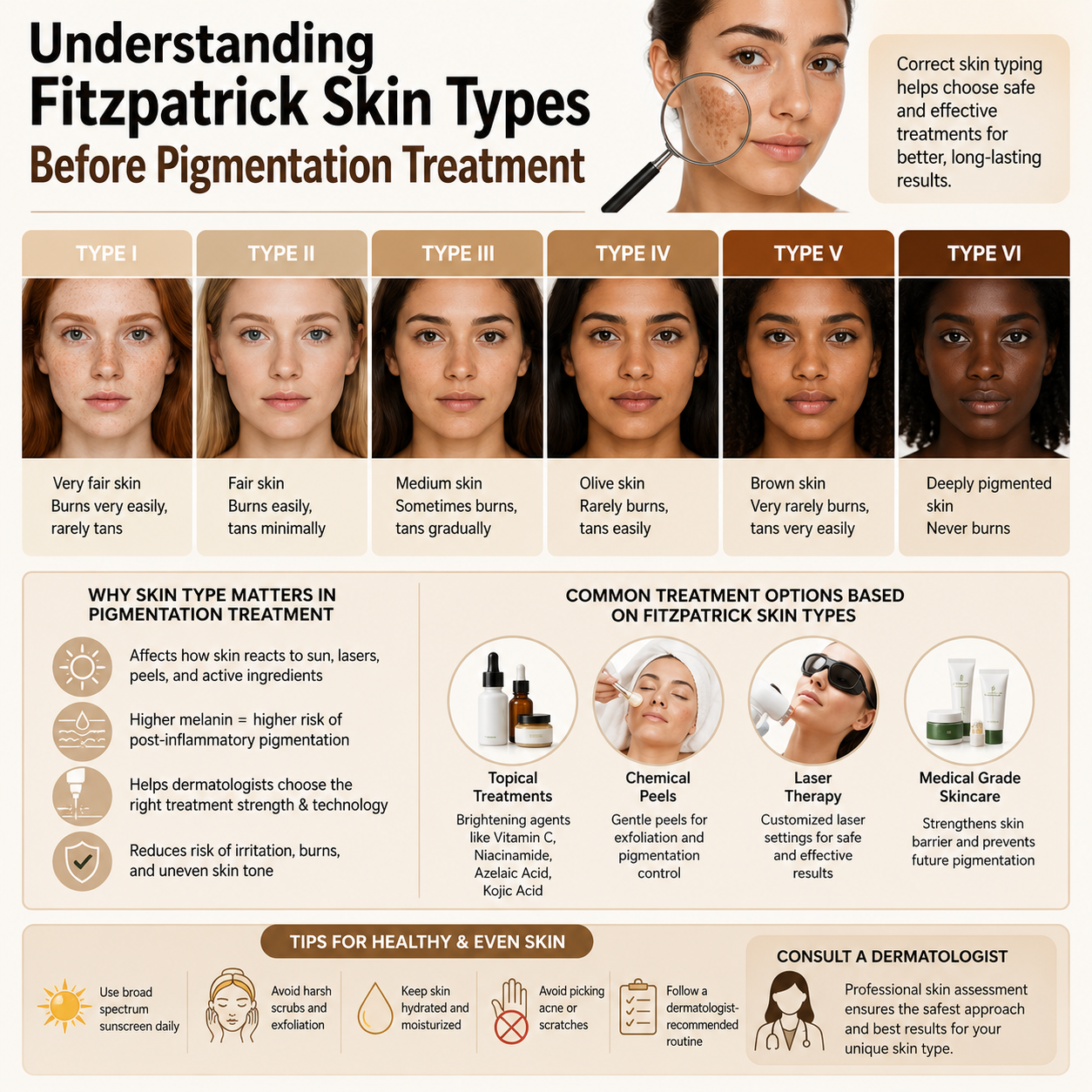
What Are Fitzpatrick Skin Types?
Fitzpatrick Skin Types are a scientific method used to classify skin according to its reaction to ultraviolet light. Dermatologist Thomas Fitzpatrick introduced this system to study how skin burns or tans after sun exposure.
Today, dermatologists worldwide use this scale before recommending pigmentation treatment, laser therapy, or advanced skincare procedures.
The system divides skin into six categories.
Fitzpatrick Type I
Very fair skin that burns quickly and rarely tans. People with this skin type often have light eyes and sensitive skin.
Fitzpatrick Type II
Fair skin that burns easily but develops mild tanning after sun exposure.
Fitzpatrick Type III
Light brown or wheatish skin that sometimes burns but gradually tans.
Fitzpatrick Type IV
Olive or moderate brown skin that tans easily and rarely burns.
Fitzpatrick Type V
Darker brown skin with higher melanin content and lower sun sensitivity.
Fitzpatrick Type VI
Deeply pigmented skin that almost never burns and contains very high melanin levels.
Why Fitzpatrick Skin Types Matter Before Pigmentation Treatment?
Every pigmentation treatment creates some level of controlled skin response. However, different skin tones react differently during healing.
For example, aggressive treatment may work well for lighter skin but trigger extra pigmentation in darker skin tones.
Therefore, dermatologists adjust treatment methods according to Fitzpatrick Skin Types.
Melanin Activity Changes Treatment Response
Melanin protects the skin from sun damage. Still, excessive melanin activity can also create stubborn pigmentation.
Darker skin tones usually contain more active melanocytes. These pigment-producing cells react strongly to heat, friction, inflammation, or injury.
As a result, improper treatment sometimes worsens dark spots instead of improving them.
Laser Treatments Need Customized Settings
Laser devices work by targeting pigment inside the skin. However, they can also affect natural melanin if settings are too strong.
This is one reason professional skin typing remains important before laser sessions.
Patients with higher Fitzpatrick Skin Types usually require safer wavelengths, lower energy levels, and gradual treatment planning.
Patch testing also helps reduce unnecessary skin reactions.
Chemical Peels React Differently on Various Skin Types
Chemical peels remove damaged surface layers and improve uneven tone. Still, stronger peels may irritate melanin-rich skin.
Consequently, dermatologists often select milder peeling agents for medium and darker skin tones.
Proper aftercare also becomes extremely important after peeling procedures.
How Fitzpatrick Skin Types Affect Hyperpigmentation Risk?
Hyperpigmentation develops when the skin produces excess melanin after inflammation or damage.
People with higher Fitzpatrick Skin Types often develop pigmentation after:
- Acne breakouts
- Skin irritation
- Laser burns
- Sun exposure
- Harsh exfoliation
- Improper skincare products
- Hormonal changes
Therefore, treatment planning should focus not only on removing pigmentation but also on preventing future triggers.
Common Pigmentation Problems Seen in Different Skin Types
Melasma
Melasma causes brown or grayish patches, mostly on the cheeks, forehead, and upper lip. Hormones, sunlight, and heat exposure usually trigger this condition.
People with Fitzpatrick Skin Types III to V commonly experience melasma.
Post-Inflammatory Hyperpigmentation
This type of pigmentation appears after acne, eczema, burns, or skin injury.
Darker skin tones often develop deeper marks after inflammation.
Sunspots and Uneven Skin Tone
Long-term UV exposure gradually damages the skin and creates dark patches. Uneven tanning and sunspots become more visible over time.
Best Treatment Approaches Based on Fitzpatrick Skin Types
Topical Treatments
Dermatologists usually begin with topical products before recommending advanced procedures.
Common ingredients include:
- Vitamin C
- Niacinamide
- Azelaic acid
- Kojic acid
- Retinoids
- Tranexamic acid
These ingredients help control excess pigment and improve skin texture slowly.
Medical Facials and Skin Brightening Procedures
Some patients benefit from gentle dermatologist-supervised facials that improve skin renewal and hydration.
These procedures can support overall skin clarity without causing aggressive irritation.
Laser and Advanced Pigmentation Procedures
Laser therapy may help stubborn pigmentation that does not improve with creams alone.
However, dermatologists must carefully evaluate Fitzpatrick Skin Types before selecting laser technology.
At Dr Hera’s Skin & Hair Clinic, treatment planning focuses on skin safety, pigmentation depth, and long-term skin health instead of temporary fairness-focused solutions.
Why Self-Treatment Can Be Risky?
Many people use strong acids, online DIY remedies, or random skincare combinations without understanding their skin type.
Unfortunately, this often damages the skin barrier.
Consequently, the skin becomes more sensitive, inflamed, and pigmented.
Using unverified laser clinics also increases the risk of burns and uneven pigmentation.
Professional guidance reduces these complications significantly.
How Dermatologists Evaluate Fitzpatrick Skin Types?
Dermatologists examine several factors before recommending treatment.
- Natural skin tone
- Sun sensitivity
- Tanning history
- Pigmentation depth
- Skin barrier condition
- Previous treatment history
- Inflammation level
This evaluation helps create safer and more personalized treatment plans.
Patients looking for expert skin assessment can consult a Dermatologist In Roorkee for medically guided pigmentation care.
Important Skincare Tips for Pigmentation-Prone Skin
Use Sunscreen Every Day
Sunscreen helps reduce UV-triggered pigmentation. Broad-spectrum SPF protection remains essential after pigmentation treatment.
Avoid Over-Exfoliation
Excess scrubbing weakens the skin barrier and increases inflammation.
Keep the Skin Hydrated
Healthy skin barrier function improves recovery and lowers irritation risk.
Do Not Pick Acne or Scabs
Skin trauma can leave dark marks for months, especially in higher Fitzpatrick Skin Types.
When Should You Visit a Dermatologist?
You should seek professional treatment if:
- Pigmentation spreads rapidly
- Dark patches become stubborn
- Over-the-counter products fail
- Acne marks stay for months
- Laser or peel treatments worsen the skin
- Your skin becomes sensitive after skincare products
Early treatment often prevents deeper pigmentation and long-term skin damage.
Dr. Hera Tabassum provides personalized treatment plans for acne scars, melasma, uneven skin tone, fungal infections, hair loss, and several chronic dermatological conditions.
How Modern Dermatology Improves Pigmentation Treatment Safety?
Modern dermatology no longer follows a one-treatment-for-all approach. Instead, treatment now depends on skin sensitivity, melanin activity, and recovery response.
Safer technologies and personalized skincare plans have improved outcomes for patients with medium and darker skin tones.
Proper evaluation becomes important because laser treatment safety for darker skin tones depends heavily on accurate skin phototype assessment.
Conclusion
Understanding Fitzpatrick Skin Types before pigmentation treatment helps reduce complications and improves treatment success.
Different skin tones react differently to lasers, peels, inflammation, and UV exposure. Therefore, professional skin assessment remains essential before starting advanced skincare procedures.
Personalized treatment planning, gentle skincare, and proper aftercare often deliver safer and more natural-looking results over time.
About Dr Hera’s Skin & Hair Clinic
Dr Hera’s Skin & Hair Clinic is a leading dermatology clinic located near Bank of India, Malviya Chowk, Roorkee, Uttarakhand 247667.
The clinic provides advanced care for acne, pigmentation, eczema, fungal infections, vitiligo, hair loss, warts, and various skin and nail disorders.
Dr. Hera Tabassum focuses on customized dermatology solutions designed according to individual skin needs and long-term skin wellness.
Phone: 070608 54824