
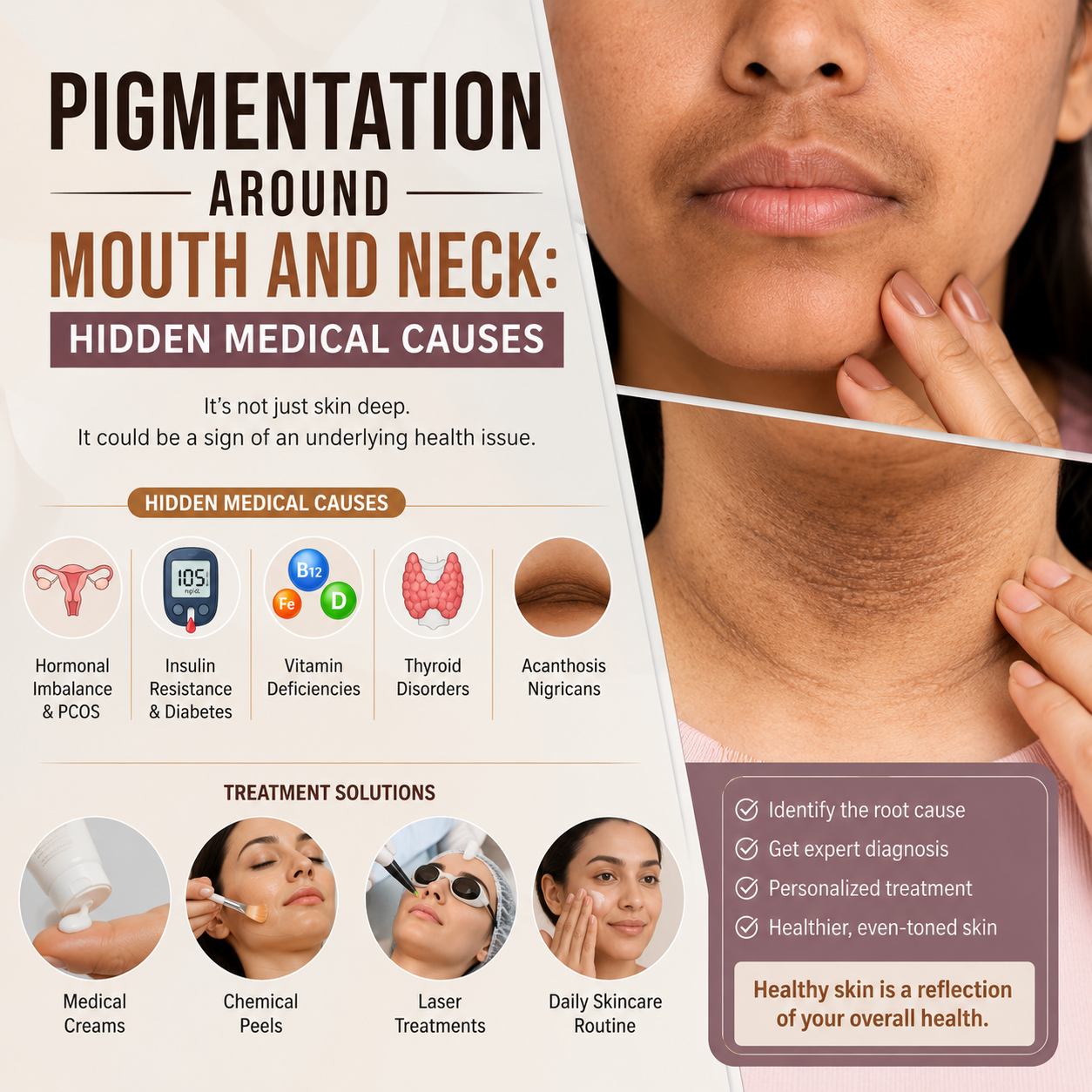
Dark patches around the mouth and neck can affect confidence. However, this issue is not always cosmetic. In many cases, Pigmentation Around Mouth and Neck points to an underlying medical condition. Therefore, early diagnosis becomes important.
Many people try home remedies for months. Still, the pigmentation keeps returning. That happens because the real trigger often remains untreated. Hormonal imbalance, insulin resistance, vitamin deficiency, and thyroid problems can all contribute to skin darkening.
In addition, pollution, sun exposure, and poor skin care habits may worsen the condition over time. A proper skin evaluation helps identify the exact reason behind uneven skin tone.
If persistent pigmentation affects your skin, consulting a qualified Dermatologist In Roorkee can help you understand the root cause and choose the right treatment.
What Does Pigmentation Around Mouth and Neck Mean?
Pigmentation refers to changes in skin color caused by excess melanin production. Melanin is the pigment responsible for skin tone. When the body produces extra melanin in specific areas, patches become darker.
Pigmentation Around Mouth and Neck may appear as:
- Brown patches
- Greyish discoloration
- Dark velvety skin
- Uneven skin tone
- Dry and rough skin texture
Sometimes, the pigmentation develops slowly. On the other hand, some people notice sudden darkening within a few weeks. The pattern often helps dermatologists identify the underlying condition.
According to the American Academy of Dermatology, hyperpigmentation can result from inflammation, hormonal changes, medications, and medical disorders.
Common Hidden Medical Causes of Pigmentation Around Mouth and Neck
Many people focus only on creams. However, treating the underlying trigger matters more. Below are some common medical causes linked to Pigmentation Around Mouth and Neck.
Hormonal Imbalance and PCOS
Hormonal fluctuations can increase melanin production. As a result, dark patches may develop around the lips, jawline, and neck.
Women with PCOS often notice:
- Acne
- Irregular periods
- Facial hair growth
- Weight gain
- Skin darkening around the neck
In such cases, topical creams alone may not provide long-term improvement. Hormonal correction becomes equally important.
Insulin Resistance and Diabetes
Insulin resistance is strongly connected with neck pigmentation. The skin may become thick, dark, and velvety. This condition is called acanthosis nigricans.
It commonly affects:
- Neck folds
- Underarms
- Around the mouth
- Elbows and knees
People with obesity or diabetes are more likely to develop this condition. Therefore, blood sugar evaluation may help identify the problem early.
Vitamin Deficiencies
Low levels of Vitamin B12 and iron may also trigger skin discoloration. In addition, nutritional deficiencies can make the skin appear dull and patchy.
Some common signs include:
- Weakness
- Hair fall
- Dry skin
- Fatigue
- Uneven complexion
A dermatologist may suggest blood tests if deficiency-related pigmentation is suspected.
Thyroid Disorders
Thyroid imbalance affects multiple body functions, including skin health. Some people develop diffuse pigmentation around the mouth and neck due to hormonal changes linked to thyroid disease.
The skin may also become:
- Dry
- Rough
- Sensitive
- Puffy
Managing thyroid levels often improves skin appearance gradually.
Acanthosis Nigricans
Acanthosis nigricans is one of the most common hidden reasons behind Pigmentation Around Mouth and Neck. The condition creates dark, thickened skin folds.
It may signal:
- Prediabetes
- Obesity
- Hormonal imbalance
- Rare metabolic disorders
Early treatment helps control progression and improves skin texture.
Lifestyle Factors That Can Make Pigmentation Worse
Medical conditions are not the only cause. Daily habits also influence skin pigmentation.
Some common triggers include:
- Excessive sun exposure
- Friction from tight clothing
- Harsh cosmetic products
- Smoking
- Poor hydration
- Stress
- Lack of sleep
Moreover, constant rubbing around the mouth due to allergies or saliva irritation can darken the skin further.
Therefore, gentle skin care and sun protection remain essential.
How Dermatologists Diagnose Skin Pigmentation Problems
Every pigmentation issue needs a personalized approach. Dermatologists first examine the texture, color, and pattern of the affected skin.
They may also recommend:
- Blood sugar tests
- Thyroid profile
- Vitamin level testing
- Hormonal assessment
- Skin examination under special light
At Dr Hera’s Skin & Hair Clinic, detailed skin analysis helps identify hidden causes instead of only covering the pigmentation temporarily. This approach supports better long-term results.
Best Treatments for Pigmentation Around Mouth and Neck
Treatment depends on the cause, severity, and skin type. Most patients require a combination of medical care and lifestyle correction.
Medical Creams and Topical Treatments
Dermatologists may prescribe:
- Depigmentation creams
- Retinoids
- Azelaic acid
- Kojic acid formulations
- Antioxidant serums
These treatments help reduce excess melanin gradually. However, self-medication may damage the skin barrier. Therefore, expert guidance matters.
Chemical Peels
Chemical peels remove damaged outer skin layers. As a result, the skin appears brighter and smoother.
Peels may help improve:
- Mild pigmentation
- Post-inflammatory marks
- Uneven texture
- Dull skin tone
Sessions are usually customized according to skin sensitivity.
Laser and Advanced Dermatology Procedures
Advanced laser treatments target deeper pigmentation. They help break excess melanin deposits without harming nearby skin.
Many patients with stubborn Pigmentation Around Mouth and Neck notice visible improvement after dermatologist-supervised procedures.
At Dr Hera’s Skin & Hair Clinic, treatment plans are adjusted according to skin condition, pigmentation depth, and patient goals instead of following a single fixed method for everyone.
Daily Skin Care Routine
Consistent skin care supports faster recovery. A dermatologist may recommend:
- Mild cleanser
- Sunscreen with broad-spectrum protection
- Non-irritating moisturizer
- Pigmentation control serum
Sun protection is especially important because UV exposure can worsen pigmentation quickly.
When Should You Visit a Dermatologist?
Many people ignore skin darkening for too long. However, some signs need medical attention.
Visit a dermatologist if:
- Pigmentation spreads rapidly
- Skin becomes thick or itchy
- Home remedies fail
- Dark patches keep returning
- You notice sudden neck darkening
- Pigmentation affects confidence and daily life
Early treatment usually provides better results.
How Dr Hera’s Skin & Hair Clinic Helps Treat Pigmentation
Dr Hera’s Skin & Hair Clinic in Roorkee offers customized dermatology care for pigmentation, acne, hair issues, and other skin concerns.
Dr. Hera Tabassum focuses on identifying the actual trigger behind pigmentation instead of only reducing surface discoloration. Her experience in treating skin, hair, and nail disorders helps patients receive tailored treatment plans according to their skin type and medical condition.
The clinic combines medical expertise with personalized attention. As a result, patients receive treatments designed for long-term skin improvement.
Clinic Details
Dr Hera’s Skin & Hair Clinic Near Bank of India, Malviya Chowk, Roorkee, Uttarakhand 247667
Phone: 070608 54824
Email: dr.heraskinandhairclinic@gmail.com
Tips to Prevent Pigmentation Around Mouth and Neck
Prevention plays a major role in maintaining healthy skin.
Follow these simple steps:
- Apply sunscreen daily
- Avoid harsh scrubs
- Maintain healthy blood sugar levels
- Drink enough water
- Eat nutrient-rich foods
- Avoid friction around the neck
- Follow a dermatologist-approved routine
- Manage hormonal conditions early
Consistency often makes a visible difference over time.
Conclusion
Pigmentation Around Mouth and Neck may look like a simple cosmetic issue. However, hidden medical causes often contribute to the condition. Therefore, understanding the root trigger becomes essential for proper treatment.
Hormonal imbalance, insulin resistance, thyroid disorders, and vitamin deficiencies can all affect skin color. In addition, lifestyle habits may worsen pigmentation further.
A proper dermatology consultation helps identify the exact reason and guides effective treatment. With the right care, many people achieve clearer and healthier-looking skin over time.
Frequently Asked Questions
Can diabetes cause dark pigmentation around the neck?
Yes. Insulin resistance and diabetes commonly cause dark neck pigmentation known as acanthosis nigricans.
Is pigmentation around the mouth permanent?
Not always. Many cases improve with proper medical treatment and skin care.
Which vitamin deficiency causes skin darkening?
Vitamin B12 deficiency is commonly associated with pigmentation changes.
Can laser treatment remove neck pigmentation?
Laser procedures may help reduce stubborn pigmentation when performed by an experienced dermatologist.
How long does pigmentation treatment take?
Treatment duration depends on the cause and severity. Some patients notice improvement within a few weeks, while deeper pigmentation may take longer.