
Your first dermatologist visit is an important step toward understanding your skin, hair, or nail concerns. Many people delay making an appointment because they are unsure what will happen or worry that their concern is too small to discuss. In reality, dermatologists diagnose and manage a wide range of conditions, from acne and eczema to hair loss, pigmentation, skin allergies, nail disorders, and suspicious moles.
Knowing what to expect before, during, and after your appointment can help you feel more confident and ensure you get the most value from your consultation.
When Should You Schedule Your First Dermatologist Visit?
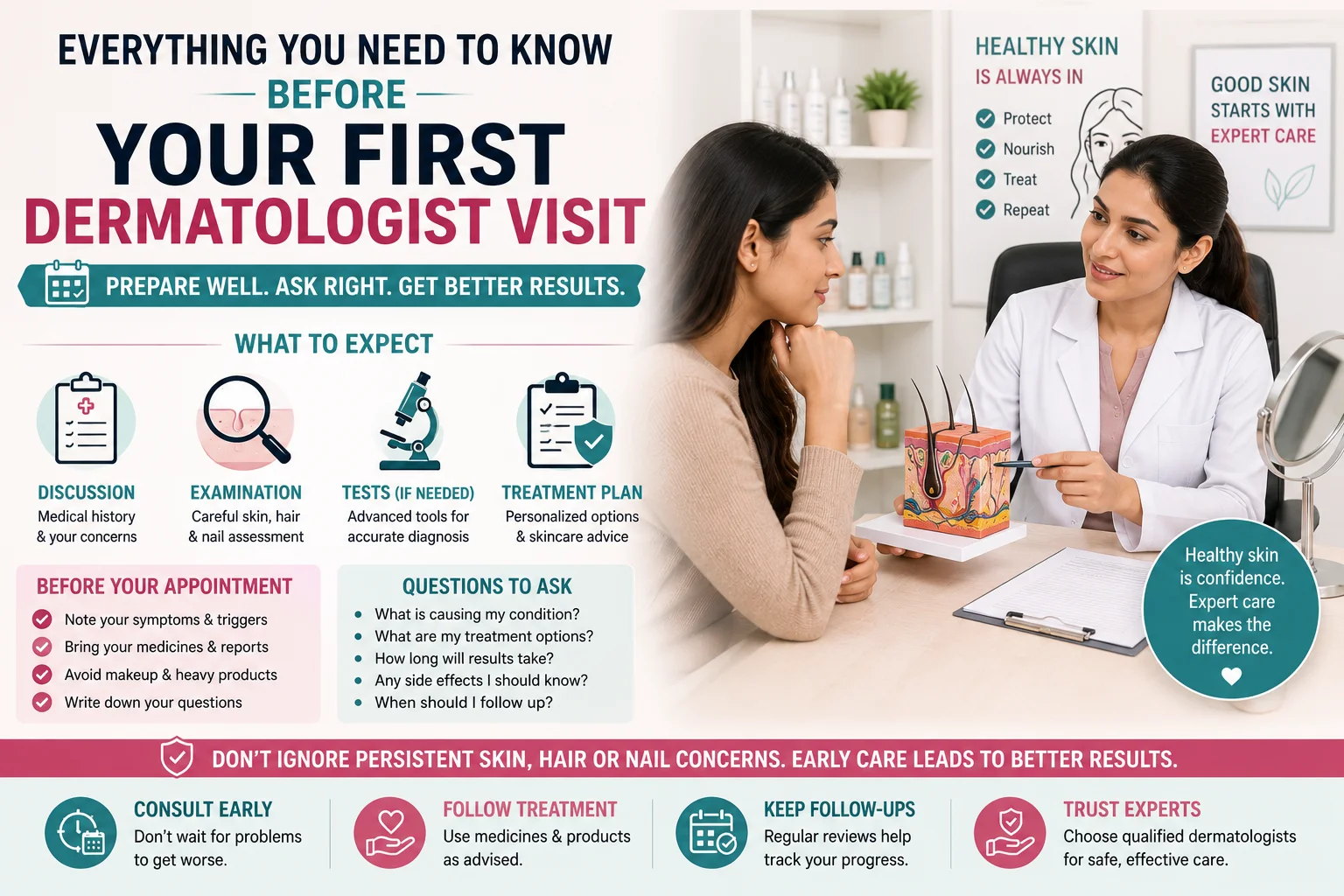
You do not have to wait until a skin problem becomes severe. It is a good idea to consult a dermatologist if you notice:
- Persistent acne or acne scars
- Unexplained rashes or itching
- Hair thinning or excessive hair fall
- Changing moles or unusual skin growths
- Pigmentation or dark patches
- Recurring fungal infections
- Chronic dandruff or scalp problems
- Skin conditions that do not improve with over-the-counter products
If you are unsure whether your concern requires specialist care, reading about when you need to consult a dermatologist may help you decide. :contentReference[oaicite:0]{index=0}
How to Prepare Before Your First Dermatologist Visit
Gather Your Medical Information
Bring information that can help your dermatologist understand your condition more accurately.
- Current prescription and non-prescription medicines
- Supplements you take regularly
- Known allergies
- Previous skin treatments or procedures
- Relevant medical conditions
- Family history of skin diseases if known
Keep Track of Your Symptoms
Before your appointment, write down:
- When the problem started
- How it has changed over time
- Anything that seems to trigger or worsen it
- Products you have already tried
If your condition comes and goes, photographs taken on your phone can be very helpful.
Avoid Hiding the Problem
If your concern involves facial skin, try to arrive with little or no makeup. For scalp examinations, avoid heavy styling products. If your nails are being examined, remove nail polish beforehand.
Questions to Ask During Your First Dermatologist Visit
Preparing questions in advance helps you leave with a clear understanding of your diagnosis and treatment plan.
- What is causing my condition?
- Is additional testing needed?
- What treatment options are available?
- How long before I notice improvement?
- What side effects should I watch for?
- Should I change my skincare routine?
- When should I return for follow-up?
What Happens During Your First Dermatologist Visit?
Medical History Review
Your dermatologist will begin by discussing your medical history and your current concerns. Expect questions about:
- Your symptoms
- Duration of the condition
- Previous treatments
- Current medications
- Lifestyle habits
- Family history of skin conditions
Physical Examination
The examination depends on your concern. Your dermatologist may inspect one specific area or recommend a more detailed skin examination if necessary.
They may use special magnification tools to examine moles, pigmentation, or other skin lesions more closely.
Additional Tests if Needed
Some patients require additional investigations for an accurate diagnosis.
- Dermoscopy
- Wood’s lamp examination
- Skin biopsy
- Patch testing for allergies
- Clinical photographs to monitor progress
These tests are recommended only when clinically appropriate.
Understanding Your Diagnosis
Once the examination is complete, your dermatologist will explain:
- Your diagnosis
- Possible causes
- Factors that may worsen the condition
- Treatment recommendations
- Expected recovery timeline
Every skin condition behaves differently. Some improve within weeks, while others require long-term management. Setting realistic expectations helps prevent unnecessary frustration.
Treatment Options You May Discuss
Your treatment plan depends on your diagnosis and individual needs.
- Prescription creams or ointments
- Oral medications
- Medical shampoos
- Lifestyle and skincare changes
- Clinic-based procedures when appropriate
For example, patients with acne may first receive medical treatment before considering procedures for acne scars. Those experiencing persistent hair loss may require diagnostic evaluation before discussing advanced therapies.
Tips to Get the Best Results From Your Appointment
- Be honest about your symptoms.
- Mention every concern, even if it seems minor.
- Take notes during the consultation.
- Ask questions whenever something is unclear.
- Follow the prescribed treatment exactly as instructed.
- Do not stop medications without medical advice.
After Your First Dermatologist Visit
Your appointment does not end when you leave the clinic. Consistent follow-up is often an important part of successful treatment.
Remember to:
- Start prescribed medicines promptly.
- Use products exactly as directed.
- Attend follow-up appointments.
- Monitor changes with photographs if advised.
- Report unexpected side effects.
Many skin conditions improve gradually rather than overnight. Patience and consistency usually lead to better outcomes.
Insurance and Practical Considerations
Before your appointment, confirm:
- Your insurance coverage for dermatology consultations
- Whether a referral is required
- Your expected consultation charges
- Costs of recommended investigations or procedures if applicable
Discuss medication costs during the visit if affordability is a concern. In many cases, suitable alternatives may be available.
Choosing the Right Dermatologist Matters
A qualified dermatologist combines clinical expertise with careful examination and evidence-based treatment planning. If you are looking for specialist care in Roorkee, choosing an experienced dermatologist can help ensure an accurate diagnosis and an individualized treatment plan. You can also learn more about selecting a specialist by reading this guide on choosing the right dermatologist. :contentReference[oaicite:1]{index=1}
At Dr Hera’s Skin & Hair Clinic, consultations are led by Dr. Hera Tabassum, Chief Dermatologist, Cosmetologist, and Trichologist. Patients receive evidence-based evaluation for skin, hair, and nail concerns, along with treatment recommendations tailored to their individual condition rather than a one-size-fits-all approach.
Frequently Asked Questions
Should I shave before seeing a dermatologist?
Only if instructed. Hair growth patterns may help your dermatologist evaluate certain conditions.
Can I wear skincare products to my appointment?
Basic skincare is usually fine, but avoid heavy makeup if your facial skin needs examination.
How long does the first dermatologist visit usually take?
Most initial consultations take around 20 to 40 minutes, depending on the complexity of your condition and whether additional tests are needed.
Will I receive treatment on the same day?
Many patients receive a diagnosis and treatment plan during their first visit. Some procedures or investigations may be scheduled separately if required.
Conclusion
Your first dermatologist visit is the beginning of a partnership focused on improving your skin, hair, and nail health. Arriving prepared, sharing accurate information, and following your treatment plan can make a meaningful difference to your results. If you notice persistent or recurring skin concerns, seeking timely advice from a qualified dermatologist is often the most reliable way to receive an accurate diagnosis and appropriate care.