
Social media has changed the way people learn about skincare. Every day, Instagram, YouTube, and short-form videos introduce new routines, DIY remedies, and products that promise glowing skin within days. This has left many people asking, are viral skincare trends safe, or are they simply attractive content designed to gain views?
The answer is not straightforward. Some viral skincare trends encourage healthy habits and are supported by dermatologists. Others can irritate the skin, damage the skin barrier, or worsen existing concerns like acne, pigmentation, and sensitivity. Understanding the difference is essential before trying any trend.
This guide explains which trends deserve caution, why Indian skin often needs a different approach, and how to make safer skincare decisions.
Why Viral Skincare Trends Become So Popular?
Beauty content is designed to grab attention. Dramatic before-and-after videos, quick transformations, and “secret” skincare hacks naturally attract millions of views.
However, social media content rarely tells the complete story. Most creators share personal experiences rather than medical advice. They may have a different skin type, different climate, different lifestyle, or even professional treatments that are not mentioned in the video.
What worked for one individual may not produce the same results for someone else.
Why Indian Skin Needs Extra Caution?
Indian skin generally contains higher levels of melanin. While melanin provides some natural protection against UV damage, it also makes the skin more likely to develop post-inflammatory hyperpigmentation after irritation or injury.
This means aggressive skincare trends can increase the risk of:
- Dark spots after acne
- Persistent pigmentation
- Skin irritation
- Barrier damage
- Uneven skin tone
- Increased sensitivity
Instead of chasing quick results, understanding your skin type is a much safer starting point. You can also learn more through the clinic’s guide on knowing your skin type. :contentReference[oaicite:0]{index=0}
Common Viral Skincare Trends and Their Risks
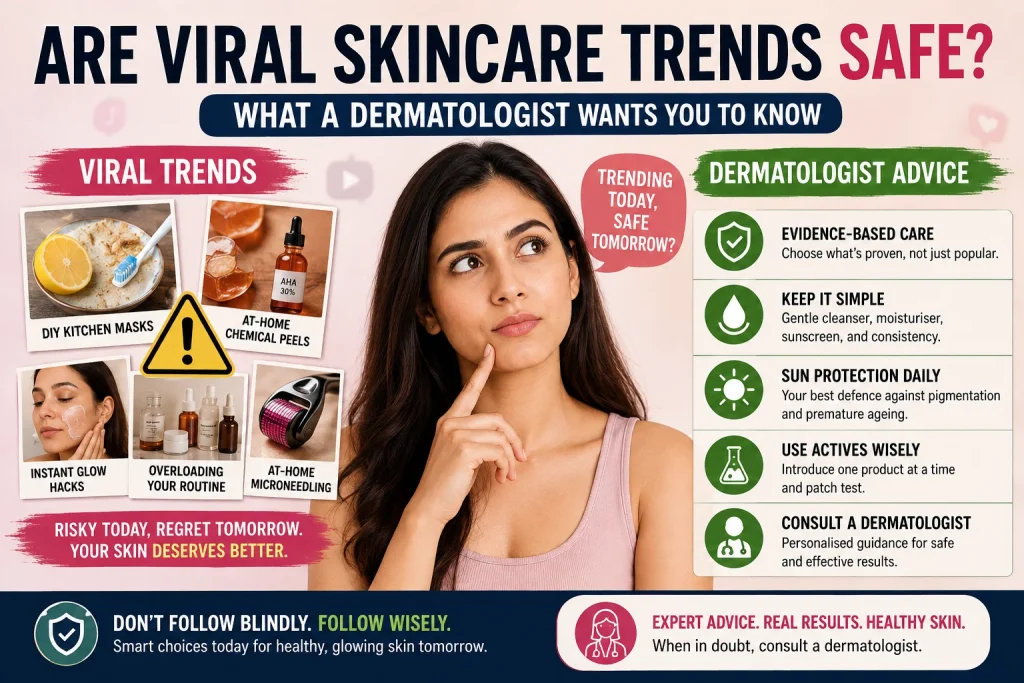
1. DIY Kitchen Ingredient Face Masks
Lemon juice, baking soda, toothpaste, cinnamon, and other household ingredients frequently appear in viral skincare videos.
Although these ingredients may seem natural, natural does not always mean safe.
- Lemon can irritate the skin and increase sun sensitivity.
- Baking soda can disrupt the skin’s natural pH.
- Toothpaste may cause redness and dryness instead of treating pimples.
- Essential oils can trigger allergic reactions in sensitive skin.
Using untested combinations may worsen the problem instead of solving it.
2. At-Home Chemical Peels
High-strength exfoliating acids have become increasingly popular online. While chemical peels can be effective, incorrect concentration, application time, or layering products can result in:
- Chemical burns
- Long-lasting pigmentation
- Excessive peeling
- Skin barrier damage
Professional chemical peels are selected according to skin type, concern, and medical history. Trying strong acids without guidance carries unnecessary risks.
3. Skin Whitening or Instant Glow Hacks
Many viral videos promise brighter skin overnight through homemade mixtures or unverified cosmetic products.
Healthy skin does not become permanently brighter overnight. Products that promise unrealistic results should be approached carefully, especially when ingredient lists are unclear.
Instead of focusing on fairness, aim for healthy, even-toned skin supported by sun protection and evidence-based skincare.
4. Overloading Your Routine
Ten-step skincare routines have become a trend across social media.
Using multiple exfoliants, retinoids, acids, and active ingredients together may overwhelm the skin.
Overusing products can lead to:
- Redness
- Burning sensation
- Breakouts
- Dryness
- Compromised skin barrier
Many dermatologists now support a more balanced approach often called skin minimalism, where fewer well-selected products produce better long-term results.
5. Microneedling and Dermarolling at Home
Home dermarollers are frequently promoted for acne scars, pigmentation, and hair growth.
Improper sterilisation or excessive pressure may increase the risk of infection, scarring, and pigmentation. Medical microneedling performed under professional supervision follows strict hygiene standards and customised treatment protocols.
Not Every Viral Trend Is Unsafe
Some popular skincare habits are supported by scientific evidence and dermatologists.
Examples include:
- Applying sunscreen every day
- Using a gentle cleanser
- Keeping the skin moisturised
- Following a consistent skincare routine
- Avoiding unnecessary product layering
If a trend promotes healthy skincare habits without making unrealistic promises, it is generally more trustworthy.
How to Judge Whether a Skincare Trend Is Safe?
Before following any viral skincare advice, ask yourself these questions:
- Is there scientific evidence behind the advice?
- Does it suit my skin type?
- Does it recommend aggressive treatments without professional supervision?
- Does it promise instant or guaranteed results?
- Has the advice been recommended by a qualified dermatologist?
If the answer raises doubts, it is better to avoid experimenting.
When Should You See a Dermatologist?
Social media cannot replace an individual skin assessment.
If you experience any of the following, professional advice is recommended:
- Persistent acne
- Recurring pigmentation
- Painful breakouts
- Sudden skin reactions
- Skin conditions that do not improve with routine care
Understanding when you should consult a dermatologist can help prevent small skin concerns from becoming more difficult to manage. :contentReference[oaicite:1]{index=1}
Dr. Hera Tabassum, Chief Dermatologist, Cosmetologist, and Trichologist at Dr. Hera’s Skin & Hair Clinic, Roorkee, believes that treatment decisions should be based on an individual’s skin condition rather than social media trends. A personalised evaluation helps identify the actual cause of concerns such as acne, pigmentation, or sensitivity before recommending treatment.
Safer Alternatives to Risky Viral Hacks
Instead of experimenting with unverified skincare trends, choose approaches that have a stronger safety profile.
- Use dermatologist-recommended skincare products.
- Introduce one new product at a time.
- Always perform a patch test before trying active ingredients.
- Wear broad-spectrum sunscreen daily.
- Seek professional advice before undergoing procedures like chemical peels or laser treatments.
Simple routines are often easier to maintain and more effective than constantly changing products based on viral content.
Frequently Asked Questions
Are viral skincare trends safe for sensitive skin?
Not always. Sensitive skin reacts more easily to harsh ingredients and excessive exfoliation. It is safer to consult a dermatologist before trying new trends.
Can DIY skincare permanently damage the skin?
Improper use of acidic or abrasive ingredients may damage the skin barrier, increase irritation, and contribute to pigmentation, particularly in darker skin tones.
Should I stop following skincare influencers?
No. Influencers can introduce useful products and healthy habits. However, their advice should not replace personalised medical guidance, especially for persistent skin concerns.
What is the safest skincare routine?
A basic routine usually includes a gentle cleanser, moisturiser, sunscreen during the day, and targeted treatments recommended for your skin type.
Final Thoughts
Viral skincare content can be informative, but popularity should never be confused with safety. Trends spread quickly because they attract attention, not necessarily because they are supported by medical evidence.
If you have been wondering, are viral skincare trends safe, the safest answer is to evaluate each trend carefully rather than following it blindly. Healthy skin is built through consistency, evidence-based skincare, and personalised guidance—not overnight transformations.
For persistent acne, pigmentation, sensitive skin, or other dermatological concerns, consulting a qualified dermatologist remains the safest way to choose treatments that match your skin’s unique needs.