
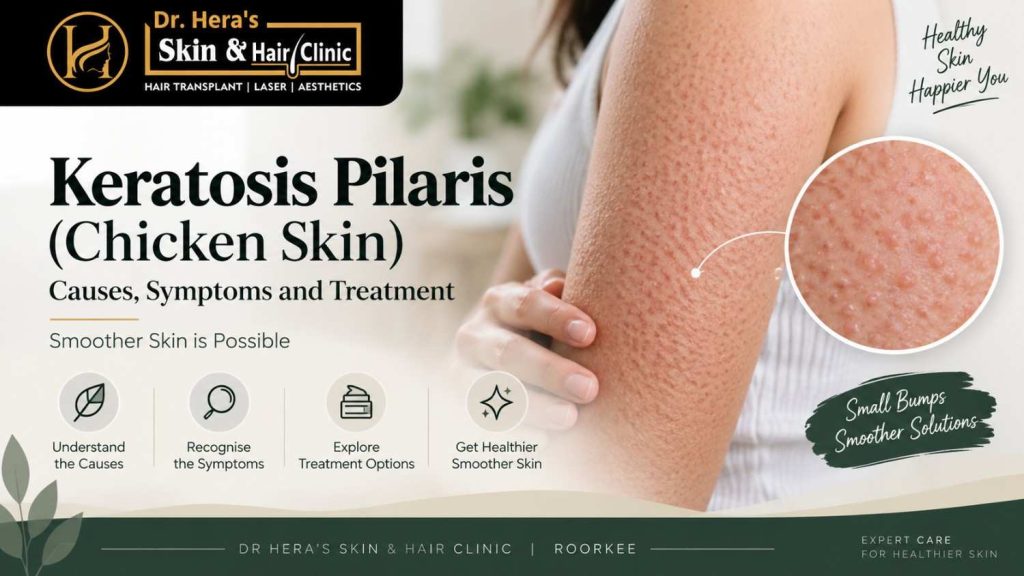
Do you have tiny, rough bumps on your upper arms, thighs, cheeks, or legs that make your skin feel like “chicken skin”?
This may be keratosis pilaris, a common and harmless skin condition. The bumps can look like small pimples or goosebumps, but keratosis pilaris is not acne and it is not contagious.
It develops when dead skin cells and keratin build up around hair follicles, creating small rough bumps on the skin. It is particularly common on the upper arms and thighs and may become more noticeable when the skin is dry.
What Is Keratosis Pilaris?
Keratosis pilaris, often called chicken skin, is a skin condition that causes tiny, rough bumps around hair follicles.
The bumps may be:
- Skin-coloured
- White
- Red or pink
- Brown or darker on deeper skin tones
The affected skin may also feel dry or slightly rough, similar to sandpaper.
Keratosis pilaris is generally harmless and does not spread from one person to another.
What Causes Keratosis Pilaris?
Keratosis pilaris develops when dead skin cells and keratin collect around hair follicles and form small plugs.
Keratin is a natural protein found in the skin, hair, and nails. When it builds up around a follicle, it can create the characteristic rough bump.
The exact reason some people develop this buildup more than others is not always clear.
Keratosis pilaris often begins during childhood or the teenage years and can become less noticeable with age.
Common Symptoms of Keratosis Pilaris
Typical symptoms include:
- Small rough bumps
- Dry or rough skin
- Bumps around individual hair follicles
- Sandpaper-like skin texture
- Mild redness around some bumps
- Occasional itching
- More noticeable bumps during dry weather
The condition may look worse during winter because low humidity can make the skin drier.
Where Does Chicken Skin Usually Appear?
Keratosis pilaris commonly affects:
- Upper arms
- Thighs
- Buttocks
- Cheeks
- Legs
It can appear in other areas where hair follicles are present as well.
Is Keratosis Pilaris the Same as Acne?
No.
Keratosis pilaris and acne can both produce small bumps, but they develop differently.
Keratosis pilaris is mainly related to keratin and dead skin plugging hair follicles.
Acne involves blocked pores, oil production, inflammation, and may cause:
- Blackheads
- Whiteheads
- Inflamed pimples
- Pustules
- Deeper painful acne lesions
Keratosis pilaris usually causes many small, rough, similar-looking bumps rather than the different types of spots seen with acne.
Can Keratosis Pilaris Be Cured Permanently?
There is no guaranteed permanent cure for keratosis pilaris.
For many people, the condition becomes less noticeable with age. Treatment mainly focuses on:
- Reducing roughness
- Keeping the skin moisturised
- Improving skin texture
- Reducing redness or discoloration
Results usually require consistent skincare, and the bumps may return when treatment is stopped.
How Is Keratosis Pilaris Treated?
Treatment depends on how dry, rough, irritated, or noticeable the skin is.
1. Moisturise Regularly
Keeping the skin moisturised is one of the most important steps.
Creams containing ingredients such as:
- Urea
- Lactic acid
may help soften dry, rough skin.
Applying moisturiser shortly after bathing, while the skin is still slightly damp, can help retain moisture.
2. Gentle Exfoliation
Removing excess dead skin may help improve texture.
Ingredients sometimes used for keratosis pilaris include:
- Lactic acid
- Glycolic acid
- Salicylic acid
- Other alpha-hydroxy acids
- Urea
These products should be introduced carefully because excessive exfoliation can cause irritation and make redness worse.
3. Retinoids
In selected cases, a dermatologist may recommend a topical retinoid to help reduce the buildup of dead skin cells.
Retinoids are not suitable for everyone and can irritate the skin, so they should be used according to professional guidance.
4. Laser or Light-Based Treatment
For some patients with persistent redness or discoloration, dermatologists may consider laser or light-based procedures when skincare and medication have not provided sufficient improvement.
The appropriate procedure depends on the individual’s skin and concern.
What Should You Avoid?
Some habits can make chicken skin more irritated.
Try to avoid:
- Aggressive body scrubs
- Scratching or picking the bumps
- Trying to pop the bumps
- Very hot showers
- Excessive exfoliation
- Harsh soaps
- Repeated friction over affected areas
Scrubbing harder does not remove keratosis pilaris faster and may instead make the skin red and irritated.
Simple Skincare Tips for Keratosis Pilaris
A basic routine can often be more useful than using many different products.
During bathing:
Use lukewarm rather than very hot water and choose a gentle cleanser.
After bathing:
Apply moisturiser while your skin is still slightly damp.
For rough texture:
Use an appropriate keratolytic ingredient such as lactic acid, urea, or salicylic acid if it suits your skin.
During the day:
Protect exposed skin from excessive sun exposure, especially if you have redness or dark marks.
Consistency is more important than aggressive treatment.
Can Keratosis Pilaris Leave Dark Marks?
Keratosis pilaris itself may appear red, brown, or darker depending on skin tone.
Picking, scratching, or repeated inflammation can make discoloration more noticeable.
This is particularly relevant in Indian and deeper skin tones, where marks following inflammation can sometimes remain noticeable after the bump becomes smoother.
Avoiding unnecessary irritation is therefore an important part of managing the condition.
When Should You See a Dermatologist?
Keratosis pilaris is usually harmless, but you may want to consult a dermatologist if:
- You are not sure whether the bumps are keratosis pilaris
- The skin is very itchy or irritated
- Redness is increasing
- Bumps are becoming painful
- Dark marks are becoming noticeable
- Your current products are irritating your skin
- The condition is not improving despite regular care
- The appearance of the skin is bothering you
Other conditions can sometimes resemble keratosis pilaris, so an examination can help confirm the diagnosis.
Keratosis Pilaris Care at Dr Hera’s Skin & Hair Clinic
If you have persistent rough bumps or are unsure whether you have keratosis pilaris, acne, folliculitis, or another skin condition, a dermatology consultation can help identify the concern correctly.
Dr. Hera Tabassum is an MBBS, MD Dermatology specialist at Dr Hera’s Skin & Hair Clinic in Roorkee. Her professional profile also lists MRCP-SCE Dermatology and training in dermatologic surgery, aesthetics, and laser procedures.
Treatment recommendations are made after evaluating the skin type, symptoms, severity, and individual needs.
Frequently Asked Questions
Is keratosis pilaris harmful?
No. Keratosis pilaris is generally a harmless skin condition.
Is chicken skin contagious?
No. Keratosis pilaris does not spread from one person to another.
Why does keratosis pilaris become worse in winter?
Dry weather can make the skin rougher and make the bumps more noticeable.
Should I scrub keratosis pilaris?
Avoid harsh scrubbing. Gentle exfoliation may help, but aggressive scrubbing can irritate the skin.
Can salicylic acid help keratosis pilaris?
Salicylic acid is one ingredient dermatologists may use to help remove excess dead skin cells and improve rough texture. It should be used carefully to avoid irritation.
Can keratosis pilaris go away on its own?
For some people, it becomes less noticeable as they get older, although it can persist into adulthood.
Conclusion
Keratosis pilaris or chicken skin is a common condition that causes small, rough bumps around hair follicles, particularly on the arms and thighs.
It is harmless and not contagious. Regular moisturising, gentle exfoliation, and avoiding harsh scrubbing can help improve the appearance and texture of the skin.
If the bumps are persistent, irritated, leaving dark marks, or you are unsure whether they are actually keratosis pilaris, a dermatologist can help confirm the diagnosis and recommend suitable treatment.