
Skin allergy causes often lead to itching, redness, and discomfort. These reactions can appear suddenly. They can also worsen with repeated exposure. So, understanding skin allergy causes helps you manage symptoms early and avoid triggers.
Many people ignore mild irritation at first. However, untreated allergies can become severe. Therefore, early identification of triggers is important for healthy skin.
Common Symptoms Linked to Skin Allergy Causes
Symptoms may vary from person to person. They also depend on the type of trigger. Still, some signs are very common.
- Redness on the skin
- Persistent itching
- Swelling or bumps
- Dry or flaky patches
- Burning sensation
- Rashes that spread
In some cases, symptoms may worsen quickly. For example, hives can appear within minutes. If irritation continues, it may lead to skin inflammation. Therefore, you should not ignore early signs.
Skin Allergy Causes from Personal Care Products
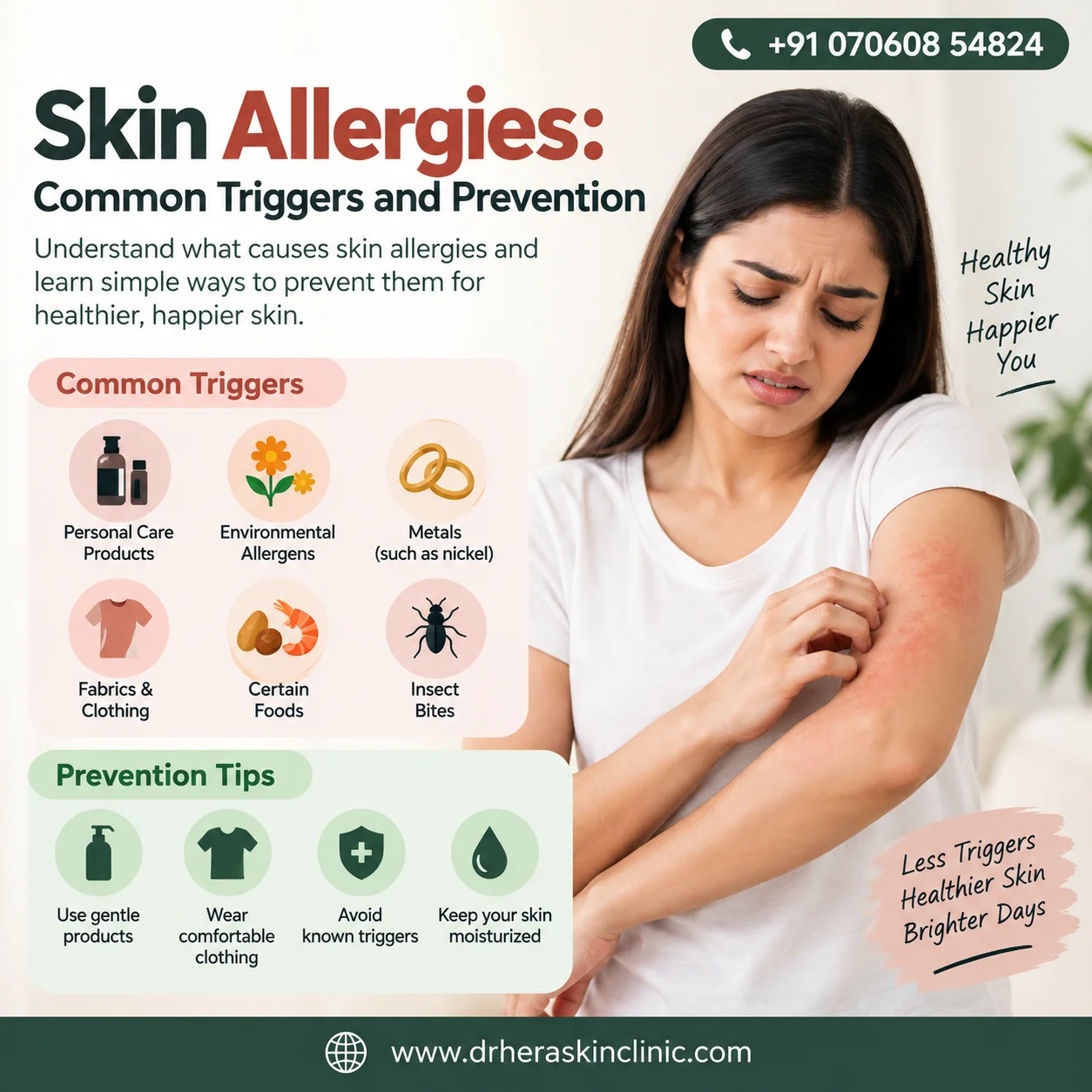
Personal care products are a common reason behind skin reactions. Many products contain strong chemicals. These can damage the skin barrier.
Fragrances are a major trigger. They are present in soaps, creams, and perfumes. Similarly, preservatives and dyes can irritate sensitive skin.
Hair dyes can also cause reactions. This happens especially when applied frequently. In addition, harsh face washes may lead to dryness and itching.
If your skin reacts after using a product, stop using it. Then, switch to gentle alternatives. Products with soothing ingredients like niacinamide can help calm the skin.
Environmental Factors That Trigger Skin Allergies
Environmental allergens are another major factor. These triggers are often difficult to avoid completely.
Pollen is one of the most common allergens. It spreads during seasonal changes. Dust mites also trigger reactions, especially indoors.
Pet dander can cause itching and rashes. Mold exposure may also lead to skin irritation. These skin allergy causes often worsen in humid conditions.
Seasonal changes can make symptoms worse. For example, dry air in winter may lead to skin dryness. As a result, the skin becomes more sensitive.
Metal Exposure and Skin Allergy Causes
Metals can trigger allergic reactions on contact. Nickel is the most common metal allergen.
It is found in everyday items. These include jewelry, watches, and belt buckles. When skin comes in contact, redness may appear quickly.
Some people develop long-term sensitivity. Even small exposure can cause irritation. Therefore, avoiding direct contact is important.
Choose hypoallergenic accessories. Also, check product labels before buying.
Fabric and Clothing-Related Irritants
Clothing can also affect skin health. Certain fabrics trap heat and moisture. This can irritate the skin.
Wool may cause itching. Synthetic fabrics like polyester can block airflow. Tight clothes increase friction and discomfort.
In addition, fabric dyes may trigger reactions. This is more common in people with sensitive skin.
Loose cotton clothes are a better choice. They allow the skin to breathe. This reduces irritation and prevents rashes.
Food-Related Skin Allergy Causes
Food allergies can affect the skin quickly. Some reactions appear within minutes. Others may take longer.
Common trigger foods include nuts, dairy, and eggs. Seafood is also a known allergen. These foods can cause hives and itching.
Sometimes, direct contact with food causes irritation. For example, handling raw vegetables or seafood may lead to reactions.
If you notice repeated symptoms, identify the food trigger. Then, avoid it to prevent further reactions.
Insect Bites and Skin Reactions
Insect bites are a common cause of skin irritation. Mosquito bites often cause itching and redness.
Bee stings can lead to swelling. In some cases, the reaction may be strong. Flea bites may also cause small rashes.
Most reactions are mild. However, some people may experience severe symptoms. Therefore, proper care is important.
If irritation increases, consult a specialist. You can also visit a skin allergy doctor for proper guidance.
Types of Skin Allergies You Should Know
Different conditions are linked to skin allergy causes. Each type has unique symptoms.
- Contact dermatitis
- Eczema
- Hives (urticaria)
- Angioedema
Contact dermatitis occurs due to direct contact with irritants. Eczema leads to dry and itchy skin. Hives appear as raised red bumps.
Some conditions need long-term care. For example, chronic irritation may lead to lichen planus or similar issues.
So, understanding the type helps in better treatment.
How Doctors Identify Skin Allergy Causes?
Doctors follow a step-by-step approach. First, they review your symptoms. Then, they check your exposure to possible triggers.
Patch testing is commonly used. Small amounts of allergens are applied to the skin. The reaction is observed over time.
Blood tests may also help in some cases. However, not all allergies need lab tests. A physical examination often gives useful clues.
Accurate diagnosis is important. It helps target the exact skin allergy causes. As a result, treatment becomes more effective.
Prevention Tips to Avoid Skin Allergy Causes
Prevention is the best way to manage allergies. Simple daily habits can reduce flare-ups.
- Use fragrance-free skincare products
- Choose mild soaps and cleansers
- Wear loose cotton clothes
- Avoid known triggers
- Keep your skin moisturized
- Maintain good hygiene
Moisturizing plays a key role. It keeps the skin barrier strong. You can explore options for dry skin solution to improve skin health.
Also, avoid scratching irritated areas. This can worsen the condition. Instead, apply soothing creams.
Treatment Options for Skin Allergies
Treatment depends on the severity of symptoms. Mild cases can improve with basic care.
Doctors may suggest antihistamines. These help reduce itching and swelling. Topical creams are also used to calm the skin.
In some cases, medicated creams are required. These reduce inflammation and redness.
Advanced treatments are available for persistent issues. Procedures like chemical peels may help improve skin texture. However, these should be done under expert supervision.
If symptoms do not improve, seek medical advice. Early care prevents complications.
When to See a Doctor
Some symptoms need medical attention. Do not delay if the condition worsens.
- Severe itching that does not stop
- Swelling on face or lips
- Spreading rashes
- Pain or burning sensation
- Frequent recurrence of symptoms
In such cases, consult a specialist. You can learn more about managing skin allergies effectively for better care.
DR. HERA TABASSUM
Chief Dermatologist, Cosmetologist & Trichologist
E-mail: info@drheraskinclinic.com
Dr Hera’s Skin & Hair Clinic, near Bank of India, Malviya chowk, Roorkee, Uttarakhand 247667
Daily Habits That Support Healthy Skin
Healthy skin habits reduce the risk of allergies. Small changes can make a big difference.
Drink enough water daily. It helps maintain skin hydration. Eat a balanced diet rich in nutrients.
Also, follow a simple skincare routine. Avoid using too many products at once. This reduces the chance of irritation.
Regular care improves skin strength. It also lowers sensitivity to triggers.
Frequently Asked Questions
What are the most common skin allergy causes?
Common causes include chemicals in products, environmental allergens, metals, fabrics, and certain foods.
How can I identify my skin allergy triggers?
You can track reactions after exposure. Doctors may also use patch testing for accurate results.
Can food allergies affect the skin?
Yes, some foods can cause hives and itching. Reactions may appear quickly after eating.
Are skin allergies permanent?
Not always. Some allergies improve with time. Avoiding triggers helps control symptoms.
Is it safe to treat skin allergies at home?
Mild cases can be managed at home. However, severe symptoms need medical attention.
Conclusion
Skin allergy causes vary from person to person. Identifying triggers is the first step. It helps prevent future reactions.
Simple lifestyle changes can protect your skin. Early treatment also improves recovery. So, stay aware of symptoms and act quickly.
Healthy habits and proper care keep your skin safe. If needed, consult a specialist for the right guidance.