
Causes of Sudden Hair Fall in Men and Women can feel confusing at first. Hair may look normal. Then it starts falling quickly. This sudden change creates stress. However, there is always a trigger behind it. Identifying that trigger early helps you control the issue.
What is Sudden Hair Fall?
Sudden hair fall means a quick rise in hair shedding. You may notice hair on your pillow. Hair may collect in the shower. This type of hair fall starts fast. It feels different from gradual thinning.
In most cases, this happens when the hair cycle gets disturbed. Many strands enter the shedding phase together. As a result, hair fall becomes visible in a short time.
How Much Hair Fall is Normal?
Hair fall is natural. Every person loses some hair daily. This is part of the normal growth cycle.
However, heavy shedding is not normal. If hair falls in clumps, then you should pay attention. You may also notice reduced volume while styling.
At this stage, understanding the real reasons behind hair fall and how to reduce it becomes important.
Why Does Sudden Hair Fall Happen?
Hair grows in a cycle. This cycle has three stages. Each stage supports healthy hair growth.
The growth phase keeps hair strong. Then comes a short transition stage. After that, hair enters the resting phase. Finally, hair sheds and new hair replaces it.
Sudden hair fall happens when many strands shift to the resting phase together. This shift often happens due to stress, illness, or sudden lifestyle changes.
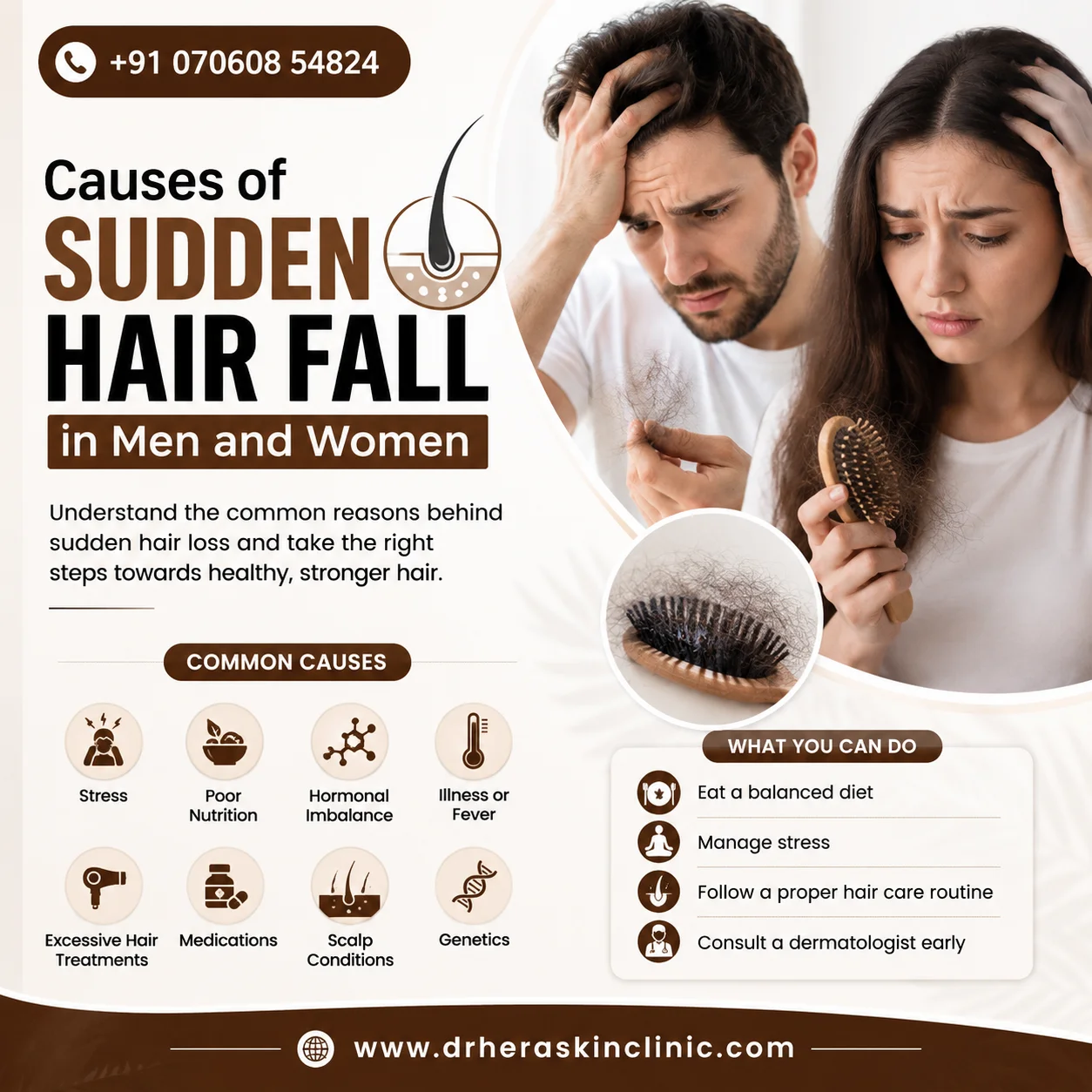
Main Causes of Sudden Hair Fall in Men and Women
There are many triggers behind this problem. Each cause affects the scalp differently. Understanding them helps you take the right step.
1. High Stress Levels
Stress is a major cause of sudden hair fall. It disturbs hormone balance. As a result, hair growth slows down.
Hair fall usually starts weeks after a stressful event. For example, work pressure or emotional stress can trigger it.
You can better understand this connection in detail through how stress leads to hair fall.
2. Nutritional Deficiencies
Your hair needs proper nutrients. Lack of iron, protein, or vitamins weakens hair roots.
Many people face sudden hair fall after dieting. Rapid weight loss reduces essential nutrients.
Including the right foods that support hair regrowth can improve hair strength over time.
3. Hormonal Imbalance
Hormones control many body functions. Hair growth depends on them.
In women, conditions like PCOS can trigger hair fall. In men, hormone sensitivity affects hair roots.
Hormonal issues often increase shedding. You can explore how imbalance affects the body in this guide on hormonal imbalance.
4. Illness or Fever
Hair fall after illness is very common. High fever or infections stress the body.
However, hair fall does not start immediately. It usually begins after a few weeks.
This delay makes it harder to identify the cause. Still, it is a known trigger.
5. Sudden Weight Loss
Rapid weight loss can shock your body. The body focuses on essential functions first.
Hair growth becomes less important. As a result, hair starts falling quickly.
This type of hair fall is often temporary. A balanced diet can help recovery.
6. Hair Treatments and Styling
Frequent styling damages hair. Heat tools weaken the strands.
Chemical treatments like smoothing or coloring affect scalp health. These treatments can trigger sudden shedding.
Using the right products and avoiding harsh styling can prevent damage. Some styling products may even cause scalp issues, as explained in this detailed guide.
7. Medications
Some medicines can cause hair fall. This happens as a side effect.
Hair fall may start after beginning a new treatment. If you notice this, then consult a doctor.
Do not stop medication without advice.
8. Scalp Conditions
A healthy scalp supports strong hair. Problems like dandruff or infections weaken roots.
Itching, redness, or flakes may signal an issue. Ignoring these signs can increase hair fall.
Understanding early symptoms helps in prevention. You can learn more in early signs of scalp infections.
9. Environmental Changes
Changes in water or climate can affect hair. Many people notice hair fall after moving to a new place.
Hard water weakens hair strands. Pollution also damages hair over time.
Protecting your scalp becomes important in such situations.
10. Genetic Factors
Genetics also affect hair health. Some people are more prone to hair fall.
However, genetic hair loss is usually gradual. Sudden hair fall often involves other triggers.
Sudden Hair Fall in Men vs Women
The causes of sudden hair fall in men and women may overlap. Still, some differences exist.
Men often experience hair fall due to hormone sensitivity. This may lead to thinning in specific areas.
Women usually face hair fall due to hormonal imbalance or nutrient deficiency.
You can explore a deeper comparison in hair loss differences between men and women.
Common Real-Life Triggers
Sudden hair fall often links with daily life events. These triggers are easy to ignore.
Hair fall after illness is very common. Stress from lifestyle changes can also affect hair.
Some people notice hair fall after starting a new diet or workout plan. Changes in routine can impact hair health.
Even water change after relocation can affect your scalp.
Tracking these triggers helps you identify the real cause.
Warning Signs You Should Not Ignore
Sudden hair fall often shows clear warning signs. You should not ignore them. Early action can prevent serious damage.
If you notice hair falling in clumps, then it is a strong signal. Hair on your pillow or comb may increase quickly.
Patchy hair loss is another warning sign. This may indicate a deeper issue.
Scalp itching or redness can also be a problem. These signs often link to infections or irritation.
If your scalp feels painful or sensitive, then it needs attention. You can check early scalp infection symptoms to understand these signs better.
How to Identify Your Hair Fall Type?
Understanding your hair fall type helps you take the right action. Different patterns show different causes.
If hair falls in large amounts suddenly, then it may be stress-related. This is common after illness or emotional pressure.
If hair loss appears in patches, then it may be a scalp condition. In such cases, proper diagnosis is important.
If hair fall is gradual but increasing, then it may be linked to hormones or genetics.
For accurate diagnosis, doctors may suggest tests. You can learn more about blood tests for hair loss to identify the root cause.
What to Do Immediately?
Taking early action can reduce damage. Simple steps can help control sudden hair fall.
First, focus on your diet. Include protein, iron, and vitamins. A healthy diet supports hair recovery.
Second, reduce stress levels. Relaxation techniques can improve overall health.
Third, avoid harsh styling. Heat tools and chemicals can worsen hair fall.
Fourth, follow a basic scalp care routine. Keeping your scalp clean is important. You can follow a proper scalp care routine to improve scalp health.
Finally, choose the right treatment if needed. Options like PRP or medical therapy may help in some cases.
Can Sudden Hair Fall Be Reversed?
In many cases, sudden hair fall is temporary. Once the trigger is removed, hair growth can return.
For example, hair fall caused by stress or illness often improves with time.
However, proper care is still important. Ignoring the problem may delay recovery.
You can explore more about recovery in hair regrowth after hair loss.
Advanced treatments may also support regrowth. For example, PRP therapy for hair regrowth is often discussed as a solution.
When to See a Doctor?
Some cases need medical attention. You should not delay in such situations.
If hair fall continues for several weeks, then consult a doctor. Continuous shedding may indicate a deeper issue.
If you notice bald patches, then seek help quickly. This condition needs proper treatment.
If hair fall starts after medication, then medical advice is important.
Early diagnosis helps prevent long-term damage.
FAQs
Why is my hair falling suddenly?
Sudden hair fall usually happens due to stress, illness, or nutritional deficiency. Lifestyle changes can also trigger it.
Is sudden hair fall permanent?
No, in most cases it is temporary. Once the cause is treated, hair growth improves.
How long does sudden hair fall last?
It may last a few weeks to a few months. Recovery depends on the cause and care.
Can stress cause sudden hair fall?
Yes, stress is one of the most common causes. It can push hair into the shedding phase early.
What is the fastest way to control hair fall?
Improve your diet, reduce stress, and avoid harsh treatments. Early care gives better results.