
Melasma is a common skin condition that causes dark patches on the face, especially on the cheeks, forehead, nose, and upper lip. Many people feel frustrated because even after treatment, melasma keeps coming back.
Understanding why melasma keeps coming back is the first step to managing it effectively. While it is not harmful, its recurring nature makes it difficult to deal with without the right approach.
This guide explains the real causes of melasma recurrence and how you can prevent relapse with practical, long-term solutions.
What is Melasma and Why Is It So Persistent?
Melasma is a type of hyperpigmentation caused by excess melanin production in the skin. It appears as brown or gray-brown patches and is more common in people with medium to darker skin tones.
The reason melasma keeps coming back is that it is a chronic condition. The pigment-producing cells (melanocytes) remain sensitive even after treatment. This means triggers like sunlight or hormones can reactivate pigmentation at any time.
Unlike temporary skin issues, melasma needs ongoing care and maintenance.
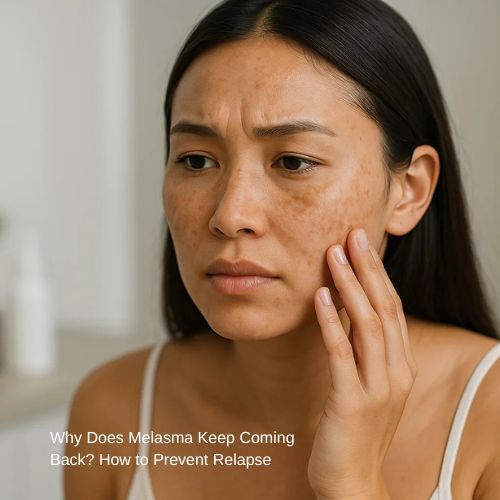
Why Does Melasma Keep Coming Back? (Root Causes Explained)
There is no single reason behind melasma recurrence. It is usually a combination of internal and external triggers.
Sun Exposure – The Biggest Trigger for Melasma Relapse
Sun exposure is the most common reason melasma keeps coming back. UV rays and even visible light stimulate melanocytes, leading to more pigment production.
Even short exposure without protection can cause pigmentation to return after treatment.
Hormonal Changes and Melasma Recurrence
Hormones play a major role in melasma. Pregnancy, birth control pills, and thyroid issues can trigger or worsen pigmentation.
This is why many people notice melasma returning again and again during hormonal changes.
Genetics and Skin Type Factors
Some people are naturally more prone to melasma due to genetics. If your family has a history of pigmentation, you may experience frequent relapse.
Darker skin tones also have more active melanocytes, increasing the risk of recurrence.
Heat, Stress, and Lifestyle Triggers
Heat exposure, stress, and inflammation can worsen melasma. High temperatures increase blood flow and stimulate pigment production.
Stress hormones may also contribute to pigmentation issues over time.
Incorrect or Incomplete Treatment
Stopping treatment too early or using the wrong products can lead to relapse. Many people treat melasma for a short time and expect permanent results.
Since melasma is long-term, incomplete care is a major reason why melasma keeps coming back.
What is a Melasma Flare-Up?
A melasma flare-up happens when the pigmentation becomes darker or more visible. It can be triggered by sun exposure, heat, stress, or hormonal changes.
Flare-ups are common and show that the skin is reacting to internal or external triggers again.
How to Prevent Melasma from Coming Back (Proven Strategies)
Preventing relapse is possible with the right habits and consistency.
Daily Sun Protection is Non-Negotiable
Using sunscreen daily is the most important step. Choose a broad-spectrum sunscreen with SPF 50 or higher and reapply every 2–3 hours.
Sun protection reduces the chances of melasma returning significantly.
Follow a Consistent Skincare Routine for Melasma
A proper skincare routine helps control pigmentation. Use gentle cleansers and products that support skin renewal.
Consistency is more important than using too many products.
Use Clinically Proven Ingredients
Ingredients like vitamin C, retinoids, azelaic acid, and kojic acid help reduce pigmentation and improve skin tone.
These ingredients work slowly but effectively when used regularly.
Avoid Common Triggers That Worsen Melasma
Try to limit sun exposure, avoid excessive heat, and reduce the use of harsh skincare products.
Small lifestyle changes can make a big difference in preventing melasma relapse.
Maintain Long-Term Treatment, Not Just Quick Fixes
Melasma needs maintenance treatment even after improvement. Long-term care helps keep pigmentation under control.
This is key if you want to stop melasma from coming back repeatedly.
Best Treatment Options for Recurrent Melasma
If melasma keeps coming back, professional treatment may be needed.
Topical Treatments Recommended by Dermatologists
Dermatologists often prescribe creams that reduce pigmentation and improve skin texture. These treatments are tailored to your skin type.
In-Clinic Treatments for Stubborn Melasma
Procedures like chemical peels and advanced skin therapies can help manage stubborn melasma.
However, treatment should always be done under expert guidance to avoid worsening the condition.
Does Melasma Ever Go Away Permanently?
Melasma can improve significantly with proper treatment, but it may not always go away completely.
The goal is to control pigmentation and prevent it from returning. With the right care, you can keep your skin clear for longer periods.
Diet, Vitamins, and Internal Factors in Melasma
Can Diet Affect Melasma Recurrence?
A diet high in sugar and processed foods may increase inflammation and worsen pigmentation.
Eating antioxidant-rich foods supports overall skin health.
Vitamin Deficiencies Linked to Melasma
Low levels of vitamin D, B12, and iron may be linked to pigmentation issues in some cases.
A balanced diet can help maintain healthy skin from within.
When Should You See a Dermatologist for Melasma?
If melasma keeps coming back despite home care, it is best to consult a professional.
Seeking help from experienced dermatologist in Roorkee can make a big difference in managing the condition effectively.
Final Thoughts: Managing Melasma Long-Term
Melasma is not a one-time problem. It requires patience, consistency, and the right approach.
Understanding why melasma keeps coming back helps you take better control of your skin. With proper care, sun protection, and expert guidance, you can reduce recurrence and maintain healthy skin.
About Dr Hera’s Skin & Hair Clinic
For those looking for trusted dermatologists in Roorkee, Dr Hera’s Skin & Hair Clinic is known for providing advanced and personalized skin care solutions.
The clinic offers complete dermatology services for conditions like melasma, acne, eczema, hair loss, fungal infections, and more.
Dr. Hera Tabassum is regarded as one of the best dermatologists in Roorkee, with years of experience in treating skin, hair, and nail disorders.
Her approach focuses on customized treatment plans to deliver effective and long-lasting results for every patient.
FAQs
Can melasma come back after treatment? Yes, melasma can return if triggers like sun exposure or hormonal changes are not controlled.
How do I stop melasma from returning naturally? Use sunscreen daily, follow a consistent skincare routine, and avoid known triggers.
What is the main cause of melasma relapse? Sun exposure and hormonal changes are the most common causes.
Is melasma permanent? It is a long-term condition but can be managed effectively with proper care.
Which treatment is best for recurrent melasma? A combination of skincare, sun protection, and dermatologist-guided treatment works best.