
From social media trends to home remedies shared by friends, skincare advice is everywhere. Unfortunately, not all of it is accurate. Many skin care myths continue to circulate despite advances in dermatology. Following incorrect advice can lead to irritation, breakouts, pigmentation, premature ageing, or damage to your skin barrier.
Healthy skin depends on understanding what your skin actually needs rather than relying on popular misconceptions. This guide separates common myths from evidence-based skincare practices so you can make informed decisions and avoid habits that may do more harm than good.
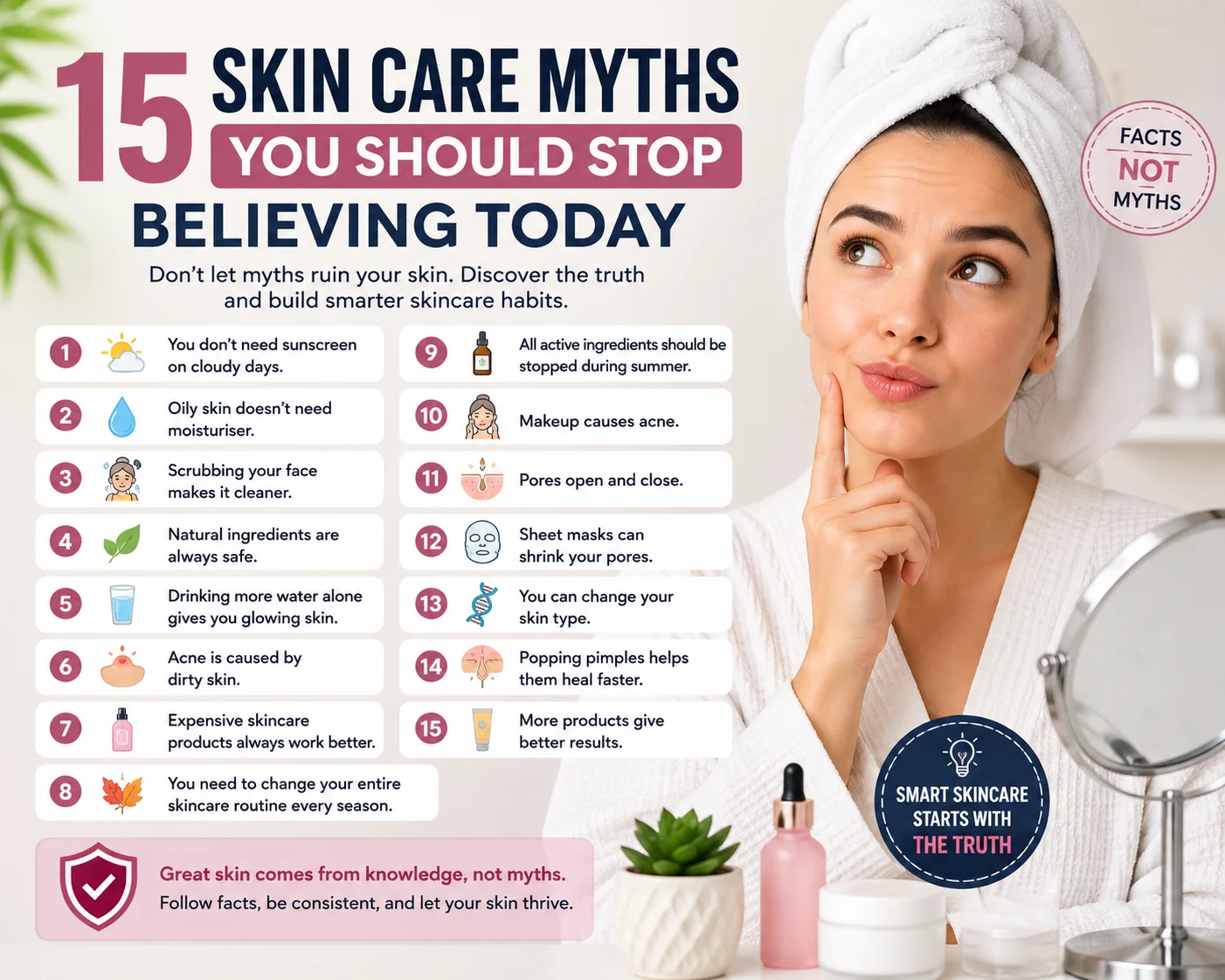
1. You Don’t Need Sunscreen on Cloudy Days
Many people believe sunscreen is only necessary on bright, sunny days. However, ultraviolet (UVA) rays can pass through clouds and glass. These rays contribute to premature ageing, pigmentation, and long-term skin damage even when the weather looks overcast.
Daily sun protection remains important throughout the year. A broad-spectrum sunscreen with SPF 30 or higher helps protect your skin during outdoor activities, commuting, and even while sitting near windows.
If you already struggle with dark spots, you may also find it helpful to read our guide on how sun exposure can cause dark spots.
2. Oily Skin Doesn’t Need Moisturiser
One of the most common skin care myths is that oily skin should skip moisturiser. In reality, oil and hydration are completely different.
Your skin can produce excess oil while still lacking water. Harsh cleansers and frequent face washing may strip away moisture, causing your skin to produce even more oil in response.
Choose a lightweight, non-comedogenic moisturiser that suits oily or combination skin. Proper hydration supports a healthy skin barrier and helps reduce irritation.
3. Scrubbing Your Face Makes It Cleaner
Scrubbing your face aggressively does not make it healthier. Instead, excessive exfoliation can damage the skin barrier, increase redness, worsen acne, and make pigmentation appear more noticeable.
A gentle cleanser is enough for everyday cleansing. Chemical exfoliants containing ingredients such as salicylic acid or glycolic acid may be appropriate for some people, but they should be used according to your skin’s needs rather than every day.
4. Natural Ingredients Are Always Safe
Natural does not automatically mean safe. Ingredients like lemon juice, baking soda, toothpaste, and undiluted essential oils are often promoted online as quick skincare solutions. Unfortunately, they can irritate the skin, disrupt the protective barrier, and even cause burns or allergic reactions.
Products developed for topical skincare undergo safety testing and contain ingredients in carefully balanced concentrations. Persistent acne, pigmentation, or skin irritation should be evaluated by a qualified dermatologist instead of relying on harsh home remedies.
5. Drinking More Water Alone Gives You Glowing Skin
Hydration supports overall health, but simply drinking large amounts of water will not automatically eliminate acne, wrinkles, or pigmentation.
Healthy skin depends on several factors, including genetics, skincare habits, nutrition, sleep quality, sun protection, and medical conditions. Drinking adequate water is beneficial, but it works best as part of a complete skincare routine rather than as a standalone solution.
6. Acne Is Caused by Dirty Skin
Acne is not simply the result of poor hygiene. It develops because of multiple factors, including excess oil production, clogged hair follicles, hormones, inflammation, genetics, and certain medications.
Washing your face repeatedly will not cure acne. In fact, over-cleansing can dry out your skin and increase irritation.
People dealing with persistent breakouts can also explore our detailed guide on how to get rid of acne for practical skincare advice.
7. Expensive Skincare Products Always Work Better
Price does not determine effectiveness. Many affordable skincare products contain the same clinically proven ingredients found in premium brands.
Rather than focusing on cost, pay attention to the ingredient list, formulation, and suitability for your skin type. Consistency often produces better results than constantly switching to expensive products.
8. You Need to Change Your Entire Skincare Routine Every Season
Seasonal changes may require small adjustments, but completely replacing your skincare routine is rarely necessary.
During humid weather, you may prefer a lighter moisturiser or gel-based sunscreen. During winter, richer moisturisers may help reduce dryness. However, your basic routine of cleansing, moisturising, and sun protection usually remains the same.
Making gradual changes also makes it easier to identify which products genuinely benefit your skin and which ones cause irritation.
9. All Active Ingredients Should Be Stopped During Summer or Monsoon
Another popular skin care myth is that ingredients like retinoids, vitamin C, niacinamide, or exfoliating acids should be completely avoided during hot or humid weather.
In reality, there is no universal rule. Your skincare routine should be adjusted based on your skin’s condition, not the season alone. Some people may need to reduce the frequency of stronger active ingredients if irritation develops, while others can continue using them without any issues.
Pay attention to how your skin responds. If you notice excessive dryness, redness, or peeling, consult your dermatologist before making major changes to your routine.
10. Sweating Removes Toxins From Your Skin
Sweating is your body’s natural cooling mechanism. It does not detoxify your skin or remove impurities from your pores.
When sweat mixes with oil, sunscreen, makeup, and environmental pollutants, it may contribute to clogged pores or skin irritation, especially in people with acne-prone skin.
Instead of leaving sweat on your face, gently cleanse your skin after heavy exercise or prolonged outdoor activity. Avoid rubbing your face with dirty towels or touching it repeatedly with your hands.
11. Popping Pimples Helps Them Heal Faster
It may feel tempting to squeeze a pimple, but doing so often pushes inflammation deeper into the skin. This increases the risk of infection, prolonged healing, dark marks, and permanent acne scars.
Allow pimples to heal naturally or use dermatologist-recommended acne treatments. If you experience painful cystic acne or frequent breakouts, professional treatment can help reduce the risk of long-term scarring.
You can also read our guide on whether it is correct to pop a pimple before attempting to squeeze acne.
12. Anti-Ageing Products Are Only for Older Adults
Many people believe anti-ageing skincare should only begin after wrinkles appear. However, prevention is often more effective than correction.
Daily sunscreen, moisturising, antioxidants, and healthy lifestyle habits help protect collagen and slow visible signs of ageing. Starting basic preventive skincare in your twenties or thirties can support healthier skin over time.
13. More Skincare Products Mean Better Results
Layering numerous serums, exfoliants, masks, and treatments does not necessarily improve your skin. In fact, using too many products can damage the skin barrier and increase sensitivity.
A simple routine built around cleansing, moisturising, sun protection, and a few carefully selected active ingredients is often easier to maintain and more effective than an overly complicated routine.
Consistency usually matters more than the number of products you use.
14. Skin Problems Always Go Away on Their Own
Minor irritation may improve with proper skincare, but persistent acne, recurring pigmentation, eczema, fungal infections, rosacea, or unexplained rashes often require medical evaluation.
Delaying treatment may allow some skin conditions to worsen and become more difficult to manage.
If you are unsure when professional care is needed, read our article on when you should consult a dermatologist.
15. One Product Can Solve Every Skin Concern
There is no single cream, serum, or facial that treats every skin problem. Acne, pigmentation, melasma, sensitive skin, ageing, and dryness each have different causes and often require different approaches.
Choosing products based on your individual skin type and concerns is far more effective than following viral skincare trends or miracle product claims.
When Should You See a Dermatologist?
While many everyday skincare concerns can be managed with a simple routine, some symptoms should not be ignored. Consider consulting a dermatologist if you experience:
- Persistent or severe acne
- Recurring pigmentation or melasma
- Frequent skin allergies or rashes
- Painful cysts or boils
- Fungal infections that keep returning
- Rapidly changing moles or unusual skin growths
- Skin irritation that does not improve with basic care
Dr. Hera Tabassum, Chief Dermatologist, Cosmetologist, and Trichologist at Dr Hera’s Skin & Hair Clinic, Roorkee, evaluates skin concerns based on medical history, skin type, and clinical examination before recommending personalised treatment. This approach helps patients receive appropriate care instead of relying on common skincare misconceptions.
Frequently Asked Questions
Can skin care myths actually damage the skin?
Yes. Following incorrect advice may damage the skin barrier, worsen acne, increase pigmentation, or delay proper treatment for underlying skin conditions.
Is sunscreen necessary every day?
Yes. Daily use of a broad-spectrum sunscreen helps protect your skin from UV damage, pigmentation, and premature ageing, even on cloudy days.
Should oily skin use moisturiser?
Yes. Oily skin still requires hydration. Choosing a lightweight, non-comedogenic moisturiser helps maintain a healthy skin barrier without making the skin feel greasy.
Are home remedies safer than skincare products?
Not always. Some household ingredients can irritate or damage the skin. Products formulated specifically for skincare are generally safer when used correctly.
Can a dermatologist help if my skincare routine is not working?
Yes. A dermatologist can identify the underlying cause of persistent skin concerns and recommend treatments based on your individual skin type and medical history.
Final Thoughts
Many skin care myths continue to spread because they sound simple or promise quick results. Unfortunately, healthy skin rarely depends on shortcuts. A consistent skincare routine, daily sun protection, suitable products, and evidence-based advice are far more effective than following popular misconceptions.
If your skin concerns continue despite following a good routine, seek guidance from a qualified dermatologist. Early evaluation can help prevent complications and ensure your skincare plan is based on your skin’s actual needs rather than common myths.