
Your skin and hair work hard to repair themselves while you sleep. When your body does not get enough rest, this natural recovery process slows down. As a result, your complexion may lose its healthy glow, your skin barrier can become weaker, and your hair may become more fragile over time.
Understanding how lack of sleep affects your skin and hair is important because quality sleep is just as essential as a healthy diet, hydration, and a consistent skincare routine. While expensive products may improve certain concerns, they cannot replace the overnight repair that happens during healthy sleep.
In this article, you’ll learn how sleep influences skin regeneration, collagen production, scalp health, and hair growth. You’ll also discover practical habits that help you wake up with healthier skin and stronger hair.
Why Sleep Is Essential for Healthy Skin and Hair?
During deep sleep, your body releases growth hormone and activates repair mechanisms that help renew skin cells, strengthen the skin barrier, and support healthy hair follicles. Blood circulation also improves during restful sleep, allowing oxygen and nutrients to reach the skin and scalp more efficiently.
When sleep becomes irregular or too short, the body produces more stress hormones such as cortisol. Higher cortisol levels may increase inflammation, disturb the skin’s protective barrier, and affect the normal hair growth cycle.
This is why poor sleep often shows on your face before you notice it anywhere else.
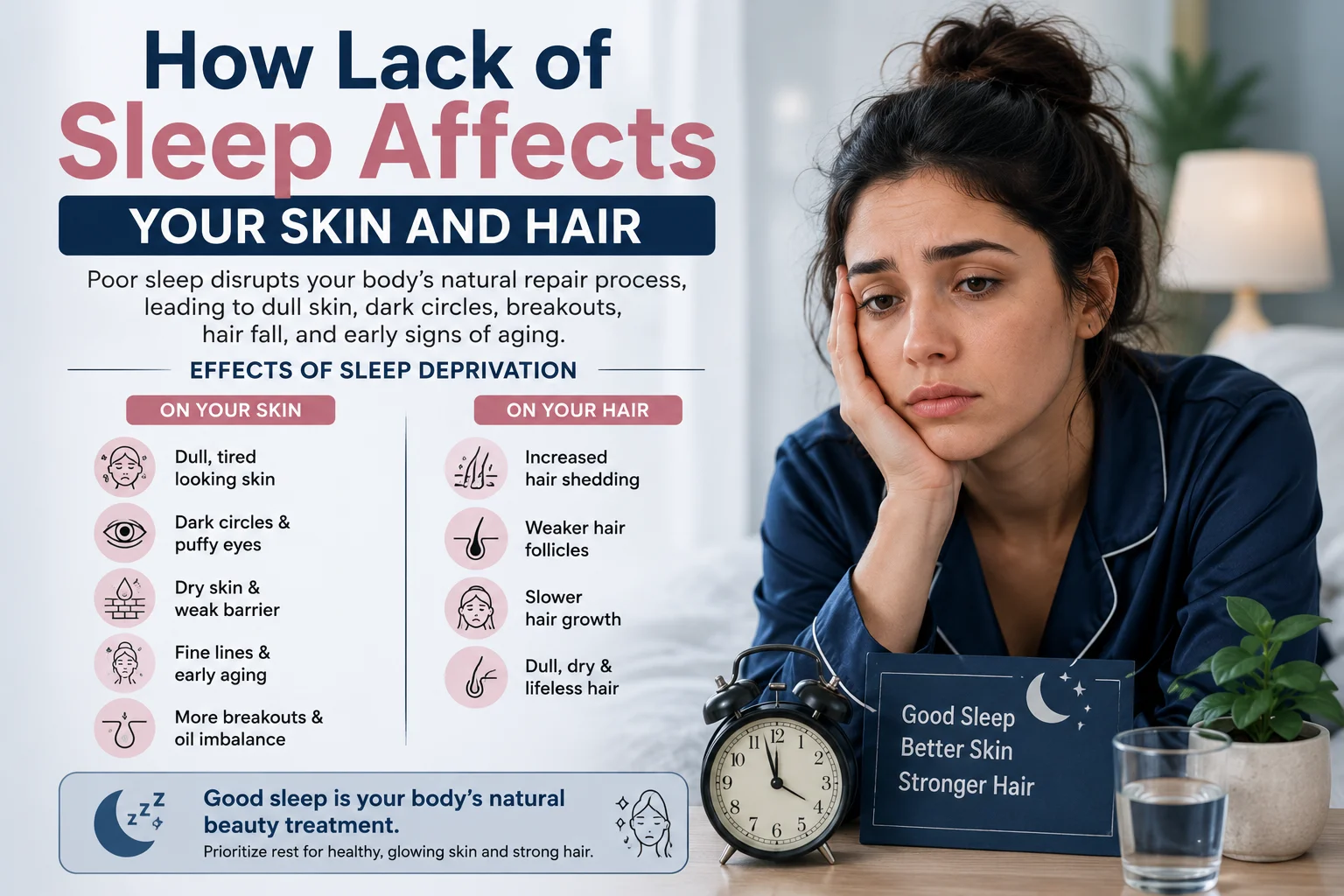
How Lack of Sleep Affects Your Skin?
1. Skin Looks Dull and Tired
One of the earliest signs of sleep deprivation is dull-looking skin. During sleep, your skin renews damaged cells and improves blood circulation. Without enough rest, this repair process slows down.
You may notice:
- Loss of natural glow
- Uneven skin tone
- Tired facial appearance
- Pale or grey-looking skin
If your skin already appears dehydrated or stressed, poor sleep can make these concerns more noticeable.
2. Dark Circles and Puffy Eyes Become More Noticeable
Dark circles have many possible causes, including genetics, aging, allergies, and fatigue. However, inadequate sleep can make them appear darker and more obvious.
Sleep deprivation may also contribute to fluid retention around the eyes, leading to puffiness in the morning.
If dark circles continue despite getting enough sleep, it is worth consulting a dermatologist because pigmentation, allergies, or volume loss may also be involved. You can learn more about dark circles and under-eye bags.
3. Dry Skin and a Weak Skin Barrier
Your skin barrier helps lock in moisture while protecting against pollution, bacteria, and environmental irritants.
When sleep quality declines, this barrier may not function efficiently. Increased water loss through the skin can lead to:
- Dryness
- Tightness
- Flaking
- Increased sensitivity
If your skin already feels dry, following a barrier-supporting skincare routine becomes even more important. A simple guide on managing dry skin can also help reduce moisture loss.
4. Faster Appearance of Fine Lines
Sleep plays an important role in collagen maintenance. Collagen gives the skin firmness, elasticity, and a smoother appearance.
Persistent sleep deprivation may increase stress-related inflammation, which can gradually affect collagen quality. Over time, this may contribute to:
- Fine lines
- Reduced skin elasticity
- Early signs of aging
- Less firm skin
Although aging is natural, healthy sleep habits support your skin’s normal repair process and complement an effective skincare routine.
5. Acne May Become More Difficult to Control
Lack of sleep does not directly cause acne, but it can worsen factors that contribute to breakouts.
Higher stress hormone levels may increase oil production and inflammation. Together, these changes can make acne-prone skin more difficult to manage.
If you continue experiencing frequent breakouts despite maintaining good skincare habits, reading about hidden reasons why acne treatment may not be working can provide additional insights.
How Lack of Sleep Affects Your Hair
Healthy hair depends on more than shampoos and conditioners. Hair follicles are living structures that rely on proper nutrition, hormone balance, and healthy blood circulation.
Sleep supports many of these biological processes.
1. Increased Hair Shedding
Chronic sleep deprivation can place physical stress on the body. Over time, this stress may disturb the normal hair growth cycle, causing more hair follicles to enter the shedding phase.
Although occasional hair fall is completely normal, persistent shedding should not be ignored.
If hair loss continues for several weeks or becomes excessive, it is advisable to seek professional evaluation. Conditions such as nutritional deficiencies, hormonal imbalance, thyroid disorders, or genetic hair loss may also contribute.
2. Slower Hair Growth
Your body performs many repair processes while you sleep, including those that support healthy hair follicles.
Insufficient sleep may reduce the body’s ability to maintain an ideal environment for healthy hair growth. While poor sleep alone is rarely the only cause of thinning hair, it can become one contributing factor when combined with stress, poor nutrition, or medical conditions.
3. Poor Sleep Can Affect Scalp Health
A healthy scalp provides the right environment for strong hair growth. However, poor sleep may contribute to increased stress, which can sometimes worsen existing scalp conditions.
People who already experience dandruff, scalp irritation, or itching may notice that their symptoms become more noticeable during periods of prolonged stress and inadequate sleep.
Maintaining good scalp hygiene, eating a balanced diet, and getting sufficient sleep can all support healthier hair over time. You can also learn more about building a daily scalp care routine.
4. Hair May Become Weaker and Less Shiny
Hair health reflects your overall wellbeing. Poor-quality sleep, ongoing stress, and unhealthy lifestyle habits may gradually affect the appearance of your hair.
You may notice:
- Increased hair breakage
- Dry-looking strands
- Reduced shine
- Difficulty managing frizz
These changes are usually influenced by several factors rather than sleep alone. A nutritious diet, proper hydration, and gentle hair care also play important roles.
Signs That Poor Sleep May Be Affecting Your Skin and Hair
If you regularly sleep fewer than seven hours, you may begin noticing several visible changes.
- Persistent dark circles
- Puffy eyes after waking
- Dull complexion
- Dry or sensitive skin
- Frequent acne flare-ups
- Increased hair shedding
- Dry, brittle hair
- An itchy or flaky scalp
These symptoms do not always indicate sleep deprivation alone. They may also be associated with nutritional deficiencies, hormonal changes, chronic stress, or underlying medical conditions.
How to Improve Sleep for Healthier Skin and Hair?
Improving sleep quality often benefits your overall health, including your skin and hair.
- Maintain a consistent bedtime every day.
- Aim for 7–9 hours of quality sleep each night.
- Reduce screen exposure before bedtime.
- Keep your bedroom cool, dark, and quiet.
- Avoid excessive caffeine late in the day.
- Exercise regularly but avoid intense workouts close to bedtime.
- Stay hydrated throughout the day.
- Follow a balanced diet rich in protein, vitamins, healthy fats, and antioxidants.
- Continue using a dermatologist-recommended skincare routine instead of relying on sleep alone.
When Should You See a Dermatologist?
Temporary tiredness may improve after a few nights of proper rest. However, persistent skin or hair concerns deserve professional evaluation.
Consider consulting a dermatologist if you experience:
- Hair fall lasting longer than two to three months
- Rapid hair thinning
- Persistent acne despite proper skincare
- Severe dry or irritated skin
- Dark circles that continue despite adequate sleep
- Scalp itching, redness, or excessive dandruff
Dr. Hera Tabassum, Chief Dermatologist, Cosmetologist, and Trichologist at Dr Hera’s Skin & Hair Clinic, Roorkee, believes that lasting improvements in skin and hair health often require identifying the underlying cause rather than treating only the visible symptoms. Lifestyle habits, medical history, and clinical examination all help guide the right treatment approach.
If persistent skin or hair concerns are affecting your confidence or daily life, scheduling a consultation with a qualified dermatologist can help determine the underlying cause. You can learn more about when it’s appropriate to consult a dermatologist.
Frequently Asked Questions
Can lack of sleep really cause hair fall?
Poor sleep alone is usually not the only cause of hair fall. However, long-term sleep deprivation may increase stress hormones and disturb the normal hair growth cycle, especially when combined with poor nutrition, illness, or hormonal imbalance.
Does sleeping more improve skin quality?
Getting adequate, high-quality sleep supports normal skin repair, hydration, and collagen maintenance. While sleep is important, healthy skin also depends on sun protection, nutrition, hydration, and an appropriate skincare routine.
Why do dark circles become worse after poor sleep?
Fatigue may make blood vessels under the eyes appear more visible and can also contribute to puffiness, making dark circles look more prominent.
Can poor sleep make acne worse?
Sleep deprivation may increase stress-related hormones that can influence oil production and inflammation. Although poor sleep does not directly cause acne, it may worsen existing breakouts in some individuals.
How many hours of sleep are generally recommended for healthy skin?
Most healthy adults benefit from seven to nine hours of quality sleep each night. Consistent sleep habits support overall wellbeing, including healthy skin and hair.
Conclusion
Understanding how lack of sleep affects your skin and hair highlights the close relationship between healthy lifestyle habits and your appearance. Quality sleep supports skin repair, maintains the protective skin barrier, promotes collagen production, and helps create a healthier environment for hair growth.
Although skincare products and hair care treatments remain valuable, they work best alongside adequate sleep, balanced nutrition, stress management, and proper medical care when needed. If you continue experiencing persistent skin or hair concerns despite improving your lifestyle, consulting a qualified dermatologist can help identify the underlying cause and recommend the most appropriate treatment.