
A consistent skincare routine can help maintain healthy skin, but it cannot solve every skin concern. Cleansers, moisturizers, and serums work on the outer layers of the skin. However, some conditions develop deeper within the skin or are influenced by hormones, genetics, immune responses, or lifestyle factors.
If you have been trying different products without noticeable improvement, it may be time to look beyond your skincare shelf. Recognizing the signs your skin needs professional treatment can help you seek timely care, avoid unnecessary product experimentation, and prevent certain conditions from becoming more difficult to manage.
This guide explains ten common warning signs that suggest your skin deserves an evaluation by a qualified dermatologist instead of relying only on over-the-counter products.
Why Skincare Products Are Not Always Enough?
Skincare products are designed to cleanse, protect, hydrate, and support the skin barrier. Many also contain ingredients that help improve concerns like mild acne, pigmentation, or fine lines.
Still, some skin conditions require more than topical care. Persistent symptoms may be linked to:
- Hormonal changes
- Chronic inflammation
- Genetic predisposition
- Autoimmune conditions
- Underlying medical issues
- Deep pigmentation or scarring
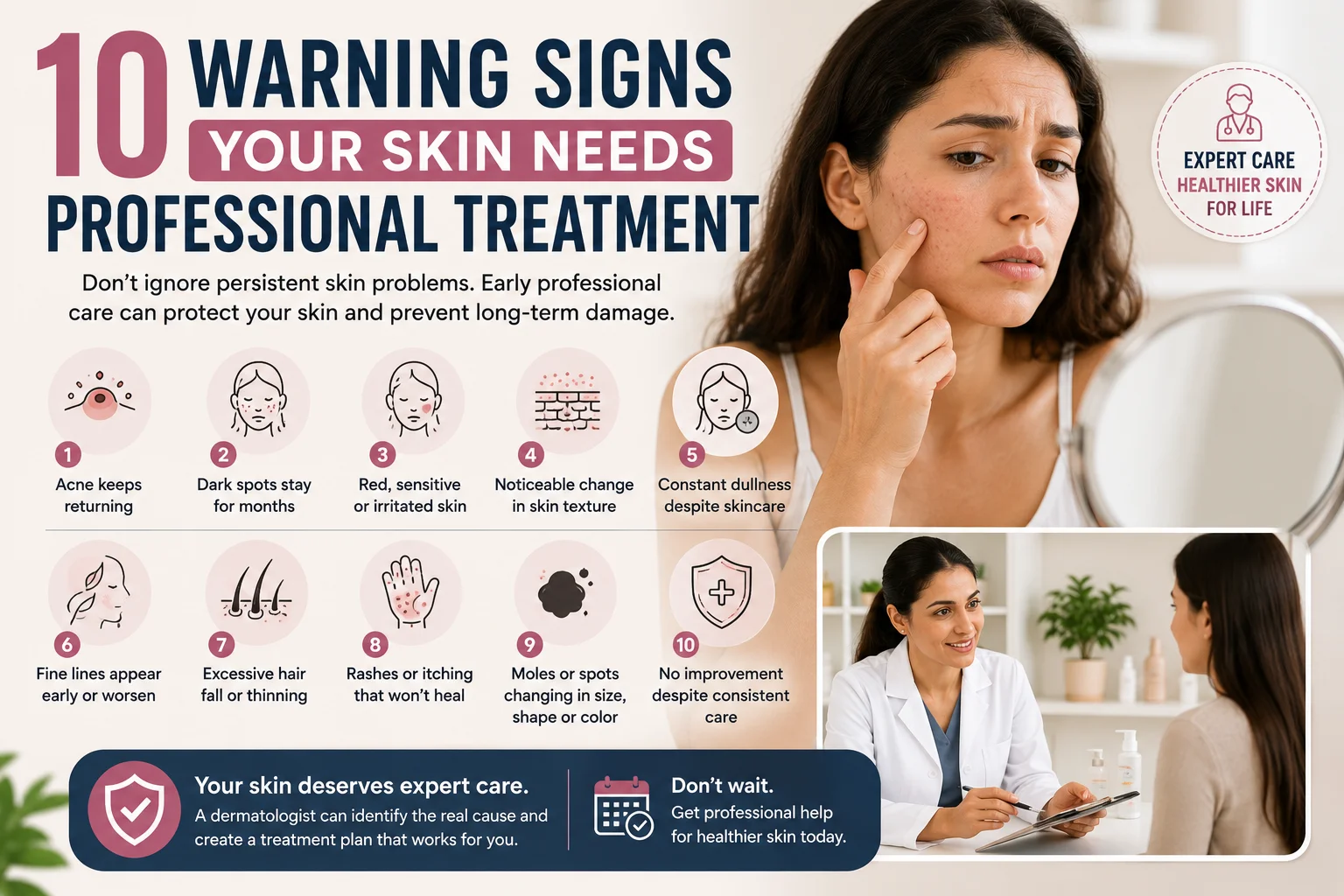
A dermatologist can identify the underlying cause and recommend a treatment plan that is tailored to your skin type, medical history, and long-term skin health.
1. Your Acne Keeps Returning
Occasional pimples are common. However, recurring acne that continues despite using cleansers, spot treatments, or acne serums may indicate an underlying issue.
Persistent breakouts may be associated with:
- Hormonal fluctuations
- Excess oil production
- Inflammation within the skin
- Incorrect skincare products
- Certain medications or medical conditions
Repeated breakouts can also increase the risk of permanent acne scars if treatment is delayed. Instead of constantly switching products, it is worth seeking professional advice to identify the root cause.
If acne has already left visible marks, learning about acne scar treatment options may also help you understand the available management approaches.
2. Dark Spots Stay for Months Without Improvement
Post-inflammatory pigmentation and sunspots often fade gradually. However, dark patches that remain unchanged for several months despite using brightening products deserve professional evaluation.
This may happen because:
- The pigmentation lies deeper within the skin.
- Ongoing sun exposure continues to trigger melanin production.
- The original cause has not been addressed.
- The skin barrier has become irritated from overusing active ingredients.
A dermatologist can determine whether the pigmentation is superficial, deeper, hormonal, or related to another skin condition before recommending suitable treatment options.
3. Your Skin Remains Red, Sensitive, or Irritated
Healthy skin should tolerate a basic skincare routine without persistent burning or discomfort. If your skin reacts to products that previously worked well, it could indicate an underlying problem.
Common warning signs include:
- Frequent redness
- Stinging after applying moisturizer
- Burning sensations
- Persistent itching
- Skin that feels sore after cleansing
These symptoms may result from a damaged skin barrier, allergic reactions, eczema, rosacea, or contact dermatitis. Self-treating with stronger products can sometimes make the condition worse.
4. Your Skin Texture Has Changed Noticeably
Healthy skin naturally has texture, but sudden or persistent roughness should not be ignored.
You may notice:
- Persistent bumps
- Enlarged pores
- Uneven skin surface
- Rough patches
- Acne scars that remain long after breakouts heal
Changes in skin texture may be linked to collagen loss, long-term sun damage, previous acne, or chronic inflammation. Identifying the underlying cause is more helpful than repeatedly using harsh scrubs or aggressive exfoliants.
5. Your Skin Looks Constantly Dull Despite Good Skincare
Everyone experiences temporary dullness after poor sleep or dehydration. However, skin that consistently appears tired and lacks radiance despite regular cleansing and moisturizing may signal something more.
Possible contributing factors include:
- Accumulated dead skin cells
- Environmental pollution
- Chronic dehydration
- Poor sleep quality
- Nutritional deficiencies
- Reduced skin cell turnover
When dullness persists for several weeks, a professional skin assessment can help identify factors that may not be obvious from appearance alone.
Supporting your daily routine with dermatologist-recommended habits is equally important. You can also explore practical guidance on maintaining a consistent skincare routine to complement professional care.
6. Wounds, Rashes, or Skin Infections That Do Not Heal
Minor cuts, insect bites, or temporary rashes usually improve within a reasonable time with basic care. However, if a skin problem lingers for weeks, keeps returning, or gradually worsens, it should not be ignored.
Persistent skin problems may include:
- Slow-healing wounds
- Repeated fungal infections
- Itchy rashes that spread
- Painful skin lesions
- Areas that become swollen or ooze fluid
These symptoms may indicate an infection, chronic inflammatory condition, or another medical issue that requires proper diagnosis. Treating them with random creams can delay appropriate care and sometimes make the condition worse.
7. Moles or Skin Spots Start Changing
Most moles are harmless, but changes in their appearance should always be evaluated by a dermatologist.
Watch for changes such as:
- An increase in size
- Irregular or uneven borders
- Multiple colours within the same mole
- Bleeding or crusting
- Persistent itching or pain
While many skin changes are non-cancerous, early assessment helps rule out serious conditions and provides peace of mind. Avoid trying to remove suspicious moles at home.
8. You Notice Sudden Hair Loss Along with Skin Problems
Your skin and hair health are closely connected. If excessive hair fall develops alongside acne, scalp irritation, or persistent skin changes, there may be a common underlying cause.
Potential contributing factors include:
- Hormonal imbalance
- Nutritional deficiencies
- Autoimmune disorders
- Scalp inflammation
- Stress-related conditions
A dermatologist can evaluate both your skin and scalp together rather than treating each symptom separately.
If hair shedding has increased recently, you may also find it helpful to read about treatment options for hair fall to better understand when professional care may be beneficial.
9. Your Skin Concern Is Affecting Your Confidence or Daily Life
Skin conditions are not only physical. They can also affect emotional well-being and self-confidence.
You may benefit from professional support if your skin concern causes you to:
- Avoid social gatherings
- Cover your skin constantly
- Feel anxious about your appearance
- Spend excessive money trying different products
- Feel frustrated because nothing seems to work
Receiving an accurate diagnosis often reduces uncertainty and helps you focus on treatments that are appropriate for your specific condition.
10. You Have Tried Multiple Products Without Results
Many people spend months switching between cleansers, serums, toners, and home remedies hoping to find the perfect solution.
If you have followed a consistent skincare routine for six to eight weeks without noticeable improvement, continuing to experiment may only increase irritation and expense.
This is one of the clearest signs your skin needs professional treatment. A dermatologist can determine whether your current products are suitable or if medical treatment is necessary.
What Happens During a Dermatology Consultation?
Many people delay visiting a dermatologist because they expect complicated or invasive procedures. In reality, the first consultation usually focuses on understanding your skin before recommending treatment.
A consultation may include:
- A detailed review of your symptoms and medical history
- Examination of your skin, scalp, or nails if required
- Discussion of your current skincare routine
- Identification of possible triggers
- A personalised treatment plan based on your condition
Not every skin concern requires advanced procedures. In many cases, simple changes to your skincare routine or prescription medications may be sufficient.
Ignoring persistent skin problems can allow them to become more difficult to manage over time. Early diagnosis offers several benefits.
- It helps identify the underlying cause instead of treating symptoms alone.
- It may reduce the risk of permanent scarring or pigmentation.
- It prevents unnecessary spending on unsuitable products.
- It allows treatment to begin before the condition progresses further.
Dr. Hera Tabassum, Chief Dermatologist, Cosmetologist, and Trichologist at Dr Hera’s Skin & Hair Clinic, Roorkee, believes that understanding the cause of a skin concern is just as important as treating the visible symptoms. A personalised approach often provides more effective and sustainable results than repeated trial and error with skincare products.
Final Thoughts
Skincare products play an important role in maintaining healthy skin, but they are not a solution for every concern. Persistent acne, long-lasting pigmentation, recurring irritation, unusual moles, slow-healing skin problems, and ongoing hair loss are all signs that professional evaluation may be needed.
Recognising the signs your skin needs professional treatment early allows you to receive an accurate diagnosis and a treatment plan that is appropriate for your individual needs. Instead of constantly changing products, consult a qualified dermatologist if your skin is telling you that home care is no longer enough.
Frequently Asked Questions
1. How long should I try skincare products before seeing a dermatologist?
Most skincare products need around six to eight weeks to show results. If your condition remains unchanged or worsens despite consistent use, it is advisable to consult a dermatologist.
2. Can over-the-counter skincare products treat severe acne?
They may help mild acne, but moderate or severe acne often requires prescription treatment and professional evaluation to reduce the risk of scarring.
3. Should I be concerned if a mole changes colour or shape?
Yes. Any noticeable change in a mole’s size, colour, border, or texture should be assessed by a qualified dermatologist as soon as possible.
4. Can stress make skin conditions worse?
Yes. Stress can contribute to flare-ups of acne, eczema, psoriasis, and some other skin conditions. Managing stress may support treatment but should not replace medical care.
5. When should I consult a dermatologist instead of changing skincare products?
You should seek professional advice if your symptoms persist despite consistent skincare, become painful, spread, repeatedly return, or interfere with your daily life.