
For decades, fair skin has been promoted as a symbol of beauty. Television advertisements, social media filters, and beauty trends have encouraged people to believe that lighter skin automatically looks healthier. However, this belief is one of the biggest misconceptions in skincare.
When discussing healthy skin vs fair skin, it is important to understand that skin colour and skin health are completely different. Fairness is determined by genetics and the amount of melanin your body naturally produces. Healthy skin, on the other hand, is measured by how well your skin protects, repairs, hydrates, and maintains itself every day.
Your skin is much more than an outer covering. It is the body’s largest organ and plays an essential role in protecting your overall health. Instead of trying to change your natural complexion, investing in healthy skin can help you achieve a naturally radiant appearance that lasts much longer than temporary cosmetic solutions.
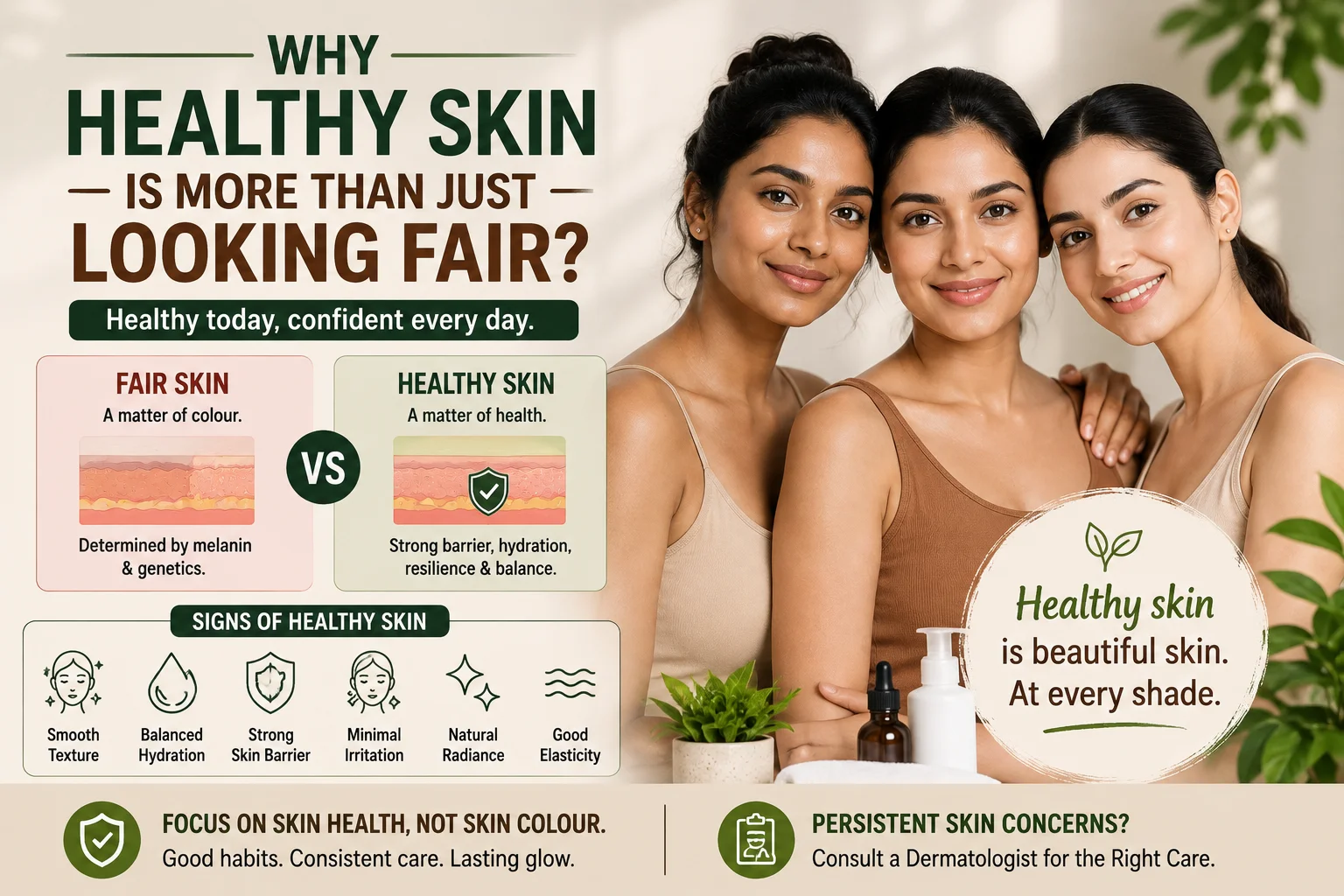
Healthy Skin vs Fair Skin: What’s the Real Difference?
Many people confuse glowing skin with fair skin. In reality, they are not the same.
Fair skin simply refers to a lighter skin tone, while healthy skin refers to skin that functions properly regardless of its colour. A person with a deeper complexion can have excellent skin health, whereas someone with fair skin may struggle with acne, eczema, pigmentation, excessive dryness, or sensitivity.
Melanin, the pigment responsible for skin colour, varies naturally among individuals. It also provides protection against ultraviolet (UV) radiation. Therefore, having more melanin is not a flaw—it is simply a natural characteristic of your skin.
The goal of skincare should never be changing your natural colour. Instead, it should focus on maintaining smooth, hydrated, resilient, and healthy skin.
What Does Healthy Skin Actually Look Like?
Healthy skin does not have to be completely flawless. Small pores, freckles, birthmarks, tanning, and occasional blemishes are all normal.
Instead, healthy skin usually has the following characteristics:
- Soft and smooth texture
- Balanced hydration
- Comfortable without excessive tightness
- Minimal irritation and redness
- Good elasticity
- A healthy skin barrier that protects against environmental damage
- Ability to heal naturally after minor injuries or acne
Healthy skin also feels comfortable throughout the day instead of constantly appearing dry, itchy, greasy, or inflamed.
Your skin works continuously, even when you are asleep. Its responsibilities extend far beyond improving your appearance.
Protects Your Body Every Day
Your skin forms a protective barrier that helps defend your body against bacteria, viruses, pollution, chemicals, and environmental irritants.
When this barrier becomes damaged, your skin becomes more vulnerable to infections, allergies, irritation, and moisture loss.
Maintains Proper Hydration
A healthy skin barrier locks moisture inside while preventing excessive water loss. This helps your skin remain soft, flexible, and comfortable.
If your barrier becomes weak, your skin may become rough, flaky, sensitive, or prone to inflammation.
Helps Regulate Body Temperature
Your skin controls body temperature by producing sweat and regulating blood flow. This natural process helps your body respond to changing weather conditions.
Supports Your Immune System
Your skin serves as the body’s first line of defence against many harmful microorganisms. It works together with your immune system to reduce the risk of infections.
Allows You to Feel the World Around You
Thousands of nerve endings within your skin help detect touch, pressure, heat, cold, and pain. These sensations allow your body to react quickly to potential dangers.
Signs That Your Skin May Not Be Healthy
Healthy skin usually remains balanced and comfortable. If your skin constantly shows signs of irritation, it may need additional care.
- Persistent dryness
- Frequent breakouts
- Redness that does not settle
- Excessive oiliness
- Itching or burning sensation
- Uneven texture
- Repeated skin infections
- Delayed healing after acne or cuts
If these symptoms continue despite following a proper skincare routine, consulting a qualified dermatologist can help identify the underlying cause instead of simply treating the visible symptoms.
Healthy Skin Starts with Daily Care
Good skin health is built through consistent habits rather than expensive products. Small daily choices often have the greatest long-term impact.
Eat Foods That Nourish Your Skin
Your skin needs vitamins, minerals, healthy fats, proteins, and antioxidants to function properly.
Foods naturally rich in Vitamin C—including oranges, guava, amla, kiwi, broccoli, and bell peppers—support collagen production and help protect skin cells from oxidative stress.
Healthy fats from nuts, seeds, and fish also help maintain the skin’s protective barrier.
Drink Enough Water
Hydration supports normal skin function. Although water alone cannot solve every skin concern, staying hydrated helps your body maintain healthy skin from within.
Follow a Simple Skincare Routine
A gentle cleanser, moisturiser, and sunscreen are enough for most people. Overusing multiple active ingredients may damage the skin barrier instead of improving it.
Following a consistent daily skincare routine is usually more effective than frequently switching between trending products.
Protect Your Skin from the Sun
Sun exposure is one of the biggest contributors to premature skin ageing, tanning, and pigmentation. Even if you spend only a short time outdoors, ultraviolet (UV) rays can gradually damage your skin.
Apply a broad-spectrum sunscreen with SPF 30 or higher every morning. Reapply it if you are outdoors for long hours. Wearing sunglasses, protective clothing, and seeking shade during peak sunlight hours can further reduce sun damage.
If you spend a lot of time outdoors, you may also find these sun protection tips for healthy skin helpful.
Prioritise Good Sleep
Your skin repairs itself while you sleep. Poor sleep may contribute to dullness, dehydration, dark circles, and slower skin recovery. Aim for consistent, quality sleep each night to support natural skin repair.
Manage Stress
Stress affects more than your mental health. It can also worsen acne, eczema, psoriasis, and several inflammatory skin conditions. Regular exercise, meditation, hobbies, and relaxation techniques can help support healthier skin over time.
Why Fairness Products Cannot Replace Healthy Skin?
Many cosmetic products promise instant fairness or skin whitening. While some may temporarily brighten the skin or reduce superficial pigmentation, they cannot replace healthy skin.
In some cases, excessive use of fairness creams, harsh exfoliants, or unverified home remedies may damage the skin barrier, causing irritation, redness, sensitivity, or uneven pigmentation.
Rather than trying to change your natural complexion, focus on improving skin quality. Healthy, hydrated skin naturally appears brighter, smoother, and more radiant regardless of its colour.
Professional Care Can Improve Skin Health
Daily skincare is essential, but some skin concerns require professional evaluation. Conditions such as persistent acne, melasma, rosacea, eczema, chronic pigmentation, or recurring infections often need personalised treatment.
A dermatologist can determine the underlying cause of your concern and recommend an appropriate treatment plan based on your skin type and medical history.
Depending on your condition, treatment options may include:
- Prescription medications
- Chemical peels
- Laser treatments
- Microneedling
- Hydrafacial and medical facials
- Scar management procedures
- Pigmentation treatments
If you notice unusual skin changes that do not improve with home care, it is advisable to consult a dermatologist for a proper diagnosis instead of relying on self-treatment.
Simple Lifestyle Habits That Keep Skin Healthy
- Eat a balanced diet rich in fruits and vegetables.
- Stay physically active.
- Drink enough water throughout the day.
- Avoid smoking and limit alcohol consumption.
- Remove makeup before sleeping.
- Use skincare products suitable for your skin type.
- Avoid excessive scrubbing or over-exfoliation.
- Never ignore persistent skin problems.
These habits improve skin function gradually and support long-term skin health.
Healthy Skin Is Different for Everyone
Every person’s skin is unique. Age, genetics, hormones, climate, occupation, lifestyle, and medical conditions all influence how your skin behaves.
Comparing your skin to edited photographs or social media trends often creates unrealistic expectations. Instead, focus on maintaining your own skin’s health by following consistent skincare habits and addressing concerns early.
Dr. Hera Tabassum, Chief Dermatologist, Cosmetologist, and Trichologist at Dr Hera’s Skin & Hair Clinic, Roorkee, believes that personalised skincare always delivers better long-term results than following viral beauty trends or fairness claims. Treatment recommendations should always be based on individual skin concerns rather than skin colour alone.
Conclusion
The debate around healthy skin vs fair skin highlights an important truth—beautiful skin is not defined by complexion. Healthy skin is strong, hydrated, resilient, and capable of protecting your body every single day.
Your natural skin tone is part of your identity, while healthy skin reflects good care, balanced nutrition, sun protection, and consistent skincare habits. Instead of trying to become fairer, invest your time in maintaining skin that feels comfortable, functions properly, and remains healthy throughout every stage of life.
With the right daily habits and professional guidance whenever necessary, healthy skin can be achieved by people of every skin tone.