
Starting an acne treatment plan can feel frustrating. You may expect clear skin within a few days. In reality, acne takes time to improve. Most treatments work gradually. Your skin also needs time to heal and respond.
So, how long does acne treatment take to show results? In most cases, early improvement appears within 4 to 6 weeks. More noticeable results often take 8 to 12 weeks. Severe or hormonal acne may need several months of consistent treatment. The exact timeline depends on your skin type, acne severity, and the treatment recommended by your dermatologist.
Patience is important. Stopping treatment too early or changing products frequently can delay your progress.
Most acne treatments do not work overnight. They target the causes of acne, such as clogged pores, excess oil, inflammation, and bacteria. Since your skin renews itself over several weeks, visible improvement also takes time.
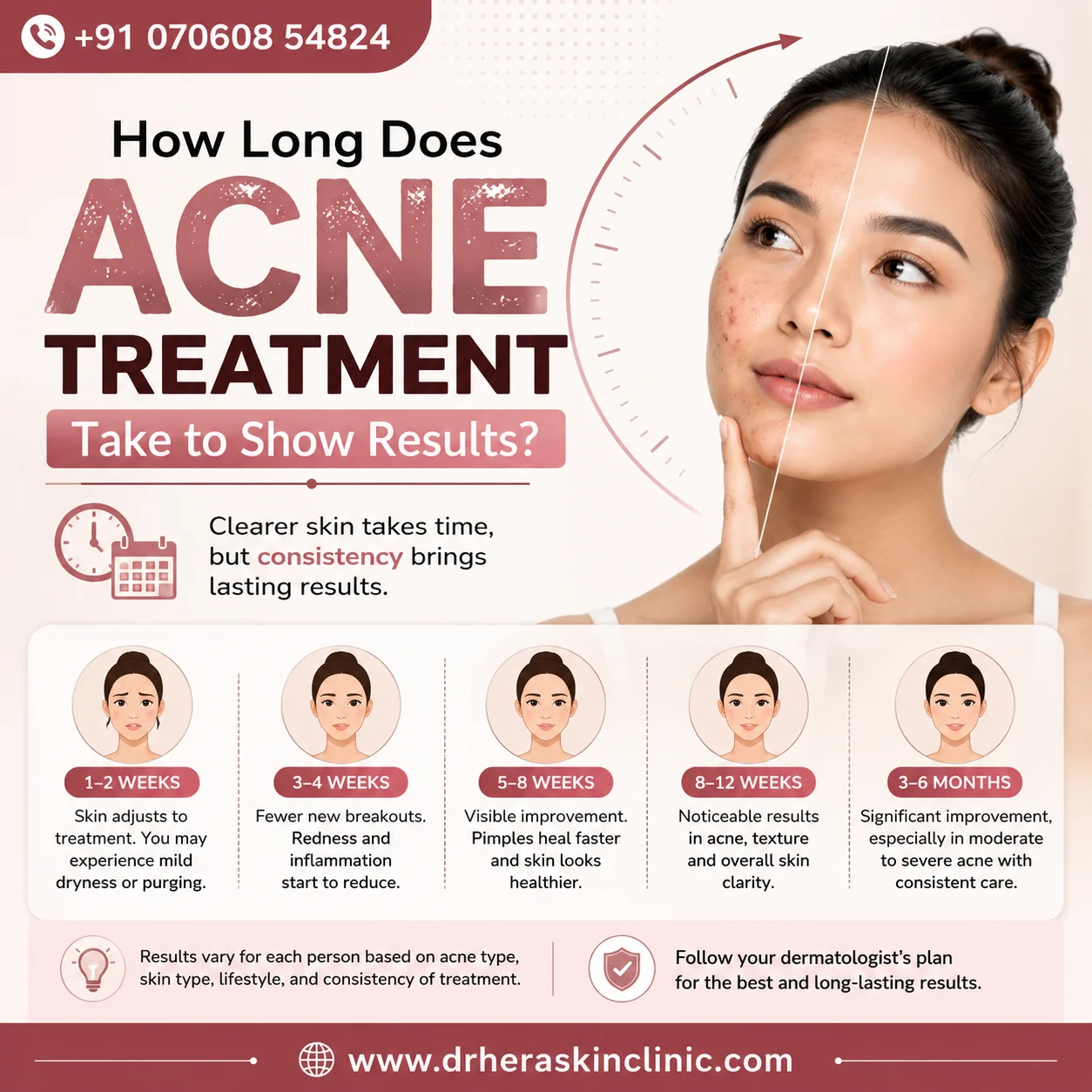
| Timeline | What You May Notice |
|---|---|
| Week 1–2 | Your skin adjusts to the treatment. Mild dryness or irritation may occur. |
| Week 3–4 | Fewer new pimples may appear. Redness may begin to reduce. |
| Week 5–8 | Inflammation usually decreases. Existing acne starts healing. |
| Week 8–12 | Noticeable improvement becomes visible in many people. |
| 3–6 Months | Moderate to severe acne often shows significant improvement with consistent care. |
Everyone’s skin responds differently. Some people improve sooner. Others may require a longer treatment plan.
What Affects Acne Treatment Results?
Several factors influence how quickly your skin responds.
Type of Acne
Blackheads and whiteheads often respond faster than deep cystic acne. Painful nodules usually need longer treatment.
Severity of Breakouts
Mild acne generally improves sooner. Moderate and severe acne often requires prescription medicines or in-clinic procedures.
Hormonal Changes
Hormonal acne can take longer to control. This is common in adults and people with hormonal conditions.
Consistency
Skipping medications or changing products every few weeks can slow improvement. Following your dermatologist’s instructions gives the best chance of success.
Daily Skincare Routine
A gentle cleanser, non-comedogenic moisturizer, and sunscreen help support treatment. Harsh scrubs and over-cleansing can irritate the skin.
Lifestyle Habits
Stress, lack of sleep, smoking, and poor skincare habits may affect acne control in some individuals.
How Long Do Different Acne Treatments Take to Work?
Every acne treatment has its own timeline. Some reduce inflammation quickly. Others improve skin gradually over several weeks.
Topical Retinoids
Topical retinoids help unclog pores and improve skin cell turnover. They are commonly prescribed for many forms of acne.
- Early improvement: 4 to 6 weeks
- Better results: Around 12 weeks
Some people notice temporary dryness or mild irritation during the first few weeks.
Benzoyl Peroxide
Benzoyl peroxide reduces acne-causing bacteria and inflammation.
- Early improvement: 2 to 4 weeks
- More visible improvement: Around 8 weeks
Using the recommended strength helps reduce irritation.
Salicylic Acid
Salicylic acid removes dead skin cells and helps keep pores clear.
- Visible improvement: Usually within 4 to 6 weeks
It works best when used consistently as part of a complete skincare routine.
Oral Antibiotics
Dermatologists may prescribe oral antibiotics for moderate to severe inflammatory acne.
- Initial improvement: 6 to 8 weeks
- Often combined with topical medicines for better long-term control
Antibiotics should only be taken as advised by your dermatologist.
Isotretinoin
Isotretinoin is generally reserved for severe or persistent acne that has not responded to other treatments.
- Noticeable improvement: Around 2 to 3 months
- Treatment course: Usually several months, depending on your dermatologist’s advice
Regular medical follow-up is essential during treatment.
Do In-Clinic Acne Treatments Work Faster?
Clinic-based procedures can support medical treatment. They often improve active acne and help reduce acne marks.
Chemical Peels
Chemical peels exfoliate the skin and help clear blocked pores.
Several sessions are usually recommended for gradual improvement. If your dermatologist suggests this option, learn more about what to expect from a chemical peel.
HydraFacial
HydraFacial deeply cleanses the skin and removes impurities. Your skin may feel smoother after one session. Acne improvement generally requires repeated treatments along with a medical skincare plan.
You can also explore the benefits of HydraFacial treatment to understand how it supports healthier skin.
Laser and Light-Based Treatments
Some laser and light therapies help reduce acne-causing bacteria and inflammation. Multiple sessions are usually needed. These treatments may also help improve certain acne scars.
If acne has already left marks, you may also find our guide on pimple scar treatment options helpful.
Can Acne Get Worse Before It Gets Better?
Yes. Some acne treatments can cause a temporary increase in breakouts during the first few weeks. This is often called skin purging.
Purging happens because treatments speed up skin cell turnover. Existing clogged pores come to the surface more quickly.
This phase is usually temporary. It often settles as your skin adjusts to the treatment.
However, persistent irritation, severe redness, or worsening acne should be discussed with your dermatologist. They can determine if your treatment plan needs adjustment.
Signs Your Acne Treatment Is Working
Visible changes may happen slowly. Looking for small improvements can help you understand if your treatment is working.
- Fewer new pimples appear.
- Existing acne heals faster.
- Redness and swelling reduce.
- Pimples become smaller and less painful.
- Your skin feels less oily.
- Post-acne marks gradually begin to fade.
Taking photos every two to four weeks under the same lighting can help you track progress more accurately than checking your skin every day.
Why Isn’t Your Acne Treatment Working?
Acne does not always respond as expected. Several reasons can delay improvement.
Inconsistent Treatment
Missing applications or stopping medication after a few weeks can slow results. Most treatments need consistent use before noticeable improvement appears.
Wrong Diagnosis
Not every facial bump is acne. Conditions like rosacea, folliculitis, or fungal infections can look similar. A proper diagnosis is important before starting treatment.
Hormonal Acne
Hormonal changes can trigger recurring breakouts. These cases often require a different treatment approach than regular acne.
You can also read more about the connection between hormonal imbalance and acne.
Using Too Many Products
Applying multiple active ingredients together can irritate the skin. Irritation may weaken the skin barrier and delay recovery.
Picking or Squeezing Pimples
Picking acne increases inflammation. It also raises the risk of permanent acne scars and dark spots.
Common Mistakes That Delay Acne Recovery
Simple habits can make acne treatment less effective.
- Changing products too often.
- Overwashing your face.
- Using harsh scrubs.
- Skipping moisturizer.
- Ignoring sunscreen during the day.
- Sleeping with makeup on.
- Touching your face frequently.
- Using heavy or pore-clogging cosmetics.
Following a simple skincare routine is usually more effective than trying many products at once.
How to Get Better Results from Acne Treatment?
You cannot safely rush acne treatment. However, you can improve your chances of success by following healthy skincare habits.
- Use your prescribed medications regularly.
- Wash your face gently twice a day.
- Choose non-comedogenic skincare products.
- Apply moisturizer to reduce dryness.
- Wear sunscreen every morning.
- Avoid popping pimples.
- Attend follow-up appointments with your dermatologist.
If acne leaves marks after healing, early treatment may help reduce their appearance. Learn more about acne scars and available treatment options.
When Should You See a Dermatologist?
Some acne can be managed with over-the-counter skincare. Other cases need professional evaluation.
Consider seeing a dermatologist if:
- Your acne is painful or cystic.
- You notice permanent scars developing.
- Over-the-counter products have not helped after several weeks.
- Your acne keeps returning.
- Breakouts affect your confidence or daily life.
- You develop acne along with signs of hormonal imbalance.
A dermatologist can identify the cause of your acne and recommend a treatment plan based on your skin type and medical history.
Frequently Asked Questions
Can acne clear in one month?
Mild acne may improve within one month. More noticeable clearing often takes 8 to 12 weeks. Moderate or severe acne usually requires a longer treatment period.
Is skin purging normal?
Yes. Some treatments, especially topical retinoids, may cause temporary purging during the first few weeks. This is different from a true allergic reaction or ongoing worsening acne.
How long should I continue acne medication?
Continue your treatment exactly as advised by your dermatologist. Stopping too early may allow acne to return.
Can acne come back after treatment?
Yes. Acne can return, especially if the underlying causes remain active. A maintenance skincare routine may help reduce future breakouts.
Which acne treatment works the fastest?
The answer depends on your acne type. Mild acne may respond well to topical treatments, while moderate or severe acne often requires prescription medication or dermatologist-recommended procedures.
Final Thoughts
If you have started treatment and are wondering, “How Long Does Acne Treatment Take to Show Results?”, remember that clear skin usually takes time. Most people begin noticing improvement within a few weeks, while significant results often appear after two to three months of consistent care.
Following your treatment plan, avoiding common skincare mistakes, and attending regular follow-up visits can improve your chances of long-term acne control.
If active acne has already caused scars, procedures like derma roller treatment for acne scars or other dermatologist-recommended options may be considered after your acne is under control.
At Dr. Hera’s Skin & Hair Clinic, every acne treatment plan is tailored to the individual’s skin type, acne severity, and treatment goals. A personalised consultation helps determine the most suitable approach while monitoring your skin’s progress over time.