
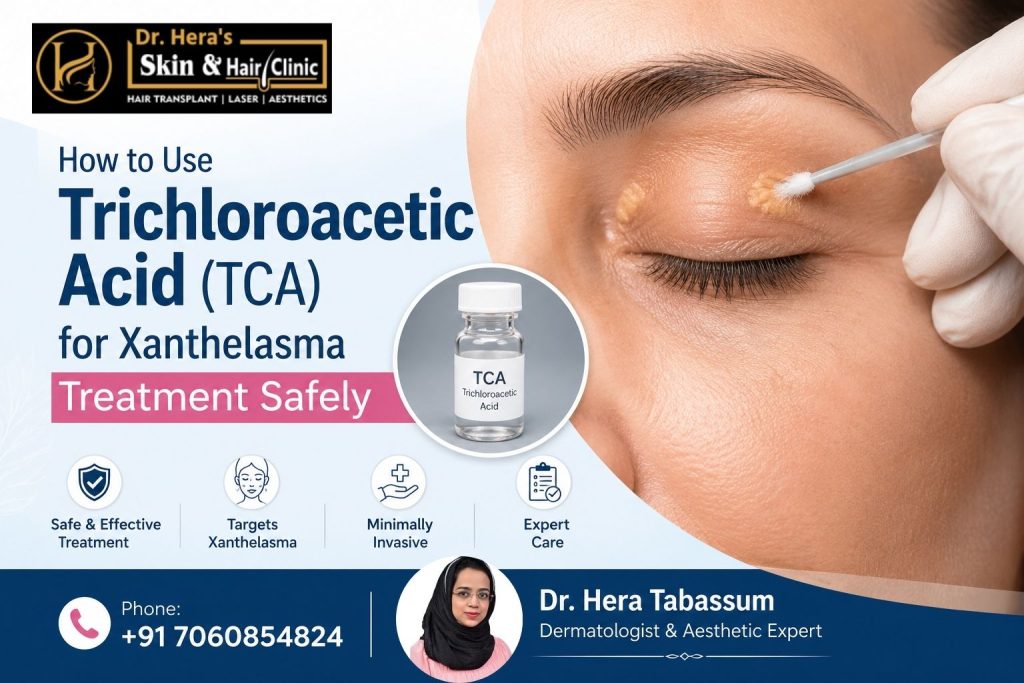
Xanthelasma are soft yellow cholesterol deposits that usually appear around the eyelids. While they are harmless, many people seek treatment because of cosmetic concerns. One of the most commonly used dermatologist treatments for xanthelasma is Trichloroacetic Acid (TCA) chemical cauterization. If you’re unsure what causes these yellow patches or whether natural remedies can help, you can also learn more about cholesterol deposits around the eyes and natural management options before exploring professional treatment methods.
TCA works by chemically destroying the superficial layers of the skin and dissolving the lipid-filled plaques. However, because the treatment is performed very close to the eyes, it carries serious risks if done incorrectly. High-strength TCA should only be applied by a qualified dermatologist or medical professional.
What Is Trichloroacetic Acid (TCA)?
Trichloroacetic Acid, commonly called TCA, is a chemical peeling agent used in dermatology for skin resurfacing and lesion removal. In xanthelasma treatment, dermatologists typically use concentrations between 50% and 100% depending on the depth and thickness of the lesion.
When applied carefully to xanthelasma plaques, TCA causes controlled chemical cauterization. The treated tissue turns white, a process called “frosting,” indicating protein coagulation and tissue destruction.
How Does TCA Work for Xanthelasma?
TCA removes xanthelasma by breaking down the superficial skin layers that contain cholesterol deposits. Over the next several days, the treated area forms a crust and eventually peels away as new skin develops underneath.
Dermatologists often recommend TCA for:
- Small to medium xanthelasma lesions
- Superficial cholesterol deposits
- Patients looking for a non-surgical treatment option
Higher concentrations such as 70% or 100% may provide better clearance but can also increase the risk of pigmentation changes and scarring.
Step-by-Step TCA Procedure for Xanthelasma
1. Skin Preparation: The skin around the eyelids is thoroughly cleaned and degreased, often using acetone or alcohol. This helps the acid penetrate evenly.
2. Protecting Sensitive Areas: Because the treatment is performed near the eyes, dermatologists protect surrounding healthy skin using petroleum jelly or petrolatum ointment. Special care is taken around the inner corners of the eyes.
3. Applying the TCA Solution: Using a pointed wooden applicator with a tiny amount of cotton, the dermatologist carefully applies TCA directly onto the xanthelasma plaque.
The acid is usually applied using a gentle dotting or feathering motion while avoiding excess dripping.
4. Waiting for Frosting: Within seconds to a couple of minutes, the lesion turns white or “frosted.” This indicates that the acid has reacted with the tissue.
Once adequate frosting appears, the remaining acid may be removed or neutralized using sodium bicarbonate solution and cold water.
5. Post-Treatment Care
After the procedure:
- Antibiotic ointment may be prescribed
- Mild swelling and redness are common
- A scab or crust forms over the treated area
- Healing usually takes 1 to 2 weeks
Patients are advised to avoid touching or peeling the scab during recovery.
Recovery After TCA Xanthelasma Treatment
The treated area generally passes through several healing stages:
First Few Days
- Redness
- Swelling
- Mild burning sensation
- Crusting
After One Week
- Scab formation
- Peeling skin
- Pink new skin underneath
Full Recovery
Most patients heal within 1–2 weeks, although redness and pigmentation changes may last longer depending on skin type.
Important Aftercare Tips
Use Sunscreen Daily: Sun exposure can worsen post-inflammatory hyperpigmentation. Dermatologists usually recommend SPF 30+ sunscreen after healing.
Avoid Picking the Area: Removing the scab early can increase the risk of:
- Scarring
- Infection
- Pigmentation changes
Apply Prescribed Ointments: Antibiotic creams may help prevent infection during the healing process.
Risks and Side Effects of TCA for Xanthelasma
Although TCA can be effective, it is not risk-free.
Possible side effects include:
- Hyperpigmentation
- Hypopigmentation
- Scarring
- Skin irritation
- Ectropion (eyelid pulling)
- Recurrence of xanthelasma
Higher TCA concentrations are associated with a greater risk of cosmetic complications.
Can You Use TCA at Home for Xanthelasma?
No. High-strength TCA should never be used at home near the eyes.
Improper application can cause:
- Severe chemical burns
- Permanent scarring
- Eye damage
- Blindness
While low-strength TCA peels exist for facial skincare, they are generally too weak to remove xanthelasma effectively. Attempting DIY treatment with concentrated acid is extremely dangerous.
Is TCA Better Than Laser or Surgery?
According to Dr. Hera Tabassum, TCA is a widely used and effective treatment option for xanthelasma, although the best treatment varies based on the patient’s individual condition.
Other commonly used treatments include:
- CO2 laser
- Erbium: YAG laser
- Surgical excision
- Cryotherapy
- Radiofrequency ablation
TCA may work well for superficial lesions, while deeper or larger plaques often respond better to laser or surgery.
Can Xanthelasma Come Back After TCA Treatment?
Yes. Xanthelasma recurrence is possible even after successful removal.
The recurrence risk may increase if:
- Underlying cholesterol levels are unmanaged
- There is a genetic predisposition
- Multiple lesions are present
Managing cholesterol and maintaining a healthy lifestyle may help reduce recurrence risk.
Final Thoughts
Trichloroacetic Acid (TCA) is a widely used dermatologist treatment for xanthelasma and can effectively reduce cholesterol deposits around the eyes when performed correctly. However, because the eyelid area is delicate and highly sensitive, TCA treatment should only be carried out by trained medical professionals.
If you notice yellow patches around your eyes, consult a dermatologist to determine the safest and most effective treatment option for your skin type and lesion severity.