
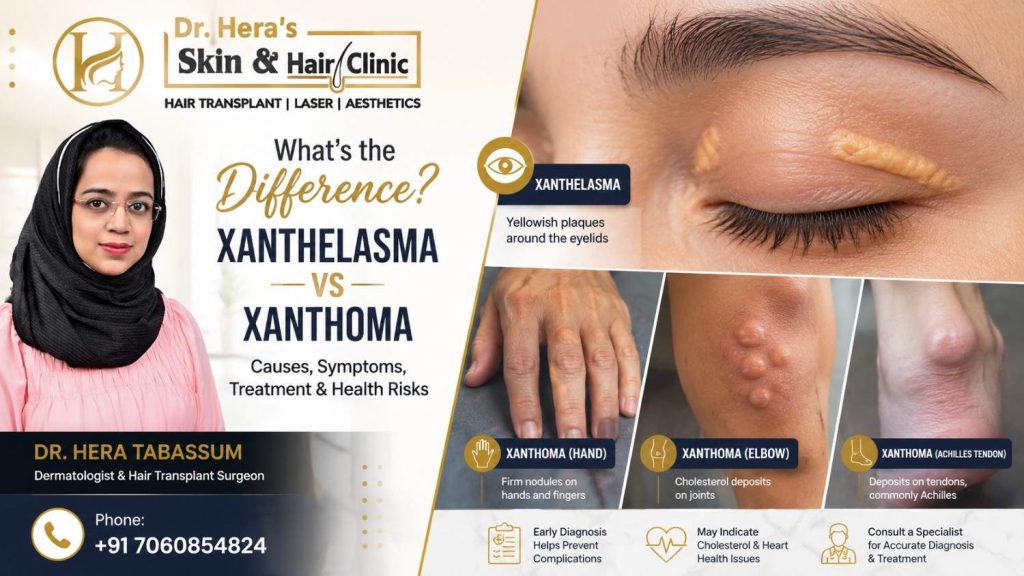
Many people confuse xanthelasma and xanthoma because both conditions involve yellowish cholesterol deposits forming beneath the skin. However, while they are related, they are not exactly the same. According to Dr. Hera Tabassum, a dermatologist with over 8 years of clinical experience who completed her MBBS and MD in Dermatology from the prestigious Jawaharlal Nehru Medical College (JNMCH), Aligarh Muslim University (AMU), understanding the differences between these conditions is important for accurate diagnosis, appropriate treatment, and identifying underlying cholesterol disorders.
The easiest way to understand the difference is this:
- Xanthoma is a broad medical term for fatty cholesterol deposits that can appear anywhere on the body.
- Xanthelasma is a specific type of xanthoma that develops only around the eyelids.
Although both conditions may be linked to cholesterol problems, they differ in appearance, location, causes, and associated health risks.
In this guide, we’ll explain the difference between xanthelasma and xanthoma, including symptoms, causes, diagnosis, treatment options, and when to seek medical advice.
What Is Xanthelasma?
Xanthelasma is the most common type of xanthoma. It appears as soft, yellowish plaques or patches around the eyelids, especially near the inner corners of the eyes.
These cholesterol deposits develop underneath the skin and are usually painless. While xanthelasma itself is harmless, it may indicate underlying cholesterol or cardiovascular issues.
Common characteristics of xanthelasma:
- Flat or slightly raised yellow patches
- Soft texture
- Usually found on upper or lower eyelids
- Slowly enlarges over time
- Common in adults between 35 and 55 years old
Medical studies suggest that nearly half of people with xanthelasma may still have normal cholesterol levels. However, the condition is still considered a potential warning sign for future cardiovascular disease.
What Is Xanthoma?
Xanthoma is a broader medical condition involving fatty deposits that can form in different parts of the body, including:
- Elbows
- Knees
- Hands
- Feet
- Tendons
- Buttocks
- Achilles tendon
Unlike xanthelasma, many xanthomas are strongly linked to severe lipid disorders or genetic cholesterol conditions.
Xanthomas can appear as:
- Firm nodules
- Raised bumps
- Rubbery lumps
- Yellow-red rashes
- Thickened plaques
Some forms may develop suddenly, especially when triglyceride levels become dangerously high.
Key Difference Between Xanthelasma and Xanthoma
1. Location on the Body
Xanthelasma: Occurs only around the eyelids, particularly near the nose.
Xanthoma: Can develop anywhere else on the body, including tendons, joints, hands, feet, and buttocks.
2. Appearance
Xanthelasma
- Soft
- Flat or slightly elevated
- Yellow or cream-colored patches
Xanthoma
- Raised nodules or lumps
- Sometimes hard or rubbery
- May appear yellow, orange, or reddish
3. Cholesterol Connection
Xanthelasma
Around 50% of patients may have normal cholesterol levels.
Xanthoma
Most cases are directly linked to severe cholesterol or triglyceride abnormalities.
4. Health Risks
Xanthelasma
Can act as an early warning sign for:
- Heart disease
- Atherosclerosis
- Stroke risk
Xanthoma
May indicate:
- Familial hypercholesterolemia
- Severe metabolic disorders
- Extremely high triglycerides
- Pancreatitis risk
Types of Xanthomas
Different types of xanthomas often indicate different internal health conditions.
1. Tendinous Xanthoma
These are firm cholesterol deposits that grow over tendons, especially the Achilles tendon.
They are strongly associated with familial hypercholesterolemia, a genetic condition that causes dangerously high LDL cholesterol levels.
2. Eruptive Xanthoma
Eruptive xanthomas appear as clusters of tiny yellow-red bumps that may itch or become inflamed.
They are commonly caused by extremely high triglyceride levels and may signal a medical emergency due to pancreatitis risk.
3. Tuberous Xanthoma
These are larger nodules usually found on:
- Knees
- Elbows
- Pressure areas
They are often associated with inherited lipid disorders.
What Causes Xanthelasma and Xanthoma?
Both conditions occur when excess fats or cholesterol accumulate underneath the skin.
Common causes include:
- High LDL cholesterol
- Elevated triglycerides
- Diabetes
- Obesity
- Liver disease
- Thyroid disorders
- Genetic lipid disorders
- Smoking
- Metabolic syndrome
However, xanthelasma can sometimes develop even in people with normal lipid levels.
Are Xanthelasma and Xanthoma Dangerous?
The skin lesions themselves are usually harmless. However, they may indicate serious internal health problems.
Doctors often recommend:
- Lipid profile testing
- Blood sugar evaluation
- Cardiovascular risk assessment
- Liver and thyroid function tests
Early diagnosis may help reduce long-term cardiovascular complications.
How Are They Diagnosed?
Dermatologists usually diagnose xanthelasma and xanthoma through physical examination.
Additional tests may include:
- Fasting lipid profile
- Blood glucose test
- Liver function tests
- Thyroid testing
- Biopsy (rarely needed)
The location and appearance of the lesion often help distinguish between different xanthoma types.
Treatment Options
Xanthelasma Treatments
Common cosmetic removal methods include:
- TCA chemical peel
- Laser removal
- Surgical excision
- Radiofrequency treatment
- Cryotherapy
Xanthoma Treatments
Treatment focuses mainly on correcting the underlying cholesterol disorder.
Doctors may recommend:
- Cholesterol-lowering medications
- Lifestyle modifications
- Weight management
- Dietary changes
- Diabetes control
Some xanthomas shrink naturally once lipid levels improve.
Can They Come Back After Treatment?
Yes. Both xanthelasma and xanthoma may recur if the underlying cholesterol imbalance is not controlled.
Maintaining healthy cholesterol levels may help reduce recurrence risk after cosmetic treatment.
When Should You See a Doctor?
You should consult a dermatologist or physician if you notice:
- Yellow patches around the eyes
- Sudden yellow bumps on the skin
- Firm lumps near tendons
- Rapidly growing skin deposits
- Family history of high cholesterol
Early medical evaluation can help identify hidden cardiovascular or metabolic conditions.
Final Thoughts
Although xanthelasma and xanthoma are closely related, they are not identical conditions. Xanthelasma specifically affects the eyelids, while xanthomas can develop throughout the body and are often linked to more severe lipid disorders.
Both conditions may serve as visible warning signs of internal cholesterol problems, making proper medical evaluation important. If you notice yellowish skin deposits, consult a dermatologist or healthcare professional for accurate diagnosis and treatment guidance.
Frequently Asked Questions (FAQs)
Is xanthelasma the same as xanthoma?
No. Xanthelasma is a specific type of xanthoma that appears around the eyelids, while xanthomas can develop on different parts of the body, including the elbows, knees, tendons, hands, and feet.
Which is more serious: xanthelasma or xanthoma?
Xanthelasma is usually a cosmetic concern, whereas some types of xanthomas may indicate severe lipid disorders or genetic conditions such as familial hypercholesterolemia. Both conditions should be medically evaluated.
Can xanthelasma occur with normal cholesterol levels?
Yes. Around half of people with xanthelasma may have normal cholesterol levels. However, it can still be associated with an increased risk of cardiovascular disease.
What causes xanthomas to develop?
Xanthomas commonly develop due to high LDL cholesterol, elevated triglycerides, diabetes, obesity, liver disease, thyroid disorders, or inherited lipid disorders.
Can xanthelasma or xanthoma go away on their own?
Generally, no. While controlling cholesterol levels may help prevent new deposits, existing lesions usually require medical treatment if removal is desired.
What is the best treatment for xanthelasma?
Treatment depends on the size and location of the lesion. Common options include TCA chemical peel, laser treatment, radiofrequency, cryotherapy, and surgical excision after evaluation by a dermatologist.
Can xanthomas disappear after lowering cholesterol?
Some xanthomas, especially those caused by high triglycerides, may gradually improve after the underlying lipid disorder is treated. However, larger lesions often require additional medical management.
When should I see a dermatologist?
Consult a dermatologist if you notice yellow patches around your eyes, firm skin nodules, rapidly growing cholesterol deposits, or have a family history of high cholesterol or heart disease.
Are xanthelasma and xanthoma signs of heart disease?
They can be. Both conditions may indicate underlying cholesterol abnormalities or cardiovascular risk, so a lipid profile and medical evaluation are recommended.
What tests are recommended for xanthelasma or xanthoma?
Doctors may recommend a lipid profile, blood sugar test, thyroid function tests, liver function tests, and a cardiovascular risk assessment to identify any underlying medical conditions.