
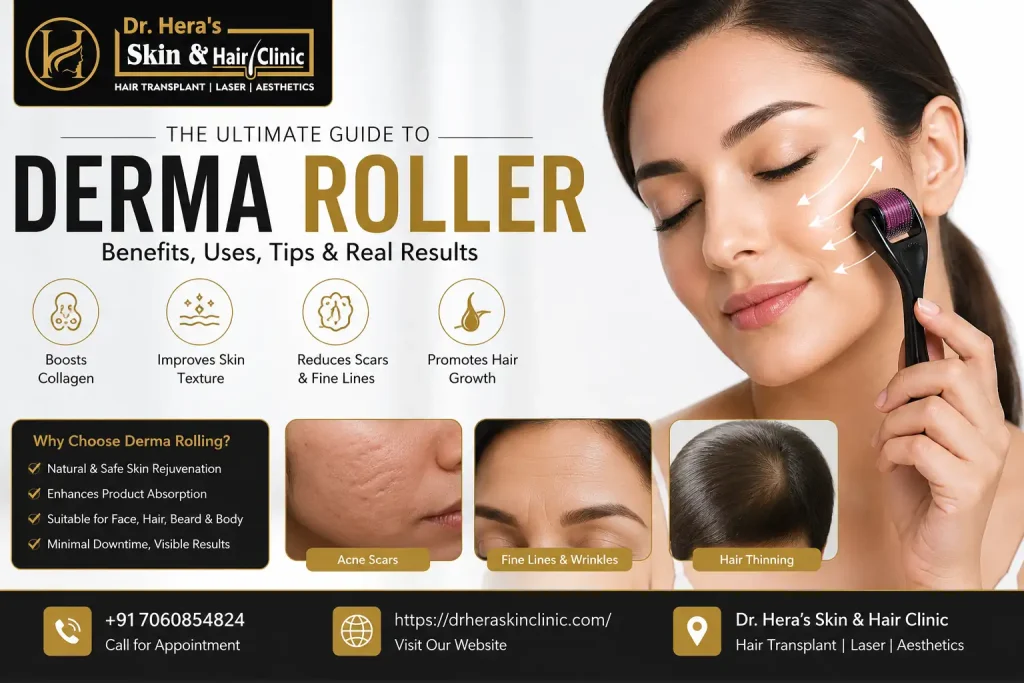
This educational guide is presented by Dr. Hera Skin Clinic under the expertise of Dr. Hera Tabassum, helping patients understand safe and effective dermarolling practices for healthier skin and hair.
Dr Hera Tabassum (Dermatologist in Roorkee)
MBBS, MD Dermatology (AMU)
MRCP-SCE (London)
Ex. Sir Ganga Ram Hospital, New Delhi
Ex. Senior Registrar, JN Medical College
Skin, Hair, Laser & Aesthetic Treatments
Life Member of IADVL
IADVL Dermatosurgery & Lasers Observer
National & International Journals
📲 Call for Consultation: +91 7060854824
🌐 Website: drheraskinclinic.com
📍 Location: Malviya Chowk, Roorkee, Uttarakhand – 247667
📧 Email: dr.heraskinandhairclinic@gmail.com
Dermarolling has become one of the most talked-about skincare treatments for improving acne scars, fine lines, wrinkles, hair thinning, enlarged pores, and uneven skin texture. From dermatology clinics to at-home skincare routines, millions of people now use dermarollers as a non-surgical way to stimulate collagen production and rejuvenate the skin.
But despite its popularity, many people still have questions:
- Does a derma roller actually work?
- Is microneedling safe at home?
- Which needle size should you use?
- Can dermarolling help acne scars and hair growth?
- How long does it take to see results?
The answer depends on how you use the device, your skin condition, and the quality of your skincare routine.
A derma roller works by creating controlled micro-injuries in the skin using tiny needles. These microscopic punctures activate the body’s natural wound-healing response, which stimulates collagen, elastin, and cell turnover. Over time, this process can improve skin firmness, smoothness, texture, and overall appearance.
When used correctly, dermarolling may help:
- Reduce acne scars
- Improve fine lines and wrinkles
- Fade stretch marks
- Enhance product absorption
- Improve scalp circulation for hair growth
- Minimize enlarged pores
- Improve overall skin texture
In this complete guide, you’ll learn exactly how dermarollers work, how to use them safely, the best needle sizes, potential side effects, realistic timelines, and expert-backed tips to achieve the best results.
What Is a Dermaroller?
A dermaroller is a handheld microneedling device covered with hundreds of tiny needles that create controlled micro-injuries in the skin. These micro-injuries stimulate collagen and elastin production, helping the skin repair itself naturally.
Dermarolling is part of a cosmetic treatment called microneedling or collagen induction therapy. Dermatologists originally used this technique in clinical settings to treat acne scars and skin texture issues. Today, smaller and safer versions are available for home use.
Most home dermarollers use needle sizes between 0.25 mm and 0.5 mm. Professional microneedling devices may use longer needles for deeper skin concerns.
The process works by activating the skin’s natural healing response. As the skin repairs itself, it produces new collagen fibers and improves circulation in the treated area.
This collagen remodeling process can gradually improve:
- Acne scars
- Fine lines
- Uneven texture
- Stretch marks
- Dull skin
- Enlarged pores
- Mild pigmentation
Unlike harsh chemical treatments or invasive procedures, dermarolling is considered minimally invasive when performed correctly.
How Does a Dermaroller Work?
A dermaroller works by triggering the body’s wound-healing mechanism.
When the tiny needles puncture the outer layer of the skin, the body interprets these punctures as microscopic injuries. In response, the skin immediately begins repairing itself.
This repair process includes:
- Increased collagen production
- Elastin stimulation
- Improved blood circulation
- Cell regeneration
- New tissue formation
The skin becomes firmer and smoother as fresh collagen develops under the surface.
What Happens Under the Skin During Dermarolling?
Dermarolling activates several biological responses inside the skin.
Inflammatory Phase
Immediately after microneedling, the body sends immune cells and nutrients to the treated area. This process increases circulation and begins tissue repair.
Proliferation Phase
The skin starts producing collagen, elastin, and new skin cells. Fibroblasts become highly active during this stage.
Remodeling Phase
Over the following weeks and months, collagen fibers reorganize and strengthen the skin structure.
This process is why dermarolling can improve acne scars, wrinkles, and skin texture over time.
Why Collagen Matters
Collagen is the protein responsible for skin firmness, elasticity, and strength.
As people age, collagen production naturally decreases. This decline contributes to:
- Fine lines
- Wrinkles
- Sagging skin
- Enlarged pores
- Thinner skin texture
Microneedling encourages the body to produce fresh collagen naturally.
That is why dermarolling is commonly used for anti-aging treatments.
Benefits of Using a Dermaroller
Dermarolling offers several skin and hair benefits when used consistently and safely.
Reduces Acne Scars
One of the most popular uses of dermarollers is acne scar treatment.
Microneedling helps break down old scar tissue while stimulating collagen production beneath depressed scars. Over time, this may improve the appearance of:
- Rolling scars
- Boxcar scars
- Mild atrophic scars
The skin gradually becomes smoother and more even.
People with severe ice-pick scars may require professional microneedling treatments combined with other dermatological procedures.
Improves Fine Lines and Wrinkles
As collagen levels decline with age, the skin loses firmness and elasticity.
Dermarolling stimulates collagen and elastin production, which can help soften:
- Crow’s feet
- Smile lines
- Forehead lines
- Fine wrinkles
Consistent microneedling may help the skin appear firmer and more youthful.
Enhances Skin Texture and Glow
Dermarolling increases skin cell turnover and circulation.
This process may help improve:
- Rough texture
- Dullness
- Uneven skin tone
- Mild discoloration
Many people notice brighter-looking skin after several sessions.
Minimizes Enlarged Pores
Large pores often become more visible when surrounding collagen weakens.
As new collagen develops around pores, the skin may appear tighter and smoother.
Dermarolling cannot permanently shrink pores, but it may reduce their appearance.
Improves Product Absorption
Microneedling creates temporary microchannels in the skin.
These channels allow certain skincare ingredients to penetrate more effectively.
Hydrating and soothing ingredients like:
- Hyaluronic acid
- Peptides
- Ceramides
may absorb more efficiently after treatment.
However, harsh or irritating products should be avoided immediately after dermarolling.
Helps Hair Growth
Microneedling is also used for scalp treatments.
Dermarolling may improve hair regrowth by:
- Increasing blood flow to hair follicles
- Stimulating growth factors
- Improving absorption of hair growth products
Some studies suggest combining microneedling with minoxidil may improve results for androgenetic alopecia.
May Improve Stretch Marks
Stretch marks form when the skin stretches rapidly and collagen fibers become damaged.
Microneedling may help improve skin texture and stimulate collagen remodeling in affected areas.
Results typically require patience and consistent treatment.
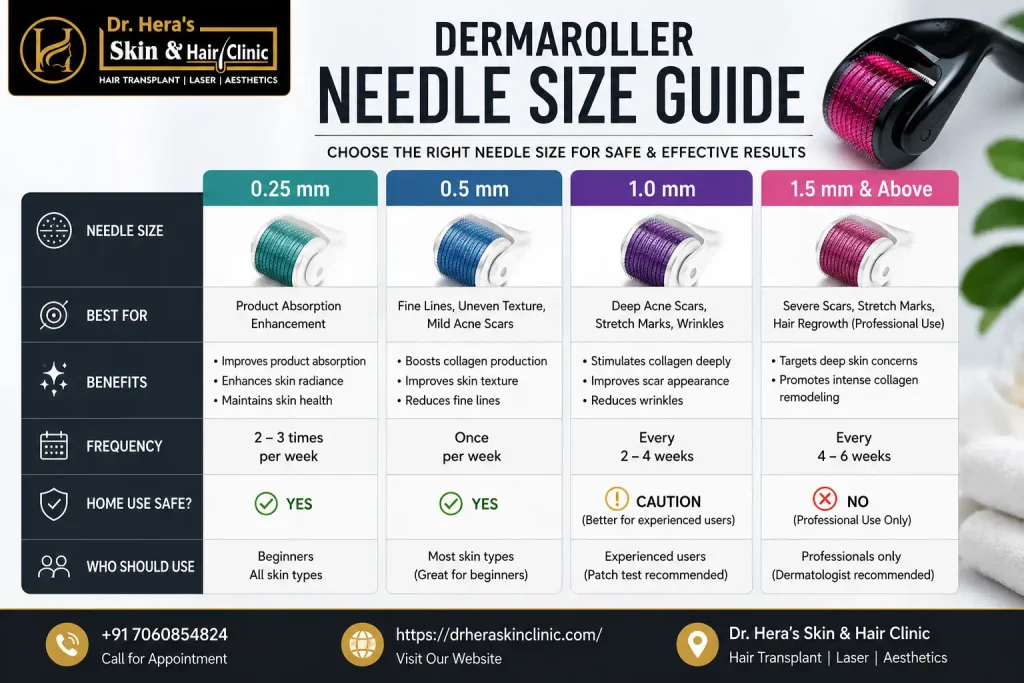
Dermaroller Needle Size Chart
Choosing the correct needle size is extremely important for both safety and results.
| Needle Size | Best For | Frequency | Home Safe? |
| 0.25 mm | Product absorption, beginners | 2 – 3 times weekly | Yes |
| 0.5 mm | Fine lines, acne scars, glow | Once weekly | Yes |
| 1.0 mm | Deeper scars, stretch marks | Every 4 – 6 weeks | Professional guidance recommended |
| 1.5 mm+ | Deep scarring | Professional only | No |
Which Needle Size Is Best for Beginners?
Most beginners should start with a 0.25 mm or 0.5 mm dermaroller.
These needle lengths are generally safer for home use and carry a lower risk of irritation and skin damage.
Longer needles should only be used under professional supervision.
How To Use a Dermaroller Safely at Home
Using a dermaroller incorrectly can damage the skin or increase infection risk.
Following proper hygiene and technique is essential.
Step 1: Sanitize the Dermaroller
Before each session, soak the dermaroller in 70% isopropyl alcohol for 5 – 10 minutes.
Allow it to air dry completely.
Step 2: Cleanse Your Skin
Wash your face using a gentle cleanser to remove:
- Dirt
- Oil
- Makeup
- Bacteria
Pat the skin dry with a clean towel.
Step 3: Divide the Face Into Sections
Treat one section at a time:
- Forehead
- Right cheek
- Left cheek
- Chin
- Nose area
This helps ensure even coverage.
Step 4: Roll Gently in Different Directions
Roll vertically, horizontally, and diagonally.
Do not drag the roller aggressively across the skin.
Use light pressure.
Over-rolling can increase irritation and inflammation.
Step 5: Apply a Gentle Serum
After treatment, apply soothing skincare ingredients such as:
- Hyaluronic acid
- Peptides
- Panthenol
- Ceramides
Avoid strong active ingredients immediately after treatment.
Step 6: Clean the Device Again
After use:
- Rinse the dermaroller
- Disinfect with alcohol
- Let it dry
- Store it in a clean container
Best Serums To Use After Dermarolling
The skin becomes temporarily more sensitive after microneedling.
Choosing the right post-treatment products is extremely important.
Safe Ingredients After Dermarolling
Hyaluronic Acid
Hyaluronic acid helps hydrate and soothe the skin.
It is one of the safest ingredients to use after dermarolling.
Peptides
Peptides support skin repair and collagen production.
Ceramides
Ceramides strengthen the skin barrier and reduce dryness.
Panthenol
Panthenol helps calm irritation and improve hydration.
Ingredients To Avoid After Dermarolling
Avoid these ingredients for at least 24 – 48 hours:
- Retinol
- Strong vitamin C formulas
- AHAs
- BHAs
- Fragrance
- Alcohol-based products
Using irritating products immediately after microneedling may damage the skin barrier.
Dermaroller for Acne Scars
Dermarolling is commonly used for mild to moderate acne scars.
Acne scars develop when inflammation damages collagen in the deeper layers of the skin.
Microneedling helps stimulate collagen remodeling beneath these scars.
Types of Acne Scars That May Improve
Rolling Scars
These shallow scars often respond well to collagen induction therapy.
Boxcar Scars
Mild boxcar scars may improve gradually with repeated sessions.
Mild Atrophic Scars
Depressed scars caused by collagen loss may become smoother over time.
Scars That May Need Professional Treatment
- Deep ice-pick scars
- Severe tethered scars
- Keloid scars
These usually require professional dermatological treatments.
How Long Does It Take To See Acne Scar Results?
Collagen remodeling takes time.
Most people begin noticing improvements after:
- 4 – 6 weeks for texture
- 2 – 3 months for mild scars
- 4 – 6 months for more visible changes
Consistency is essential.
Dermaroller for Hair Growth
Microneedling has become increasingly popular for scalp and beard treatments.
Hair thinning can occur due to:
- Genetics
- Hormonal changes
- Stress
- Poor nutrition
- Aging
Dermarolling may help improve scalp health and stimulate hair follicles.
How Dermarolling Helps Hair Growth
Microneedling may support hair growth by:
- Increasing circulation to follicles
- Stimulating growth factors
- Activating stem cells in the scalp
- Improving absorption of topical hair products
Some studies suggest combining microneedling with minoxidil may improve hair density.
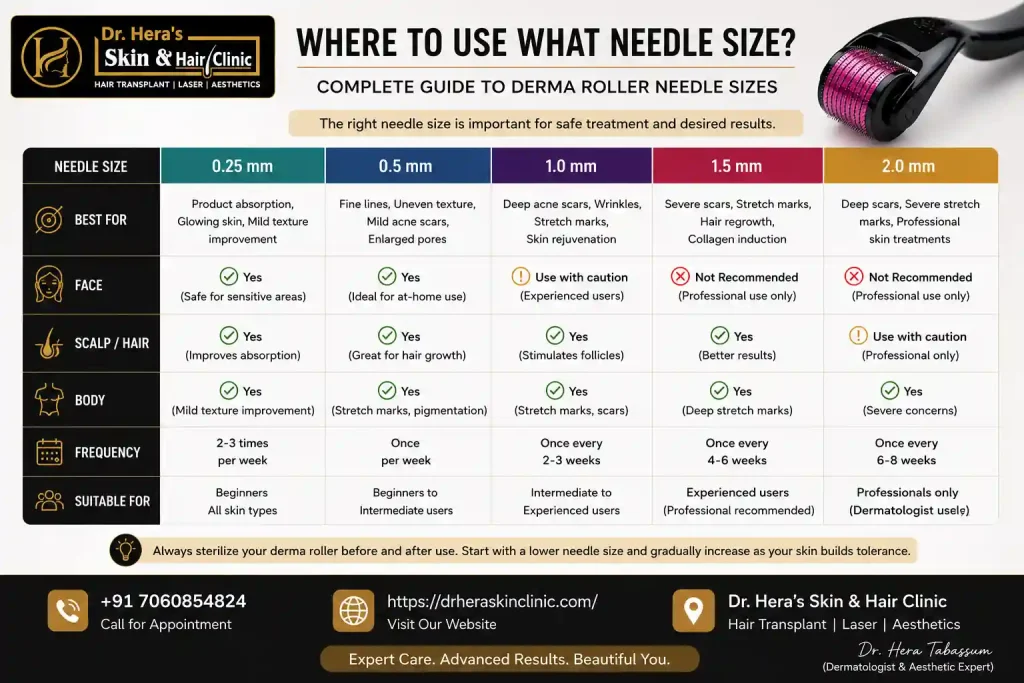
Best Needle Sizes for Hair Growth
| Area | Recommended Needle Size |
| Beard | 0.25 – 0.5 mm |
| Scalp | 0.5 – 1.0 mm |
How Often Should You Dermaroll the Scalp?
Most people use:
- 0.5 mm once weekly
- 1.0 mm every 2 – 3 weeks
Excessive scalp microneedling may irritate hair follicles.
Dermaroller for Wrinkles and Anti-Aging
One of the main reasons people use dermarollers is to reduce visible signs of aging.
Beginning in the mid-20s, collagen production naturally declines.
This process accelerates with:
- Sun exposure
- Smoking
- Stress
- Poor sleep
- Aging
As collagen decreases, the skin gradually loses firmness and elasticity.
How Dermarolling Supports Anti-Aging
Microneedling stimulates collagen and elastin production.
This may help improve:
- Fine lines
- Skin firmness
- Texture
- Mild sagging
- Dullness
Many skincare professionals describe this process as “collagen induction.”
Areas Commonly Treated
- Forehead
- Around the mouth
- Crow’s feet
- Neck
Realistic Expectations
Dermarolling can improve early signs of aging, but it does not replace surgical procedures or advanced dermatological treatments.
Results develop gradually over several months.
Dermaroller Before and After Timeline
Many people expect immediate results from microneedling.
However, collagen production takes time.
Understanding realistic timelines helps set proper expectations.
Week 1
You may notice:
- Redness
- Mild sensitivity
- Temporary glow
- Increased skin smoothness
Weeks 2 – 4
The skin begins repairing itself.
You may notice:
- Improved hydration
- Slight texture improvement
- Better product absorption
Months 2 – 3
Collagen production increases.
Possible improvements include:
- Softer fine lines
- Smoother texture
- Reduced acne scar visibility
- Healthier skin tone
Months 4 – 6
More visible changes may appear:
- Firmer skin
- Better elasticity
- Improved scar appearance
- Stronger skin texture
Results vary depending on:
- Age
- Skin condition
- Needle size
- Frequency
- Skincare routine
Dermaroller Mistakes To Avoid
Many side effects occur because of poor technique or unsafe practices.
Avoiding these mistakes can improve both safety and results.
Using Dirty Rollers
A contaminated dermaroller may introduce bacteria into the skin.
Always disinfect the device before and after each use.
Rolling Over Active Acne
Microneedling active acne can spread bacteria and increase inflammation.
Avoid treating areas with:
- Cystic acne
- Open wounds
- Infections
Using Too Much Pressure
Pressing aggressively does not improve results.
Excessive pressure may damage the skin barrier and increase irritation.
Overusing the Device
The skin needs time to heal between sessions.
Too much microneedling can lead to:
- Chronic irritation
- Dryness
- Sensitivity
- Inflammation
Using Harsh Products After Treatment
Avoid strong active ingredients immediately after dermarolling.
The skin is temporarily more vulnerable after treatment.
Sharing Dermarollers
Never share a dermaroller with another person.
This increases the risk of:
- Infection
- Cross-contamination
- Skin irritation
Using Long Needles at Home
Needles longer than 1.0 mm carry higher risks.
Professional guidance is recommended for deeper treatments.
Side Effects and Risks of Dermarolling
Dermarolling is generally considered safe when performed properly.
However, side effects can occur.
Common Side Effects
Most side effects are temporary and mild.
These may include:
- Redness
- Sensitivity
- Tightness
- Mild swelling
- Dryness
- Peeling
These symptoms usually improve within a few days.
Potential Risks
Improper use may increase the risk of:
- Infection
- Hyperpigmentation
- Skin barrier damage
- Scarring
- Prolonged inflammation
When To Stop Dermarolling
Stop treatment and consult a dermatologist if you experience:
- Severe irritation
- Persistent redness
- Bleeding
- Signs of infection
- Worsening acne
Who Should Avoid Dermarolling?
Dermarolling is not suitable for everyone.
Avoid microneedling if you have:
- Active acne breakouts
- Eczema
- Psoriasis
- Rosacea flare-ups
- Open wounds
- Skin infections
- Keloid-prone skin
- Severe sensitive skin
People taking blood-thinning medications should also consult a healthcare professional before treatment.
Pregnant individuals should speak with their doctor before beginning any microneedling routine.
Dermaroller vs Dermapen vs Professional Microneedling
Different microneedling devices work differently.
Understanding the differences can help you choose the right option.
| Feature | Dermaroller | Dermapen | Professional Microneedling |
| Motion | Rolling | Vertical stamping | Advanced medical devices |
| Precision | Moderate | Higher | Highest |
| Pain Level | Mild | Mild – moderate | Moderate |
| Home Use | Yes | Some models | No |
| Risk of Skin Dragging | Higher | Lower | Lowest |
| Best For | Beginners | More targeted treatment | Severe concerns |
Is Dermapen Better Than Dermaroller?
Dermapens use vertical needle movement, which may create more controlled punctures.
Some people prefer dermapens because they reduce dragging across the skin.
However, high-quality dermarollers can still provide good results when used correctly.
How Often Should You Use a Dermaroller?
Frequency depends mainly on needle size.
Using the device too often can damage the skin barrier.
| Needle Size | Recommended Frequency |
| 0.25 mm | 2 – 3 times weekly |
| 0.5 mm | Once weekly |
| 1.0 mm | Every 3 – 4 weeks |
| 1.5 mm+ | Professional supervision only |
The skin requires recovery time for collagen production and healing.
How To Clean and Store a Dermaroller
Proper hygiene is essential.
A poorly cleaned dermaroller may introduce bacteria into the skin.
Cleaning Steps
- Rinse with warm water
- Soak in 70% isopropyl alcohol
- Allow it to air dry
- Store in a protective case
When Should You Replace a Dermaroller?
Replace the device if:
- Needles become bent
- The roller feels dull
- It shows signs of rust or damage
Most home dermarollers should be replaced every 2 – 3 months depending on usage.
Does Dermarolling Really Work?
Dermarolling can improve certain skin concerns when used consistently and correctly.
However, results vary depending on:
- Skin type
- Age
- Severity of concerns
- Needle size
- Technique
- Skincare routine
Microneedling works best for:
- Mild to moderate acne scars
- Early signs of aging
- Uneven texture
- Enlarged pores
- Hair thinning
It is not an overnight treatment.
Collagen remodeling is a gradual biological process that takes weeks and months.
People expecting dramatic changes after one session may feel disappointed.
Consistent long-term use typically produces better outcomes.
Frequently Asked Questions
Is dermarolling painful?
Most people experience mild discomfort rather than severe pain. Smaller needle sizes are generally more comfortable.
Can I use a dermaroller every day?
No. The skin needs time to recover between sessions.
Can dermarolling remove acne scars permanently?
Dermarolling may improve the appearance of acne scars, but complete removal is not always possible.
What should I apply after dermarolling?
Gentle hydrating products such as hyaluronic acid and ceramides are commonly recommended.
Can dermarolling damage skin?
Improper technique, excessive pressure, or poor hygiene can damage the skin barrier.
Does dermarolling help beard growth?
Microneedling may improve circulation and stimulate follicles in some individuals.
How long does redness last after dermarolling?
Mild redness usually fades within 24 – 48 hours.
Can I wear makeup after dermarolling?
It is best to avoid makeup for at least 24 hours after treatment.
Is dermarolling safe for sensitive skin?
People with highly sensitive skin should consult a dermatologist before treatment.
Can I use vitamin C after microneedling?
Strong vitamin C formulas may irritate freshly treated skin. Gentle hydration is usually safer immediately after treatment.
Final Verdict
Dermarolling has become one of the most popular minimally invasive skincare treatments for improving acne scars, fine lines, enlarged pores, uneven texture, and even hair thinning.
When performed correctly, microneedling stimulates collagen production and supports the skin’s natural repair process.
The key to safe and effective results is:
- Choosing the correct needle size
- Maintaining proper hygiene
- Avoiding overuse
- Following a gentle aftercare routine
- Staying consistent over time
Although dermarolling can significantly improve skin texture and overall appearance, realistic expectations are important.
Results develop gradually because collagen remodeling takes time.
People with severe acne scars, active skin conditions, or advanced skin concerns should consider consulting a dermatologist before starting microneedling at home.
With proper technique, patience, and consistency, dermarolling can become a valuable addition to a long-term skincare or hair care routine.
This article explores how dermarollers work, how to use a dermaroller, and tips for achieving the best results.