
Medically reviewed guidance from Dr Hera’s Skin & Hair Clinic
Not sure which chemical peel will actually work for your dark spots? You’re not alone. The truth is, there is no single “best” peel — the right choice depends on what is causing your pigmentation and what type of skin you have. This guide explains it in simple terms, so you know what to ask your dermatologist before you book a peel.
What Is Hyperpigmentation?
Hyperpigmentation simply means darker patches on the skin. It can show up in different ways:
- Melasma – Brown-grey patches, often on the cheeks, forehead, or upper lip. Linked to hormones and sun exposure.
- Post-inflammatory hyperpigmentation (PIH) – Dark marks left behind after a pimple, cut, or irritation heals.
- Sun spots – Flat brown spots caused by years of sun exposure.
- Acne marks – Dark spots left after acne clears up, often confused with active acne.
Knowing which type you have is the first step. This matters more than the peel itself, because the wrong peel on the wrong type of pigmentation can make things worse, not better.
How Does a Chemical Peel Work?
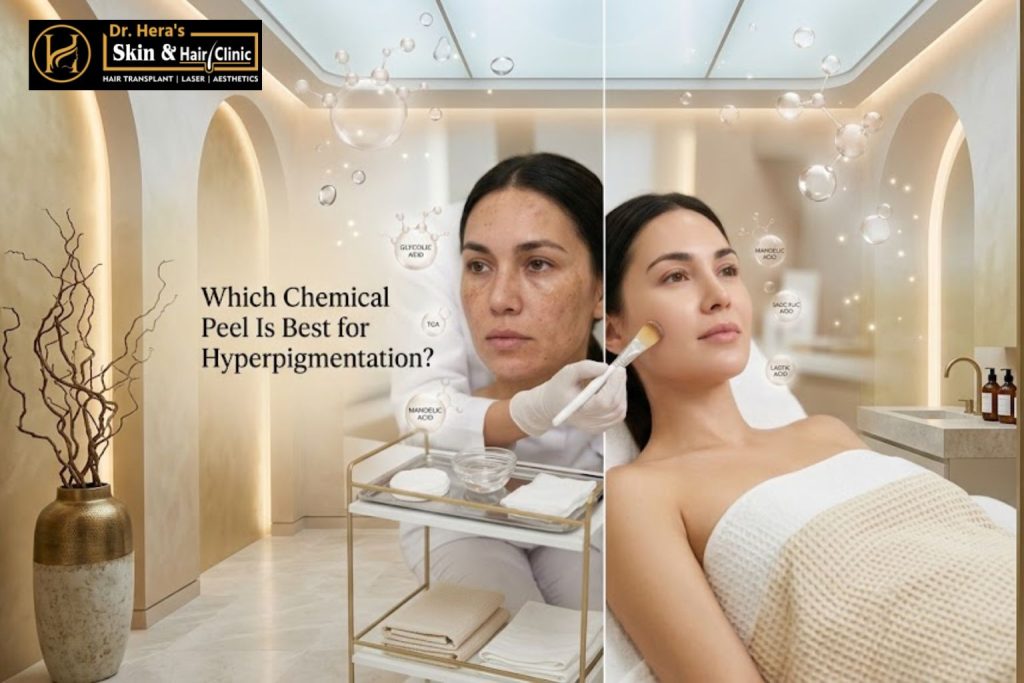
A chemical peel uses a mild acid solution to remove the top layer of dull, pigmented skin. As this layer sheds, fresh, more even-toned skin comes through. Most peels used for pigmentation are “superficial” peels — gentle enough for regular use, with little to no downtime.
Best Peel for Each Type of Pigmentation
1. Melasma: Gentle peels like mandelic or lactic acid work best. Melasma is sensitive to heat and irritation, so a slow, careful approach is safer than a strong peel.
2. Post-inflammatory hyperpigmentation (PIH): Salicylic acid is a good choice if you also get breakouts, since it treats both the acne and the marks. Mandelic acid is a softer option for sensitive skin.
3. Sun spots: Glycolic acid peels are effective for fading sun damage over a series of sessions.
4. Acne marks: Salicylic acid works well for oily, acne-prone skin. Glycolic acid suits skin that is drier or no longer breaking out.
Best Peel by Skin Type
- Sensitive skin: Mandelic acid – gentle, low risk of irritation.
- Oily or acne-prone skin: Salicylic acid – clears pores and reduces marks.
- Skin of color (including most Indian skin tones): Mandelic or lactic acid, done carefully, since darker skin is more prone to dark marks from irritation.
- Dry skin or uneven tone: Lactic acid hydrating and mild.
- Stubborn pigmentation (selected cases): TCA – stronger and only used under close dermatologist supervision, since it carries a higher risk of dark marks in deeper skin tones.
Peel Comparison at a Glance
| Peel | Best For | Strength | Risk in Darker Skin |
|---|---|---|---|
| Mandelic Acid | Sensitive skin, melasma, skin of color | Mild | Low |
| Lactic Acid | Dry skin, uneven tone | Mild | Low |
| Glycolic Acid | Sun spots, general dullness | Mild-Medium | Moderate |
| Salicylic Acid | Acne marks, oily skin | Mild-Medium | Low-Moderate |
| TCA | Stubborn pigmentation | Medium | Higher – needs expert care |
What to Expect During and After a Peel
A peel session usually takes 15–30 minutes. You may feel mild tingling or warmth during the process. Afterward, skin can look slightly pink or flaky for a few days as it sheds. Results build up gradually most people need a series of sessions, not just one, to see a real difference in pigmentation.
Chemical Peel vs Laser: Which Is Better for Pigmentation?
Both can help, but they work differently. Peels are usually gentler, more affordable, and better for early or mild pigmentation. Lasers can target deeper or more stubborn pigmentation but often cost more and need more downtime. Many dermatologists recommend starting with peels and adding laser treatment only if needed — your dermatologist can guide you on which fits your skin.
Benefits of Chemical Peels for Pigmentation
Peels can fade dark spots, even out skin tone, and improve texture over time. They also help other skin-brightening products work better. Results are usually gradual and build up with each session, which is a good sign — slow, steady fading is safer than a fast, aggressive change.
Risks and Side Effects
Chemical peels are generally safe, but they aren’t risk-free. Using too strong a peel, going too often, or skipping aftercare can cause redness, irritation, and — in some cases — make dark spots worse. This risk is higher for melasma and skin of color, which is why peel type and strength should always be chosen by a dermatologist.
Who Should Avoid Peels or See a Dermatologist First
Hold off on a peel, or get medical advice first, if you have:
- Active, inflamed acne or open skin
- Recent sunburn or tanning
- A history of keloid or thick scarring
- Melasma that is currently flaring up
- Very reactive or eczema-prone skin
Peel Aftercare Tips
Aftercare decides whether your results last. Keep it simple:
- Wear sunscreen daily — even indoors, and especially for a few weeks after your peel.
- Stay out of direct sun and avoid heat (saunas, hot yoga) for a few days.
- Skip retinoids or other exfoliants until your skin has fully recovered.
- Follow your dermatologist’s aftercare instructions exactly — don’t adjust it yourself.
Skipping these steps is one of the biggest reasons dark spots come back after a peel.
How to Choose the Right Clinic
Look for a clinic where peels are done or supervised by a qualified dermatologist, not just a beautician. A good clinic will assess your skin type and pigmentation cause first, explain which peel and strength suit you, and give clear aftercare guidance — rather than offering a one-size-fits-all peel to everyone.
FAQ
Which peel is best for dark spots?
It depends on the cause — glycolic acid for sun spots, salicylic acid for acne marks, and mandelic acid for sensitive or darker skin.
Is glycolic acid good for hyperpigmentation?
Yes, especially for sun spots and mild pigmentation, but it should be used carefully on sensitive or darker skin.
Is chemical peel safe for Indian skin?
Yes, when the right peel is chosen. Mild peels like mandelic or lactic acid, done under dermatologist guidance, are usually the safest choice for Indian skin tones.
Which peel is best for melasma?
Mild peels like mandelic or lactic acid, combined with daily sunscreen. Strong peels can make melasma worse.
Can chemical peels worsen pigmentation?
Yes, if the wrong strength is used or aftercare is skipped. This is why a dermatologist should guide your treatment.
How many peels are needed for visible results?
Most people need several sessions, spaced a few weeks apart, rather than just one.
There is no single “best” chemical peel for hyperpigmentation. The right one depends on your pigmentation type, skin tone, and sensitivity. Mild peels like glycolic, mandelic, salicylic, and lactic acid work well for most people, while TCA is reserved for select cases under expert care.
If you’re dealing with dark spots, melasma, or acne marks, the safest first step is a proper skin check — not guesswork. Book a consultation with Dr Hera’s Skin & Hair Clinic to find the right peel for your skin.